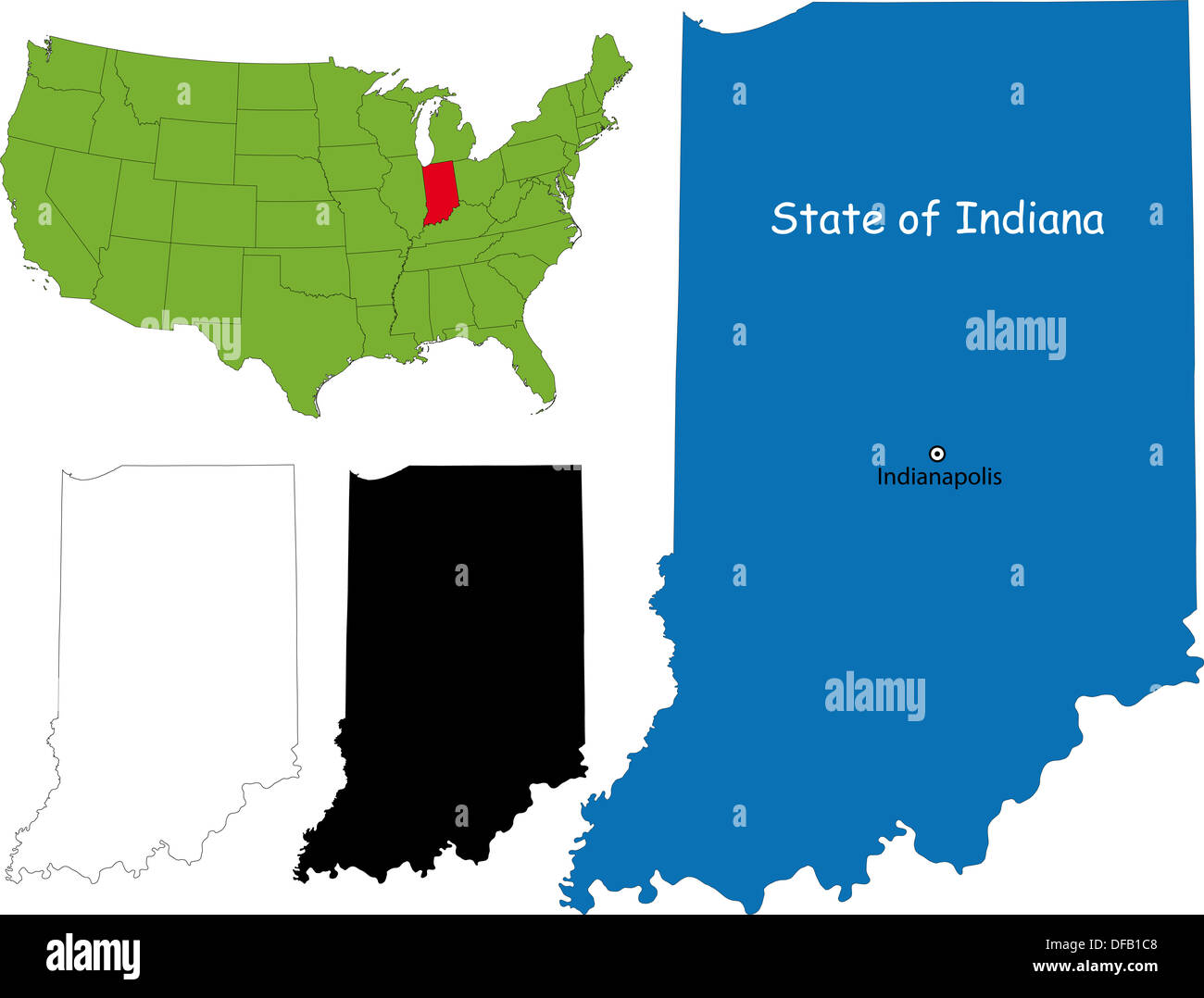
Navigating Indiana time zones can trip up travelers and remote workers because the state splits across two different zones. Eighty of Indiana's ninety-two counties run on Eastern Time, while twelve counties follow Central Time. This division sits across two specific corners of the state near major neighboring metro areas. Understanding how the map breaks down helps prevent missed meetings and scheduling errors.
The state uniform standard means that all ninety-two counties now observe Daylight Saving Time. Clocks spring forward on the second Sunday in March and fall back on the first Sunday in November. While this consistency makes life easier than it was decades ago, knowing which cities fall into which zone requires looking closely at regional boundaries.
The Indiana Time Zone Split: Eastern Versus Central
Most of Indiana aligns with the Eastern Time Zone. Major population hubs like Indianapolis, Fort Wayne, Bloomington, South Bend, and Muncie operate on Eastern Standard Time during winter and Eastern Daylight Time during summer.
Meanwhile, twelve counties run on the Central Time Zone. These counties cluster in two distinct geographic pockets: the northwest region bordering Chicago and the southwest region surrounding Evansville.
Northwest Indiana Counties on Central Time
Six counties in the northwestern corner of the state align with the Chicago metropolitan area on Central Time:
- Jasper County
- Lake County
- LaPorte County
- Newton County
- Porter County
- Starke County
Cities like Hammond, Gary, and Merrillville share an hour with Illinois, which simplifies daily commuting for thousands of workers traveling into Chicago.
Southwest Indiana Counties on Central Time
Six counties in the southwestern pocket of the state also operate on Central Time, tied closely to the Evansville economic hub:
- Gibson County
- Perry County
- Posey County
- Spencer County
- Vanderburgh County
- Warrick County
Evansville, the state's third-largest city, sits right in this Central Time zone pocket, creating a distinct time boundary just a short drive east or north.
Major Indiana Cities and Their Time Zones
Knowing where specific cities land keeps travel schedules on track. Here is how key Indiana urban centers distribute across the map:
- Indianapolis: Eastern Time
- Fort Wayne: Eastern Time
- Evansville: Central Time
- South Bend: Eastern Time
- Hammond: Central Time
- Bloomington: Eastern Time
- Gary: Central Time
- Lafayette: Eastern Time
Crossing county lines in Indiana frequently means changing your watch. For example, driving east from Evansville into neighboring Boonville in Warrick County keeps you on Central Time, but driving just a bit further east into Spencer County or north into Pike County shifts you onto Eastern Time.
A Brief History of Indiana Time Keeping
Indiana's relationship with time zones has a chaotic history. Early in the twentieth century, the entire state used Central Time. As the railroad and industrial eras progressed, parts of the state unofficially drifted to Eastern Time to match business partners on the East Coast.
The federal government stepped in through the Uniform Time Act of 1966, officially placing most of Indiana on Eastern Time while leaving a handful of counties on Central Time. For decades, the bigger controversy wasn't the zone split, but Daylight Saving Time. Most of Indiana refused to observe Daylight Saving Time until 2006.
Before 2006, Indianapolis matched New York time in the winter, but matched Chicago time in the summer. This mismatch caused immense confusion for national businesses, television scheduling, and transport logistics. In April 2006, the state finally adopted statewide Daylight Saving Time, bringing uniformity to how clocks turn across the region. You can read more about state statutes and updates directly through the Indiana Government Official FAQ.
Common Mistakes to Avoid
Visitors and remote workers often make avoidable errors when dealing with Indiana schedules:
- Assuming the entire state matches Chicago or New York. Since 80 counties use Eastern Time, assuming statewide Central Time will make you an hour late for meetings in Indianapolis.
- Forgetting county borders. Time zones in Indiana are divided by county lines, not city limits. If you travel through rural stretches, check which county you are entering.
- Discounting seasonal shifts. Because Indiana fully observes Daylight Saving Time now, the time gap between different US regions stays constant, but forgetting to change your manual clocks will throw off your day twice a year.
To double-check local official times or view boundary shapefiles, consult resources like the Visit Indiana Tourism Portal or track technical time zone data via Time and Date Indiana Overview.
Frequently Asked Questions
Does all of Indiana observe Daylight Saving Time?
Yes. Since 2006, every single county in Indiana springs forward in March and falls back in November.
How many Indiana counties are on Central Time?
There are 12 counties on Central Time. Six sit in the northwest corner near Chicago, and six sit in the southwest corner near Evansville.
What time zone is Indianapolis in?
Indianapolis sits in the Eastern Time Zone and observes Eastern Standard Time and Eastern Daylight Time alongside the majority of the state.
Why does Indiana have two different time zones?
The split dates back to mid-century federal transportation rulings that balanced local economic ties to Chicago in the west and industrial Eastern hubs like Cincinnati and New York.



