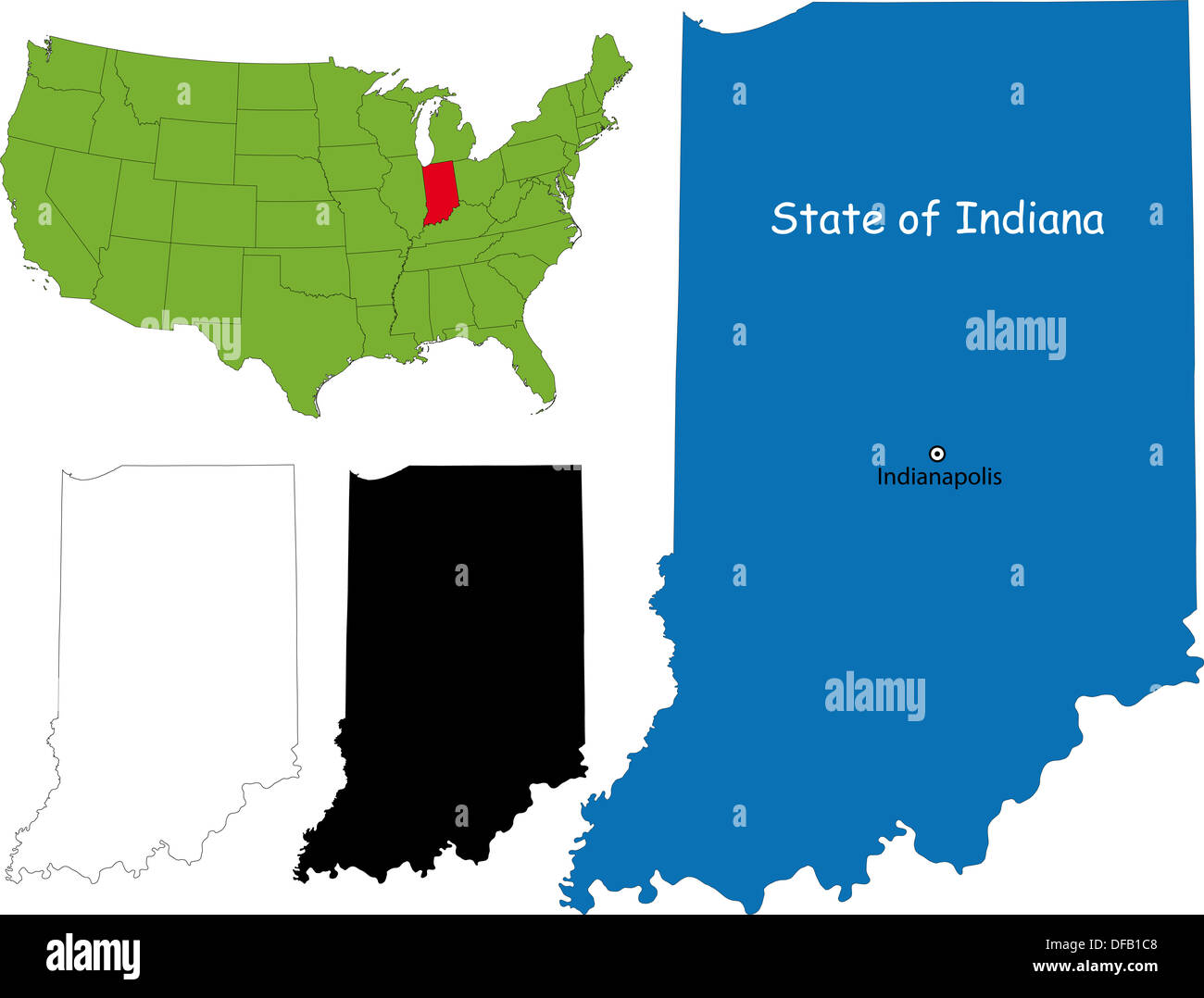
Indiana's relationship with the clock is one of the most eccentric administrative sagas in American history. Today, eighty of Indiana's ninety-two counties observe Eastern Time, while twelve counties stick to Central Time. That division isn't just a random quirk of geography. It’s the result of a century-long tug-of-war between commerce, local identity, legislative battles, and federal intervention. If you've ever wondered how a single midwestern state ended up fractured across two time zones—and why skipping daylight saving time used to be a point of pride—the history involves fierce local debates that lasted generations.
Understanding Indiana time zones requires looking past simple geography and examining how economic gravity shapes the clock. Cities like Indianapolis lean toward eastern commercial hubs, while corners of the state look naturally toward Chicago or St. Louis. For decades, state lawmakers, federal regulators, and everyday residents fought over whether to spring forward, fall back, or ignore standard time divisions altogether.
How Indiana Split Across Two Time Zones
When railroads standardized American time in the late nineteenth century, all of Indiana fell within the Central Time Zone. As industrial centers grew, parts of the state developed deep economic ties with Ohio and the eastern seaboard. Communities along the eastern border found it wildly inconvenient to operate on a different schedule than their business partners just across the state line.
Without waiting for federal permission, many eastern and central Indiana towns simply shifted their clocks to match Eastern Time informally. This created a chaotic patchwork where neighboring towns ran on different hours. Commuters, train conductors, and school administrators dealt with a daily puzzle.
The federal government tried to settle the issue in 1961 when the Interstate Commerce Commission moved Indianapolis and forty-three surrounding counties into the Eastern Time Zone. Yet, local resistance persisted. Residents argued back and forth over the perceived health, agricultural, and commercial benefits of daylight saving time, leading to frequent petitions, legislative revolts, and localized rule-breaking.
The Long War Over Daylight Saving Time
For decades, Indiana was an outlier nationally because much of the state refused to observe daylight saving time. While the Uniform Time Act of 1966 standardized the practice across most of the United States, Indiana secured exemptions.
Supporters of staying on standard time year-round argued that it kept summer evenings cooler for farm work and matched local lifestyles. Critics countered that the lack of uniform time isolated Indiana businesses, confused clients in other states, and created massive administrative headaches for television programming, banking, and transport.
The debate reached a boiling point in 2005 when the Indiana General Assembly passed legislation requiring the entire state to observe daylight saving time starting in April 2006. That move forced a massive realignment. Several counties petitioned the federal Department of Transportation to switch from Eastern to Central Time to better align with local metropolitan areas.
Where Indiana Time Stands Today
Following post-2006 adjustments and county-level appeals, the state settled into its current footprint. Today, eighty counties observe Eastern Time, and twelve counties observe Central Time.
The twelve Central Time counties sit neatly in two distinct corners of the state:
- Northwest cluster: Six counties near Chicago, including Lake, Porter, LaPorte, Jasper, Newton, and Starke.
- Southwest cluster: Six counties near Evansville, including Posey, Vanderburgh, Warrick, Spencer, Gibson, and Pike.
These clusters remain on Central Time because their daily commerce, commuting patterns, and media markets tie them directly to major metropolitan centers outside Indiana's borders. For more details on official state boundaries, check the IN.gov Time Zone Information. To explore broader legislative perspectives on regional timekeeping, visit the National Conference of State Legislatures.
Frequently Asked Questions
Does all of Indiana observe daylight saving time now?
Yes. Since the sweeping state legislative changes in 2006, every county in Indiana observes daylight saving time. The era of different counties doing their own thing during the summer months is entirely in the past.
Why didn't Indiana want to change clocks historically?
Many Hoosiers—particularly in agricultural and rural communities—preferred staying on standard time year-round to avoid late summer sunsets that interfered with farm schedules and children's evening routines.
Which major cities in Indiana are on Central Time?
Major cities in the northwest cluster include Hammond, Gary, and Valparaiso, while the southwest cluster centers around Evansville, the state's third-largest city. Indianapolis, Fort Wayne, South Bend, and Evansville's neighbors are all firmly in the Eastern Time Zone.
Can an Indiana county change its time zone whenever it wants?
No. Individual counties cannot simply change their clocks on a whim. Moving between the Eastern and Central time zones requires a formal petition process through the United States Department of Transportation, which evaluates economic justification and community impact before approving any boundary shift.



