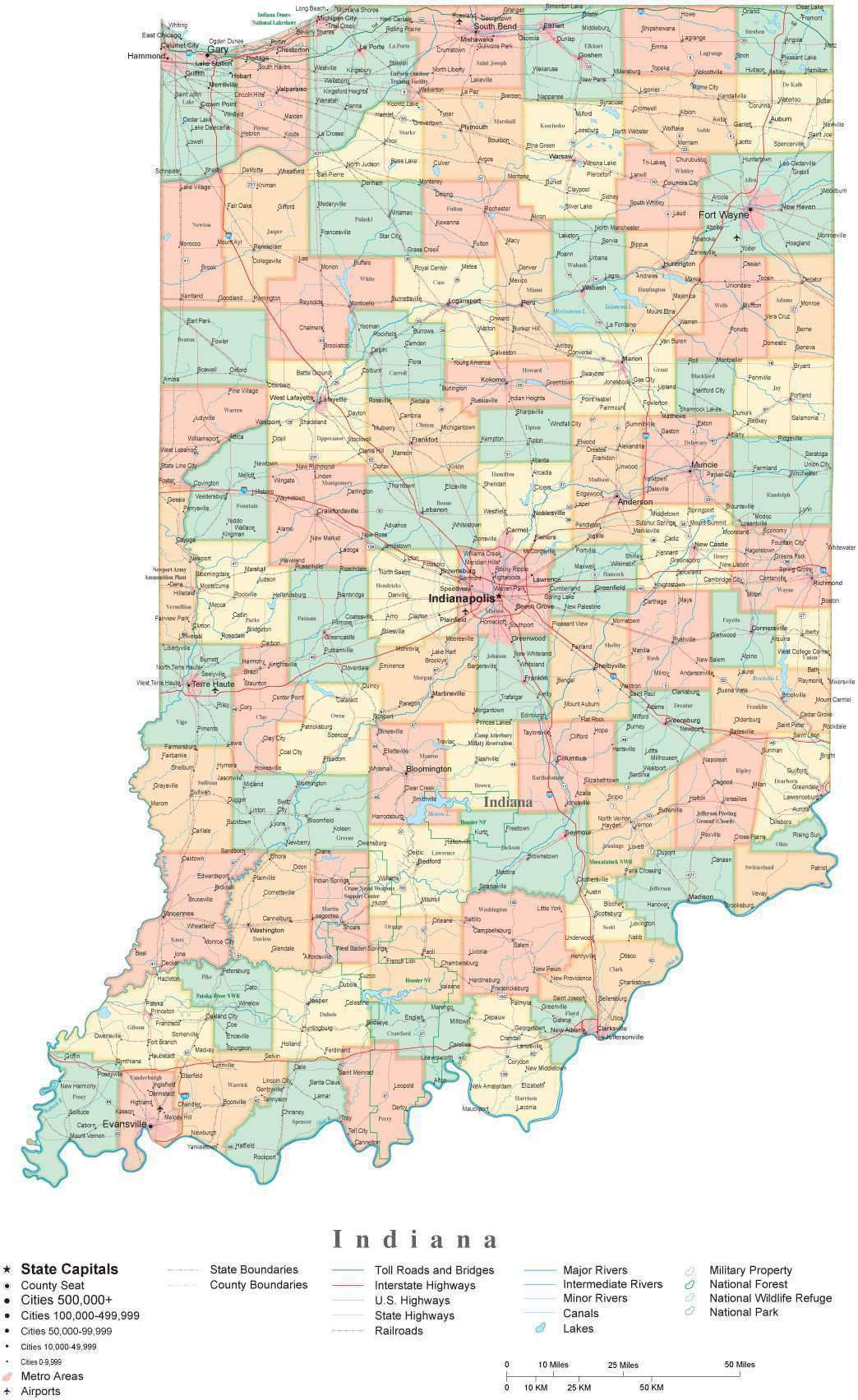
Navigating the Indiana time zone map requires understanding a century-long bureaucratic tug-of-war that split the Hoosier State. Today, 80 of Indiana's 92 counties sit in the Eastern Time Zone, while 12 counties reside in the Central Time Zone. This split creates unique local commuting challenges, business coordination hurdles, and cross-county scheduling quirks that confuse visitors and residents alike.
The state is divided into two distinct regional clusters observing Central Time: six counties in the northwest corner near Chicago (Lake, Porter, LaPorte, Jasper, Newton, and Starke) and six counties in the southwest corner near Evansville (Posey, Vanderburgh, Warrick, Spencer, Gibson, and Perry). Knowing which side of a county line you're standing on prevents missed appointments and travel mix-ups.
Historical Roots of the Indiana Time Split
Federal time zones were first established by Congress through the Standard Time Act of 1918, which placed all of Indiana into the Central Time Zone. Commerce patterns, railroad schedules, and local industrial ties quickly fractured that uniform rule. Cities like Indianapolis and manufacturing hubs closer to Ohio preferred aligning with Eastern Standard Time to match eastern financial markets.
For decades, local municipalities shifted back and forth independently, ignoring federal boundaries. Some towns observed Daylight Saving Time while neighboring towns refused, creating a notorious patchwork quilt across the state.
When Congress passed the Uniform Time Act of 1966, authority over time zone boundaries shifted to the U.S. Department of Transportation (DOT). The DOT drew a formal line assigning most of Indiana to Eastern Time while carving out initial exceptions for the northwest and southwest corners. For a comprehensive look at federal oversight, visit the U.S. Department of Transportation.
The 2006 Shift to Statewide Daylight Saving Time
For many years, most of Indiana stayed on standard time year-round, meaning it matched Eastern Standard Time in winter and Central Daylight Time in summer. This inconsistency frustrated businesses, logistics firms, and residents communicating across state lines.
In 2005, the state successfully petitioned the federal government to mandate Daylight Saving Time statewide. As part of that transition, several counties requested switches between zones. On April 2, 2006, counties such as Starke, Pulaski, Daviess, Dubois, Knox, Martin, Perry, and Pike adjusted their clocks to better reflect their economic and commercial ties. Today, the entire state observes Daylight Saving Time in unison, aligning clocks with the National Institute of Standards and Technology.
Practical Impact on Daily Life and Commerce
Living near an internal time zone boundary changes daily routines. Residents in counties bordering Central Time frequently work, shop, or go to school in a different zone than the one they sleep in.
- Commuting Across Zones: A worker driving from an Eastern Time county like Dubois into a Central Time county gains an hour on the way there, but loses that hour on the return trip home.
- Media and Broadcasting: Television markets in the state span across borders, meaning evening news and sports broadcasts air at different local clock times depending on the transmitter location.
- Municipal Coordination: Local emergency services, school districts, and county governments must explicitly account for time zone boundaries when scheduling inter-agency responses or athletic events.
Common Mistakes to Avoid When Traveling
Travelers often assume state borders govern time uniformity, leading to frequent errors.
- Assuming Uniformity: Don't assume that because you are inside Indiana, you share a single time zone. Always check your GPS or map app when approaching the Chicago suburbs or the Evansville metro region.
- Ignoring Smartphone Auto-Update Glitches: Cell towers near the boundary line occasionally bounce signals between Eastern and Central towers, causing phones to rapidly jump back and forth. Manual checks are safer during cross-county road trips.
- Overlooking Business Hours: Local banks, post offices, and government offices in the 12 Central Time counties close an hour later relative to Eastern Indiana clock time. For official state guidance, check the State of Indiana Official Website.
Frequently Asked Questions
Why does Indiana have two time zones?
Indiana spans two time zones because of historical economic pulls from different commercial centers. Northwest Indiana aligns naturally with Chicago's economy, while the southwest leans toward regional hubs like Evansville, leaving the rest of the state tied to Eastern markets.
Do all Indiana counties observe Daylight Saving Time now?
Yes. Following the 2006 regulatory changes, every single county in Indiana springs forward in March and falls back in November alongside the rest of the country.
Which major cities are in the Central Time zone in Indiana?
Major population centers in Indiana's Central Time zone include Hammond, Gary, Merrillville, and Valparaiso in the northwest, along with Evansville in the southwest corner.
How many counties are on Central Time?
There are 12 counties out of Indiana's 92 total counties that observe Central Time. The remaining 80 counties operate on Eastern Time.



