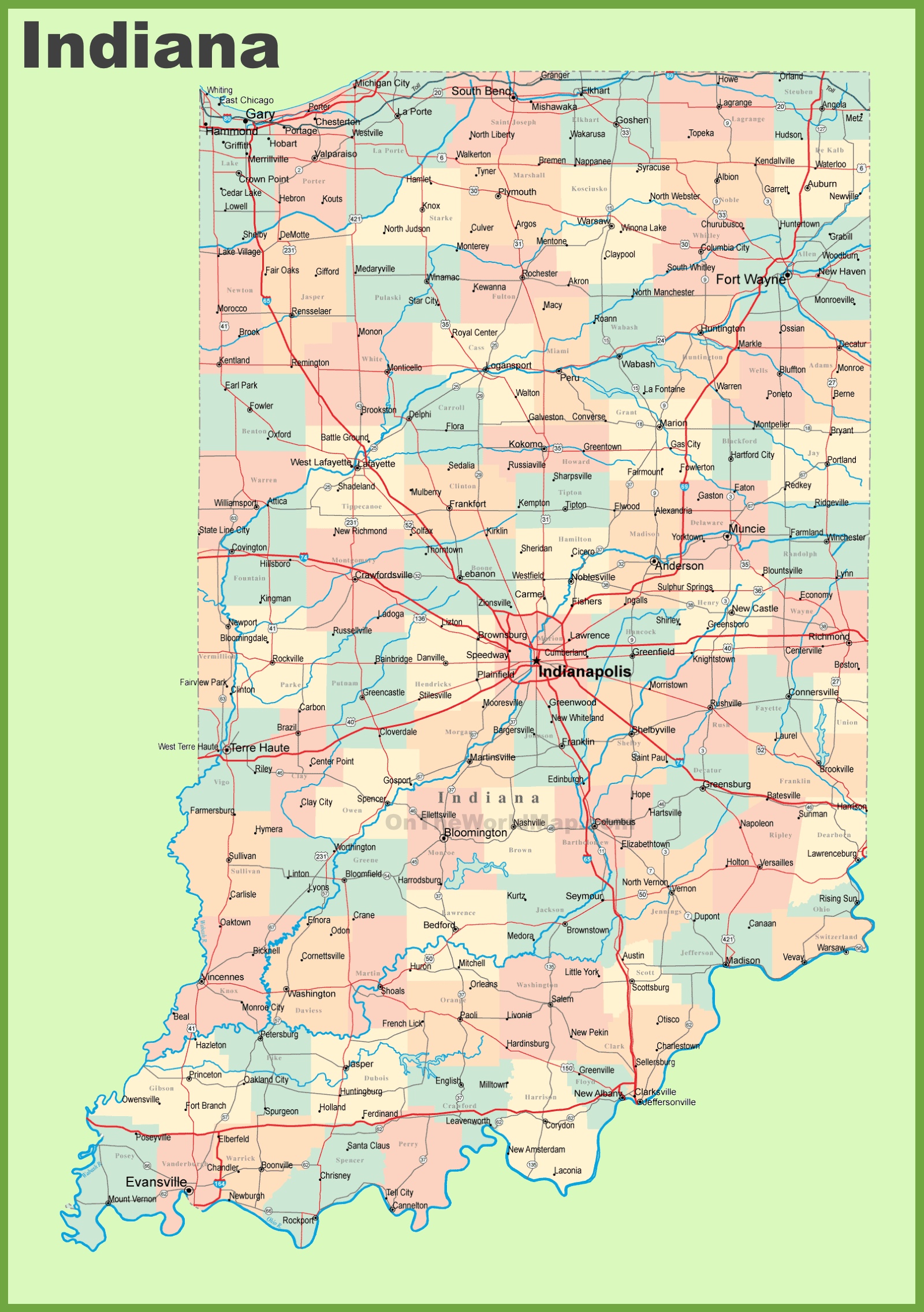
The Hoosier State spent nearly a century fighting over what time it was. While most states fell neatly into a single federal time zone, Indiana became a fractured patchwork where neighboring towns operated on completely different schedules. Local businesses aligned with Chicago or Cincinnati, farmers fought city dwellers, and politicians traded blows over whether to set clocks forward. This messy reality turned the Indiana time zone debate into a legendary administrative puzzle.
Understanding this tangle requires looking past simple geography into a century of economic tug-of-wars, legislative rebellions, and a statewide decision that finally brought uniformity in 2006.
How Indiana's Clock Logic Began
Congress passed the Standard Time Act of 1918, placing the entire state of Indiana into the Central Time Zone. At the time, railroad standardization dictated how the nation kept track of hours. However, local economies didn't care much for federal railway maps. Eastern Indiana had deep commercial ties to Ohio cities like Cincinnati, which ran on Eastern Time.
Communities near the Ohio border simply ignored federal regulations and set their clocks ahead. This created an informal split across the state. Towns ran on whatever clock suited their business partners best, setting the stage for decades of institutional friction between rural agricultural districts and growing industrial urban centers.
The Mid-Century Legislative Rebellions
As daylight saving time gained traction nationally, Indiana descended into legislative chaos. The state government tried to force absolute uniformity, but local defiance rendered those efforts powerless:
- The 1949 Ban: The Indiana General Assembly passed a law putting the entire state on Central Standard Time and outright banning daylight saving time. Because the law lacked enforcement mechanisms, eastern cities completely ignored it.
- The 1957 Compromise: Lawmakers designated Central Time as official but permitted summer daylight saving time. However, they made winter daylight saving time illegal. Governors threatened to pull state funding from defiant towns, but legal roadblocks forced them to back down.
- The 1961 Federal Split: The Interstate Commerce Commission formally intervened, drawing a line straight through the middle of the state. Indianapolis and the eastern half moved to Eastern Time, while the western half stayed on Central.
Even with federal lines drawn, compliance remained entirely optional in practice. Different towns within the same region often kept different hours, confusing travelers and corporate schedulers alike.
The Long Era Without Daylight Saving Time
When Congress passed the Uniform Time Act of 1966, the U.S. Department of Transportation placed most of Indiana on Eastern Time. However, the state successfully lobbied for an exemption from observing daylight saving time.
For the next four decades, 77 of Indiana's 92 counties stayed on Eastern Standard Time year-round. During the summer months, Indiana matched Eastern Daylight Time, meaning it shared a time with New York in the winter but shifted to match Chicago in the summer. Meanwhile, a small cluster of counties in the northwest and southwest corners observed Central Time and changed their clocks twice a year.
This split wreaked havoc on out-of-state businesses. Television broadcast schedules, airline connections, and financial markets constantly stumbled over Indiana's unique calendar choreography.
The 2006 Statewide Shift
The turning point arrived in 2005 when Governor Mitch Daniels and the Indiana General Assembly pushed through a razor-thin legislative vote. The state abandoned its anti-daylight-saving stance. Beginning in April 2006, the entire state of Indiana started observing Daylight Saving Time.
This massive policy shift reopened old geographical wounds. Several counties petitioned the federal government to switch zones entirely to ease local commerce. Eight counties shifted to Central Time, though some quickly changed their minds and moved back to Eastern by 2007.
Today, 80 of Indiana's 92 counties sit in the Eastern Time Zone, while 12 counties remain in the Central Time Zone split between the Chicago and Evansville metro regions. Every county in the state now springs forward and falls back in unison, finally bringing an end to decades of internal clock confusion.
Frequently Asked Questions
Why did Indiana avoid daylight saving time for so long?
Many Hoosiers historically believed that staying on standard time year-round protected agricultural productivity and kept summer evenings cooler for outdoor labor. Business leaders and politicians spent decades debating whether shifting clocks offered any real economic benefit, leading to prolonged legislative gridlock.
Which Indiana counties use Central Time?
Twelve counties currently observe Central Time. These are split into two regional clusters: six in the northwest corner near Chicago (Lake, Porter, LaPorte, Jasper, Newton, and Starke) and six in the southwest corner near Evansville (Posey, Vanderburgh, Warrick, Spencer, Gibson, and Pike).
Does any part of Indiana still ignore daylight saving time?
No. Every single county in Indiana has observed Daylight Saving Time since April 2006. However, specific religious communities within the state, such as certain Old Order Amish groups, choose not to adjust their personal clocks, maintaining solar time traditions independently.
Who has the final authority over time zone boundaries?
The U.S. Department of Transportation holds the ultimate regulatory power to change time zone boundaries under the Standard Time Act. Local governments must formally petition the federal agency and prove that a switch serves the convenience of commerce before any map lines can be redrawn.



