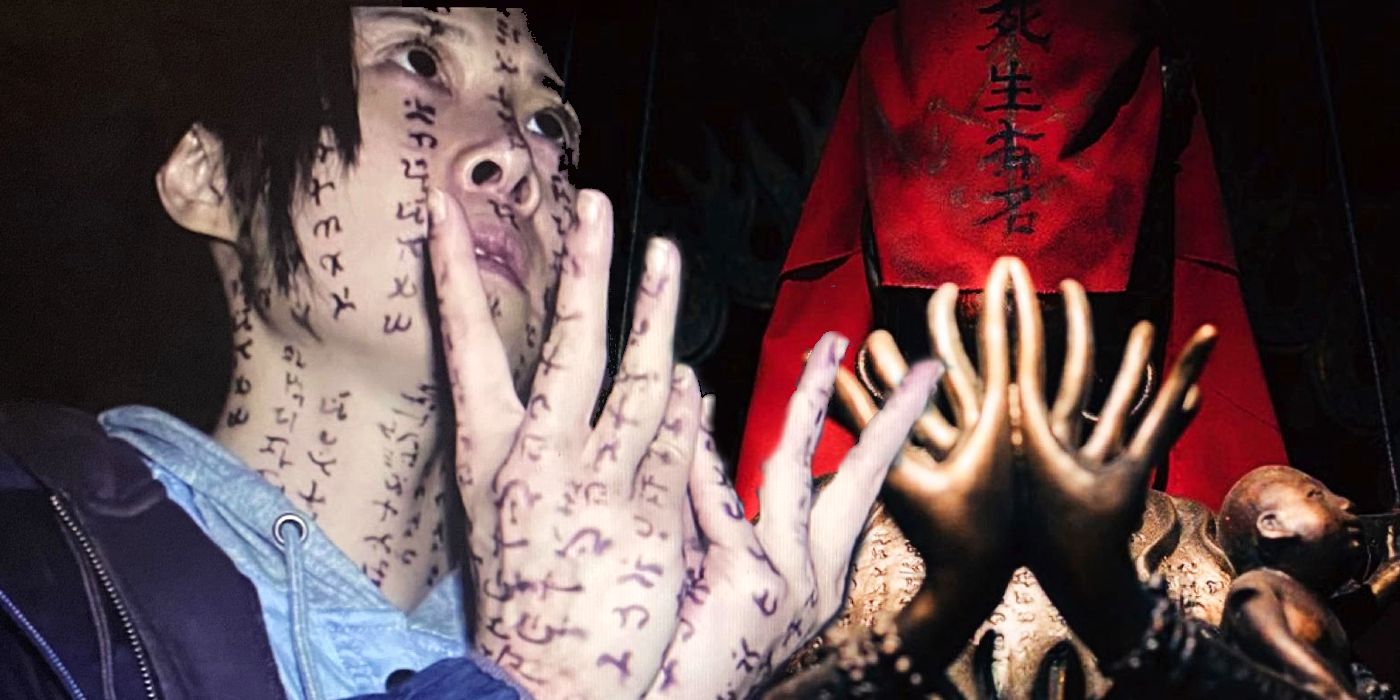
When Netflix released the Taiwanese found-footage horror film Incantation, audiences faced a unique kind of dread. Directed by Kevin Ko, the movie forces viewers into active participation, demanding that they chant a specific phrase and memorize a sacred symbol to protect a young girl named Dodo. Only later does the narrative reveal a grim twist: this active engagement is actually a ritual designed to distribute a malignant curse among the audience. While the Mother-Buddha deity and the supernatural mechanics are cinematic inventions, the psychological core of the film stems from a deeply disturbing, real-life mass hysteria case in Taiwan.
Understanding the roots of this movie requires looking past the screen jump scares and examining the true cultural anxieties about family devotion, religious psychosis, and isolation that inspired director Kevin Ko. This piece breaks down the actual events behind the film, how folkloric elements were adapted, and why the movie leaves such a lasting psychological footprint.
The 2005 Kaohsiung Family Possession Case
The primary real-life anchor for Incantation is a bizarre and tragic mass hysteria incident that occurred in Kaohsiung, Taiwan, in 2005. A six-member family became convinced that various Taoist deities—including traditional figures like Jade Emperor and Nezha—had possessed different members of the household.
What started as intense religious fervor quickly spiraled into psychological collapse. The family members began attacking one another under the belief that evil spirits were trying to infiltrate their bodies. They engaged in extreme self-harm and bizarre rituals, including consuming urine and feces, under the delusion that these repulsive acts possessed cleansing or exorcising properties.
Neighbours noticed the chaotic commotion and the deteriorating condition of the family, but fear of local spiritual taboos kept people from intervening. The situation culminated in the death of the eldest daughter. The family refused to seek medical help, believing that the physical suffering was merely the deity fighting off remaining evil entities or that the possession itself was burning out. When the eldest daughter ultimately died of organ failure caused by severe malnutrition and exhaustion, the rest of the family remained convinced she was only temporarily sleeping.
When authorities finally intervened and arrested the family members, psychological evaluations revealed they were suffering from shared psychosis, medically known as folie à plusieurs. They were eventually acquitted of severe criminal charges because the death was classified as self-inflicted through delusion rather than direct physical assault by others, but the case left a permanent scar on the public consciousness of Taiwan.
Translating Psychological Horror into Fictional Folklore
Director Kevin Ko took the underlying terror of the Kaohsiung incident—the idea that absolute faith and family protection can warp into horrific abuse—and built a fictional mythology around it.
In the film, the fictional deity Dàhēi Fúmǔ (Dahei Mother Buddha) and her associated scripture do not exist in actual Tantric Buddhism or traditional folklore. Ko and his production team synthesized elements from various esoteric traditions, including concepts of wrathful deities, ancient Brahmic scripts, and intense regional taboos.
The fictional religion in Incantation operates on a distinct karmic logic: blessing and curse are two sides of the same coin. A community pooling its collective belief can bear the weight of a malevolent entity, but when that energy is scattered onto individuals or unsuspecting strangers, it acts like a spiritual contagion. This core mechanic mirrors how shared psychosis functions in the real world—beliefs amplify and feed on each other until reality completely fractures.
How Found-Footage Amplifies Real-World Fear
Most horror films maintain a safe distance between the audience and the screen. Incantation shatters this barrier through deliberate meta-narrative framing.
- The movie uses a non-linear timeline to disorient the viewer, shifting between Ronan's frantic present-day attempts to save her daughter and the reckless digital-camera footage from six years prior.
- The interactive elements—asking the audience to say a mantra ("huahuo di mi si di") and trace a geometric symbol—weaponize psychological compliance.
- By structuring these requests under the guise of sending positive energy or love to a child, the film preys on basic human empathy.
This technique echoes real-world urban legends and chain-letter curses, where the act of passing along information makes the receiver complicit. The horror doesn't live in the monster design alone; it lives in the viewer's lingering thought: What if participating actually invited something in?
Common Misconceptions About the Movie's Origin
Because internet forums and viral TikTok summaries often blur the lines between marketing and reality, several myths surround the film's production.
- Myth: The movie is a direct, documentary-style retelling of the Kaohsiung family. Fact: The plot involving Ronan, her videographer friends, the tunnel in Yunnan, and the young child Dodo is entirely fictional. Only the thematic elements of shared delusion and extreme ritualistic behavior are drawn from real life.
- Myth: The Mother Buddha statue and chants are based on a real, forbidden sect. Fact: Anthropologists and religious scholars have confirmed that the specific iconography—such as covering the deity's face with a cloth and the specific hand mudras shown backward—were custom-designed by the film's art department to induce maximum unease, particularly targeting people with trypophobia.
- Myth: The cast experienced actual curses during filming. Fact: Lead actress Tsai Hsuan-yen and the production crew frequently spoke in interviews about the rigorous safety measures and psychological support systems in place during the shoot, emphasizing that the project was a controlled cinematic exercise in suspense.
Frequently Asked Questions
Is Incantation based on a true story?
No, the plot, characters, and specific religion in the film are fictional. However, it draws heavy thematic inspiration from a real 2005 mass psychosis case in Taiwan where a family believed they were possessed by deities, leading to tragic results.
What does the chant and symbol in the movie actually mean?
In the context of the movie, the phrase and hand sign function as a mechanism to share a burden, effectively tying the viewer to the curse. In reality, they are completely fabricated linguistic and visual constructs created by the filmmakers with no ties to authentic religious practices.
Why is the Mother Buddha's face covered?
Within the film's lore, the deity's true power and malevolence reside in her face. Looking directly at it breaks a fundamental taboo, inviting immediate psychological corruption and death. This narrative device plays on universal human fears regarding the unknown and forbidden sights.
Does Dodo survive the events of the film?
Yes, Dodo survives the ordeal, but the narrative concludes with Ronan making the ultimate self-sacrificial choice to take on the full weight of the curse herself to save her daughter.



