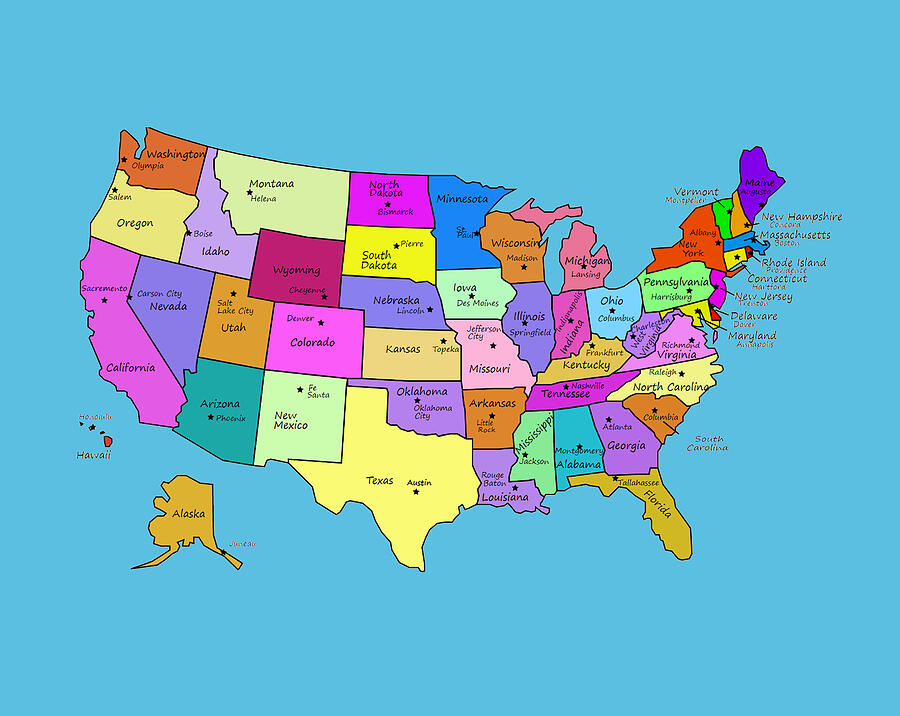
The two-letter code IN is the official postal and data abbreviation for the U.S. state of Indiana. Established nationally in 1963 alongside the five-digit ZIP Code system, this compact identifier replaced a patchwork of older abbreviations like "Ind." to streamline mail sorting and data processing. Today, IN serves as a vital anchor across shipping logistics, tax filing, government databases, and digital mapping infrastructure.
Understanding why Indiana uses IN rather than another combination requires looking back at the mid-20th-century modernization of American mail delivery. This article examines the historical origins of state postal codes, how IN became the standard, and its practical impact across modern technology, commerce, and administration.
The Origins of Postal Abbreviations
Before the United States Postal Service introduced standardized two-letter abbreviations, addressing mail relied heavily on spelling out state names or using traditional abbreviations such as Ind., Cal., or Penn.. As mail volume surged following World War II, manual sorting methods struggled to keep pace with the sheer volume of letters and parcels.
The bottleneck led the Post Office Department to explore mechanization and optical character recognition. Traditional state abbreviations varied in length, creating unpredictable spacing on envelopes and slowing down automated sorting equipment. A uniform system was needed to ensure every state identifier occupied a predictable number of character spaces. BBC has analyzed this fascinating issue in great detail.
In 1963, the USPS rolled out the ZIP Code system, pairing it with official two-letter state abbreviations. The goal was simple: create uniform, machine-readable codes that could fit easily onto punch cards, mechanical sorting machinery, and early mainframe computers.
Why Indiana Became IN
The assignment of two-letter codes followed strict logistical rules to prevent confusion, misrouting, and duplication. The primary criteria included:
- Uniqueness: No two states could share the same two-letter code.
- Clarity: The abbreviation needed an intuitive phonetic or visual connection to the state's full name.
- Length Constraint: Exactly two characters to fit rigid data entry fields and early computing hardware limits.
For Indiana, the choice of IN was straightforward. The first two letters of the state name were available and uncontested by any other U.S. state or territory. (By contrast, states like Iowa (IA) or Idaho (ID) required alternative configurations because their first two letters overlapped or conflicted with other naming priorities).
Once codified in official federal style manuals, IN quickly migrated beyond postal logistics. State agencies, financial institutions, and publishing houses adopted the standard, establishing it as the definitive shorthand for Indiana.
Standardization Across Technology and Industry
In contemporary software and data architecture, IN functions as a primary geographic key. Databases rely on this exact two-letter string to categorize records, validate user addresses, and prevent input errors during online checkouts.
- E-Commerce and Logistics: Shipping platforms use IN to calculate regional sales tax, estimate transit times, and assign carrier routes.
- Financial Services: Banks and credit bureaus require the standardized code for compliance reporting, loan underwriting, and fraud detection.
- Public Records: Federal bodies like the U.S. Census Bureau use IN as a standard GIS and statistical identifier to aggregate demographic and economic data.
Because modern application programming interfaces enforce strict schema validation, entering anything other than the uppercase IN into a designated state field will typically trigger a form error. This rigidity ensures that millions of automated transactions process daily without human intervention.
Legal, Tax, and Administrative Functions
Beyond logistics, state abbreviations carry legal weight. Government forms, corporate registrations, and court filings incorporate IN to establish clear jurisdictional boundaries.
When filing federal and state tax documents, residents and businesses include IN to designate state-specific tax obligations, unemployment insurance contributions, and regulatory compliance. Similarly, professional licensing boards and municipal offices rely on the code to verify that practitioners are authorized to operate within state lines.
Misidentifying a jurisdiction—such as confusing IN with another state code—can result in delayed filings, administrative penalties, or misallocated tax revenue. Consequently, software validation rules treat state codes as high-integrity data points.
Common Mistakes and Misconceptions
While using IN appears straightforward, several recurring errors surface in data entry and content publishing:
- Lower-case usage: Entering "in" instead of "IN" can break case-sensitive database queries or fail automated address verification checks.
- Confusing postal codes with international country codes: In global logistics, IN denotes India under ISO 3166-1 alpha-2 standards, occasionally causing routing confusion in international shipping manifests if domestic and global datasets overlap without proper context filters.
- Obsolete abbreviations: Relying on older three- or four-letter abbreviations like Ind. in modern database schemas where systems expect strictly two characters.
Frequently Asked Questions
Why does Indiana use IN instead of ID?
Idaho claimed ID when the two-letter postal code system was established in 1963, leaving Indiana to take IN, which consists of its first two letters.
Is IN used exclusively for the U.S. state of Indiana?
Domestically, yes. However, in international trade and ISO standards, IN is the country code for India, requiring careful context separation in global supply chain databases.
Who created the two-letter state abbreviations?
The United States Post Office Department introduced the two-letter state abbreviations in June 1963 as part of the nationwide rollout of the ZIP Code system.
Can lowercase letters be used for state abbreviations in official forms?
Most digital systems automatically convert state codes to uppercase, but data entry standards and postal guidelines specify uppercase IN for optical character recognition and database integrity.



