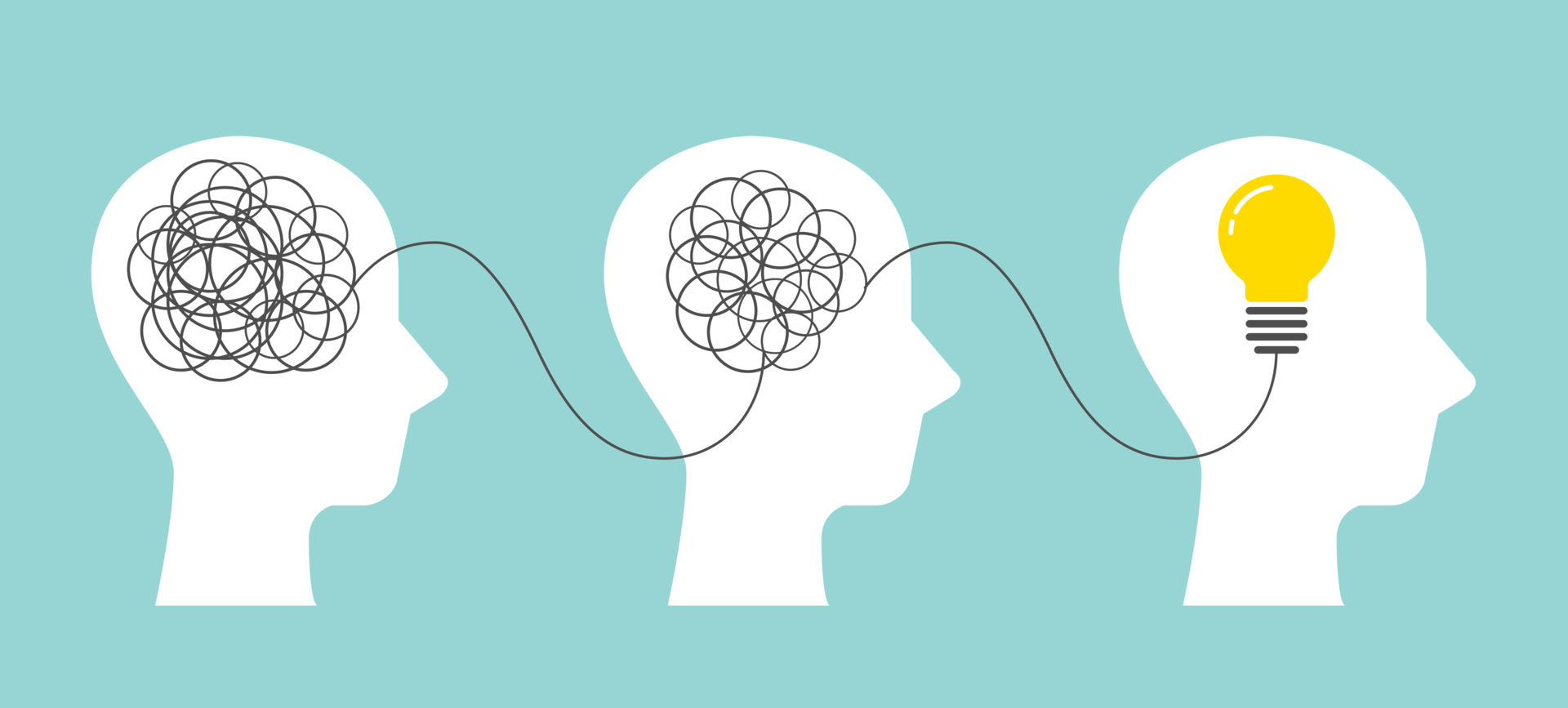
When you say something is in my mind, you're describing a deliberate mental act of holding, shaping, or examining a concept. When you say it's on my mind, you're signaling an intrusive, weighted burden that demands your attention whether you want it to or not. While casual speech treats these two phrases as interchangeable, cognitive psychology reveals a sharp divide between them. They map directly onto how the human brain processes voluntary focus versus automatic emotional intrusion.
Understanding this linguistic split changes how you diagnose mental static, manage daily anxiety, and track your own cognitive loops. Let's break down the exact mechanics behind both phrases, why your brain treats them differently, and how to shift your internal dialogue when a thought turns heavy.
The Cognitive Architecture of Volition: What "In My Mind" Means
When a concept lives in my mind, your prefrontal cortex is driving the vehicle. This is top-down cognitive processing. You aren't reacting to an external shock or an uninvited worry; you're actively constructing a mental model.
Think of your mind here as a workbench. If you're designing a schedule, visualizing a home renovation project, or recalling a specific memory for a story, that content stays neatly contained within your workspace. You decide when to pick up the tools and when to walk away from the table.
Key Characteristics of "In My Mind" Processing
- Agency: You choose when to engage with the thought and when to dismiss it.
- Containment: The thought has boundaries. It doesn't bleed into your physiological stress responses.
- Goal-Direction: It serves a specific utility, such as problem-solving, creative synthesis, or structured planning.
When people use this phrase in clinical settings, they're often talking about internal simulations. For instance, chess players run potential moves in their mind before touching a piece. The mental simulation is controlled, editable, and temporary.
The Mechanics of Intrusion: What "On My Mind" Means
The preposition changes everything. When something is on my mind, the dynamic flips from active construction to passive pressure. This activates bottom-up processing, where external stimuli or subconscious anxieties hijack your attentional resources.
If in my mind is a workbench you control, on my mind is a heavy boulder resting squarely on your chest. It creates background static. You might try to write a report or enjoy a meal, but the thought lingers at the edge of your awareness, demanding constant emotional regulation to keep at bay.
Why the Brain Treats "On My Mind" Differently
- The Zeigarnik Effect: Unfinished tasks and unresolved emotional conflicts stick around in working memory because the brain flags them as survival-critical anomalies.
- Default Mode Network (DMN) Hijacking: Instead of focusing on your current task, your brain loops through repetitive scenarios, triggering mild cortisol spikes.
- Loss of Voluntary Control: You can't simply flip a switch and turn off a worry that's on your mind, because the subconscious engine is driving the repetition.
For deeper context on how attention filters external and internal noise, explore the American Psychological Association overview on cognitive control.
Semantic and Psychological Comparison
| Feature | In My Mind | On My Mind |
|---|---|---|
| Cognitive Driver | Prefrontal cortex (Voluntary) | Limbic system / DMN (Automatic) |
| Emotional Weight | Low to moderate; constructive | High; often anxious or pressing |
| Duration | Temporary and task-dependent | Persistent, looping, intrusive |
| Control Level | High; easy to put down | Low; requires conscious grounding |
Common Mistakes in Everyday Language
Most people mix up these phrases because conversational English prioritizes flow over precision. However, this linguistic blurring causes subtle psychological misfires.
Mistake 1: Treating Rumination as Planning
People often say, "I have that mistake from yesterday on my mind," when they are actually cycling through self-blame. They mask rumination as productive problem-solving. True problem-solving brings the issue in your mind for structured repair. Rumination leaves the issue on your mind as an unmoving weight.
Mistake 2: Confusing Belief with Visualization
When someone says, "Well, that's just in my mind," they often mean it isn't real. Psychologically, everything starts as a construct in your mind before manifesting externally. Dismissing internal models as trivial ignores the reality that mental rehearsals physically alter neural pathways through neuroplasticity.
To read more about how neural architecture adapts to repetitive thought patterns, check out research resources at the National Institutes of Health.
How to Shift a Thought from "On" to "In"
If you find yourself paralyzed by something that's on your mind, the goal is to drag it down from the heavy surface and place it onto your active workbench. By changing the physical and mental container, you regain agency.
- Externalize the weight: Write the intrusive thought down on a physical sheet of paper. Moving a worry from internal working memory to external text tricks the brain into filing it as a managed object.
- Impose a time constraint: Schedule a specific ten-minute window later in the day to worry about it. If the thought pops up at noon, tell yourself, "We are saving that for the 5:00 PM workbench."
- Audit your language: Notice when you use passive phrasing ("It's just weighing on me"). Consciously reframe it into active inquiry ("What specific problem am I trying to solve here?").
Frequently Asked Questions
Can something start on my mind and move in my mind?
Yes. An unexpected crisis often lands on your mind as a sudden wave of panic. Once you sit down, list out action items, and create a timeline, you convert that chaotic panic into a structured problem you hold in your mind.
Why do romantic phrases use these two prepositions differently?
Saying "You're always on my mind" usually implies a lingering, perhaps obsessive attachment or longing. Saying "I keep our future in my mind" suggests a deliberate, goal-oriented vision you are actively building toward together.
Is one phrase inherently more negative than the other?
Generally, on my mind carries a heavier psychological burden because it implies preoccupation or worry. In my mind remains neutral, spanning anything from abstract daydreams to precise mathematical calculations.
How does cognitive behavioral therapy address this distinction?
CBT focuses heavily on catching automatic, intrusive thoughts (on my mind) and bringing them into conscious awareness (in my mind) so therapists and clients can test their validity and rewrite them.


