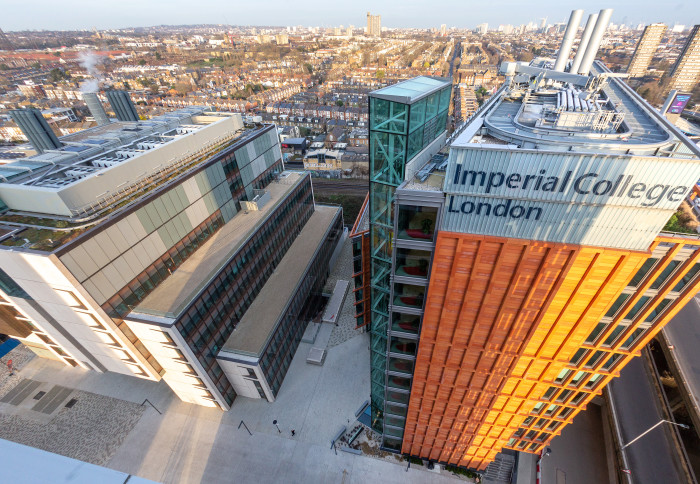
Imperial College London operates exclusively as a public research university in the United Kingdom, focusing entirely on science, engineering, medicine, and business. Founded in 1907 by Royal Charter, the institution grew from a vision to boost Britain's industrial competitiveness through specialized technical education. Today, it consistently ranks among the top universities globally, operating as a powerhouse for scientific discovery, medical breakthroughs, and technological advancement in the heart of South Kensington, London.
Understanding what makes this institution unique requires looking past generic marketing descriptions and examining its structural DNA. This overview details how the university evolved, how its academic faculties operate, and why its research footprint shapes modern industries.
Origins and Historical Evolution
The roots of Imperial trace back to Victorian-era scientific institutions established in the wake of the Great Exhibition of 1851. Prince Albert envisioned an educational district in South Kensington dedicated to applying science to industry.
- Royal College of Chemistry: Founded in 1845, later becoming part of the Royal College of Science.
- Royal School of Mines: Established in 1851 to serve the burgeoning mining and metallurgical industries.
- City and Guilds College: Opened in 1884 to provide technical training for intermediate-level engineers.
King Edward VII signed the Royal Charter in July 1907, merging these three bodies into the Imperial College of Science and Technology. For much of the twentieth century, Imperial functioned as a school of the federal University of London. That arrangement ended in July 2007 when Imperial officially became an independent university in its own right, celebrating its centenary with full degree-awarding autonomy. As reported in latest reports by Reuters, the implications are significant.
Academic Structure and Core Faculties
Unlike comprehensive universities that offer wide-ranging degrees in the humanities and arts, Imperial maintains a strict STEM and business focus across four main faculties.
Faculty of Engineering
Engineering forms the historical bedrock of the institution. Consistently ranked among the best engineering schools worldwide, it covers aeronautics, bioengineering, chemical engineering, civil and environmental engineering, computing, design engineering, electrical and electronic engineering, and mechanical engineering. Research here ranges from aerospace propulsion to advanced computing architecture.
Faculty of Natural Sciences
This division houses the traditional physical and life sciences. Departments include chemistry, mathematics, physics, and life sciences. Researchers in this faculty focus on fundamental questions ranging from quantum optics and particle physics to molecular biology and synthetic biology.
Faculty of Medicine
Formed through integrations with prominent London teaching hospitals—most notably St Mary’s Hospital Medical School—the medical faculty tackles clinical medicine, public health, and biomedical research. The integration of hospital clinical settings with laboratory science allows rapid translation of medical discoveries into patient care.
Imperial College Business School
Operating at the intersection of business and technology, the business school leverages the institution's deep scientific roots. Programs emphasize digital transformation, analytics, innovation management, and finance, training leaders who understand technical products and corporate strategy alike.
Research Culture and Global Impact
Imperial's research output directly influences daily life, global health policies, and industrial standards. The institutional ethos prioritizes translational research—moving ideas from laboratory benches to commercial markets or clinical trials.
Major milestones tied to the institution include the discovery of penicillin by Sir Alexander Fleming at St Mary’s Hospital in 1928, the development of holography by Dennis Gabor, and foundational contributions to the physics of black holes and quantum mechanics.
In recent years, the institution has driven global responses to public health crises, renewable energy transitions, and artificial intelligence safety frameworks. Interdisciplinary research hubs, such as the Grantham Institute for Climate Change and the Environment, bring scientists and economists together to model climate risks and formulate mitigation strategies.
Campus Life and Student Experience
Studying at Imperial means navigating a rigorous, fast-paced academic environment. The student body is intensely international, with over half of the student population coming from outside the UK, representing more than 140 countries.
- Location: Situated in South Kensington, students study adjacent to world-class cultural institutions like the Science Museum, the Natural History Museum, and the Victoria and Albert Museum.
- Innovation Ecosystem: The college encourages student entrepreneurship through incubators like the Enterprise Lab, which provides funding, mentorship, and workspace for student-led startups.
- Student Union: Imperial College Union operates over 300 clubs and societies, ranging from competitive sports teams to robotics clubs and cultural associations.
Frequently Asked Questions
What is the acceptance rate at Imperial College London?
Admissions selectivity varies significantly by department, but overall undergraduate acceptance rates typically hover between 10% and 15%. Highly competitive programs like computing and medicine often see acceptance rates drop below 10% due to high applicant volumes and stringent academic prerequisites.
Is Imperial College London still part of the University of London?
No. While it was a founding college of the University of London, Imperial left the federal university structure in 2007. It now awards its own degrees independently.
What are the entry grade requirements for undergraduate applicants?
Imperial expects top-tier academic performance. For A-levels, standard conditional offers generally range from AAA to AAA, heavily weighted toward mathematics and relevant science subjects. International Baccalaureate requirements typically range from 38 to 42 points overall, with specific high scores in higher-level subjects.
How does Imperial support student startups?
The institution runs specialized programs such as the Enterprise Lab and Undaunted, an incubator focused on climate tech startups. Students and alumni have access to seed funding, patent advice, and incubator space designed to commercialize university research.
Where can I find official statistics and employment data?
Detailed enrollment figures, graduate employment outcomes, and research metrics are published annually through the Imperial College London Strategic Planning Statistics portal.



