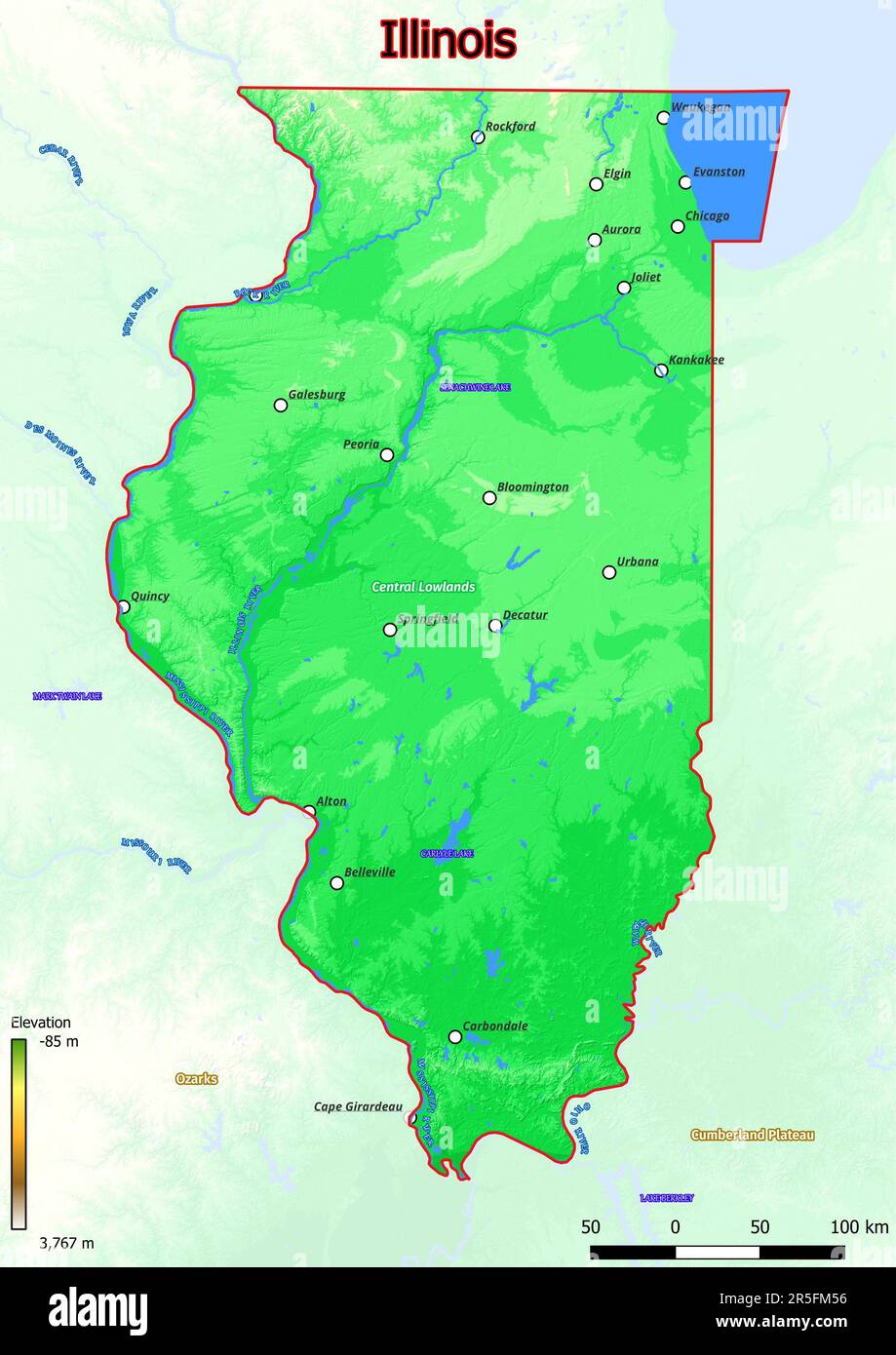
When people look at a map of Illinois, they usually expect a clock-based identity crisis similar to neighboring Indiana. After all, Chicago stretches out as a massive economic engine near the eastern border, sitting just a short drive from the Eastern Time Zone. Yet, unlike states split down the middle by federal decree, the entire state of Illinois operates squarely within the Central Time Zone. Every single county, from the northern border with Wisconsin down to Cairo at the confluence of the Ohio and Mississippi rivers, shares the exact same hour.
This uniformity surprises travelers who assume proximity to Indiana or Michigan forces a split schedule. While parts of the broader Midwest juggle multiple offsets, Illinois maintains a single geographic clock governed by the U.S. Department of Transportation. This article breaks down how Illinois maintains its unified time, why Chicago anchors the entire region's schedule, and what happens when local commerce bumps up against neighboring Eastern jurisdictions.
The Geographic Reality of Illinois Time
Every inch of Illinois falls under the Central Time Zone, keeping UTC-6 during standard time and UTC-5 during daylight saving time. Federal time zone boundaries are determined based on the convenience of commerce, transportation flows, and communication networks. Because the state's economic gravity tilts heavily toward Chicago, and because Chicago has historically anchored Central Standard Time for the region, lawmakers and federal regulators have never carved out an eastern slice for counties bordering Indiana.
Even communities sitting directly on the Indiana state line—such as Danville or Calumet City—stay on Central Time. This creates a unique daily rhythm for border-town residents who can cross a street and instantly jump one hour ahead. Further journalism by Bloomberg explores similar perspectives on this issue.
Why Chicago Anchors the Central Clock
Chicago's immense economic footprint dictates the time zone stability for the rest of Illinois. As the third-largest city in the United States, its financial markets, transportation hubs, and media networks require a unified regional standard.
- Transportation Hubs: O'Hare International Airport and major freight rail lines coordinate thousands of daily movements that rely on a predictable Central Time framework.
- Media Markets: Broadcast signals and television networks span the state, tying central and southern Illinois directly to Chicago's programming schedules.
- Corporate Alignment: Statewide businesses operate without internal friction, avoiding the scheduling cross-talk that plagues split states like Indiana or Kentucky.
Comparing Illinois and Indiana Time Zones
To understand why Illinois feels unique, look immediately east. Indiana spent decades famously divided, with certain counties observing Central Time while the majority stayed on Eastern Time. That split caused widespread confusion for commuters, television viewers, and logistics companies.
Illinois avoided this fate because its population centers and trade routes never pushed federal regulators to redraw the boundary line westward. While Northwest Indiana counties like Lake and Porter align with Chicago's Central Time due to commuter integration, the inverse did not happen on the Illinois side. Eastern Indiana counties remained tied to the eastern seaboard's business day, leaving Illinois completely untouched by the division.
Practical Challenges of Living Near the Border
While Illinois itself is unified, its eastern border creates plenty of friction for residents who work, shop, or travel across state lines into Indiana.
- The Commuter Time Jump: Residents driving from Illinois into eastern Indiana for work must remember that their clocks jump forward one hour upon crossing the state line.
- Smartphone Confusion: Cell towers near the border frequently bounce signals across state lines, causing mobile devices to switch time zones mid-conversation or alter morning alarms unpredictably.
- Event Scheduling: High school athletic conferences and local businesses near the border must explicitly state whether event times are listed in Central or Eastern time to prevent fans from arriving an hour late or early.
Frequently Asked Questions
Does any part of Illinois observe Eastern Time?
No. Every county in Illinois operates on the Central Time Zone.
Does Illinois observe Daylight Saving Time?
Yes. Like most of the United States, Illinois springs forward by one hour on the second Sunday in March and falls back on the first Sunday in November, shifting between Central Standard Time and Central Daylight Time.
Why don't border towns in Illinois switch to Eastern Time?
Federal time zone changes require formal petitions to the Department of Transportation proving that commerce and community patterns heavily favor the alternate zone. Illinois border communities have historically maintained strong economic ties to Chicago and statewide administrative systems, making a switch unnecessary.
How does the time change affect Amtrak travel out of Chicago?
Amtrak trains running east out of Chicago into Indiana or Michigan cross the time zone boundary quickly, meaning schedules listed on tickets reflect local station times. Passengers must pay close attention to whether departure and arrival times are noted in Central or Eastern time.



