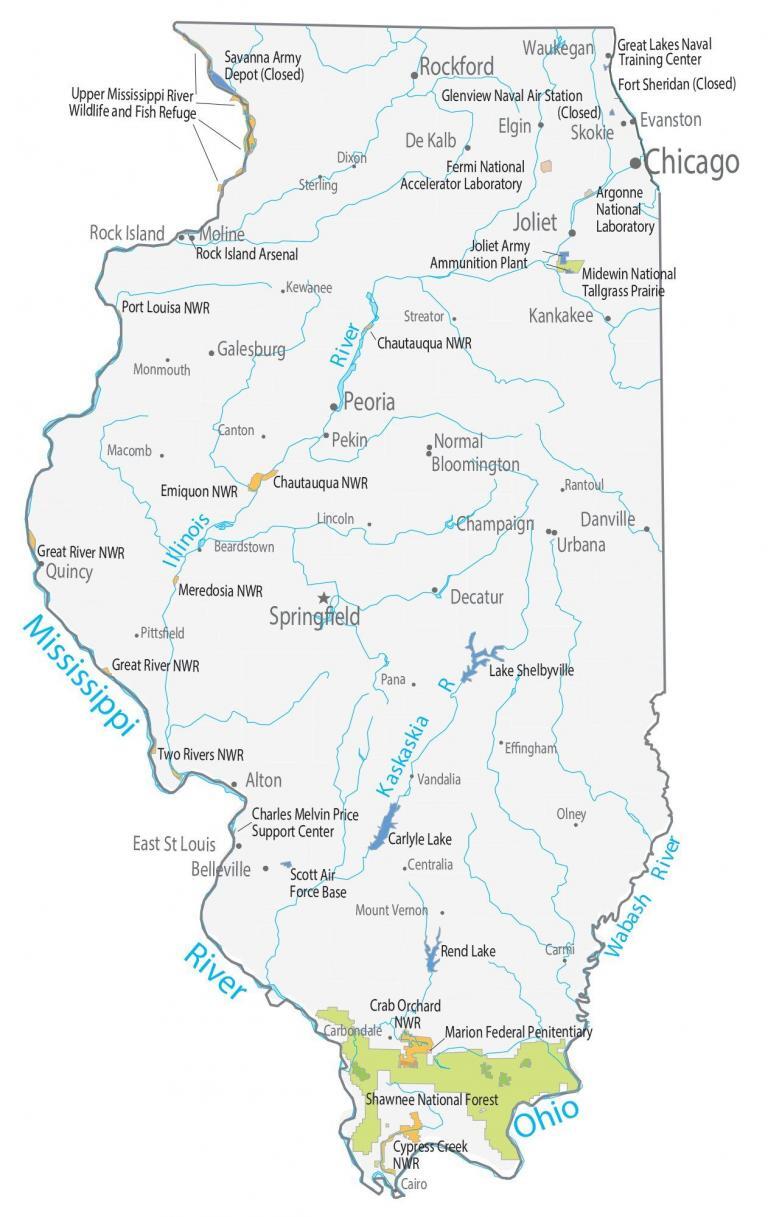
When you plan a trip, schedule a business call, or tune into a live broadcast involving the Land of Lincoln, understanding the local clock matters. Illinois is in the Central Time Zone, placing it right in the heart of America's geographic and economic pulse.
Unlike many neighboring states that split their clocks between two different zones, the entire state of Illinois shares a single time standard. From the bustling streets of downtown Chicago down to the southern tip in Cairo, residents and visitors operate on the exact same schedule all year round.
Understanding Illinois Central Time
The state observes Central Standard Time (CST) during the winter months, which puts local clocks at UTC-6. When spring arrives, the state transitions alongside most of the country to Central Daylight Time (CDT), shifting clocks forward to UTC-5.
This uniform state-wide setup prevents confusion for commuters traveling between major hubs like Rockford, Peoria, Springfield, and Chicago. You won't have to worry about crossing an internal time boundary while driving across state borders from Indiana or Iowa.
- Standard Time Offset: UTC-6 (November to March)
- Daylight Saving Time Offset: UTC-5 (March to November)
- Relation to East Coast: Exactly one hour behind New York and Washington, D.C.
- Relation to West Coast: Two hours ahead of Los Angeles and Seattle
How Daylight Saving Time Works in Illinois
Like roughly 48 other states, Illinois follows the federal mandates for Daylight Saving Time (DST) set by the U.S. Department of Transportation. Clocks spring forward by one hour on the second Sunday in March and fall back by one hour on the first Sunday in November.
This shift alters daily routines twice a year. During mid-summer, sunsets in Chicago stretch past 8:30 PM, giving residents long evening hours by Lake Michigan. Conversely, winter brings early darkness, with sunset occurring around 4:30 PM in late December.
Lawmakers in the state legislature have occasionally debated proposals to stay on daylight saving time permanently, mirroring broader national conversations tracked by organizations like the National Conference of State Legislatures. However, federal law currently requires congressional approval for any state to make year-round daylight saving time permanent, so the seasonal clock changes remain in effect.
Comparison With Neighboring States
While Illinois maintains a single time zone, several of its neighbors deal with split schedules. Navigating regional travel requires keeping an eye on how state lines intersect with time boundaries:
- Indiana: Mostly sits in the Eastern Time Zone, though several counties in the northwest and southwest corners use Central Time.
- Kentucky: Split down the middle, with the western half observing Central Time and the eastern half (including Louisville and Lexington) on Eastern Time.
- Iowa: Fully observes Central Time, matching Illinois entirely.
- Wisconsin: Entirely within the Central Time Zone.
- Missouri: Completely shares the Central Time Zone across St. Louis and Kansas City.
Frequently Asked Questions
Does any part of Illinois observe Eastern Time?
No. Every single county in Illinois falls strictly within the Central Time Zone. Even towns located on the eastern border directly adjacent to Indiana operate on Central Time.
When do clocks change in Illinois?
Clocks move forward one hour on the second Sunday in March at 2:00 AM, and they move back one hour on the first Sunday in November at 2:00 AM.
Is Chicago in the same time zone as Springfield?
Yes. Despite sitting roughly 200 miles apart, both Chicago and Springfield are in the Central Time Zone and share the exact same time year-round.
How does Illinois time compare to London?
During standard time in the winter, Illinois is six hours behind Coordinated Universal Time (UTC), making it six hours behind London. In the summer, due to daylight saving shifts, the gap narrows to five hours.



