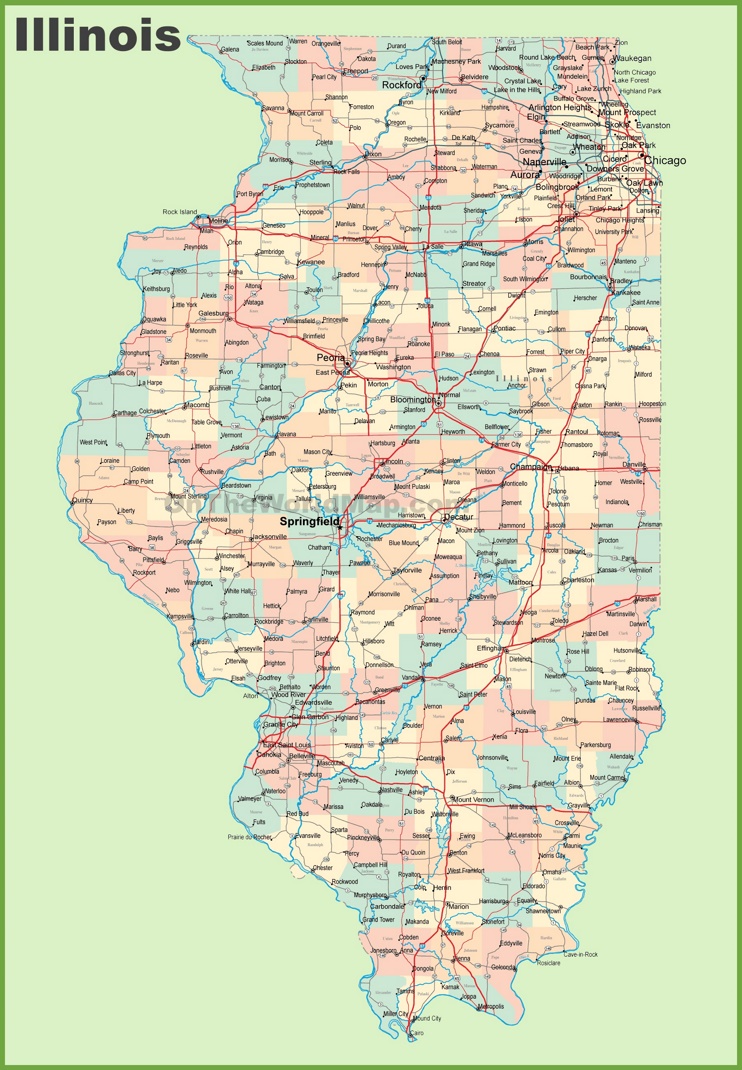
The state of Illinois operates entirely within the Central Time Zone, observing Central Standard Time (CST) during the winter months and Central Daylight Time (CDT) during the summer. This uniform schedule covers the entire state, spanning from the dense urban center of Chicago down to the rural farming communities of the southern tip, eliminating the internal time zone shifts that complicate logistics in neighboring states like Indiana or Kentucky.
Understanding how this schedule functions requires looking at both federal time zone boundaries and practical scheduling. The state sits at UTC-6 during standard time and shifts to UTC-5 when daylight saving time begins. For businesses, transit networks, and daily routines, this single-zone consistency streamlines coordination across municipal lines, though proximity to the Eastern Time Zone just across the Indiana border still demands careful attention for cross-border commuters.
The Mechanics of Central Time in Illinois
Illinois has not always maintained its current uniform timekeeping. The Standard Time Act of 1918 originally established official time zones in the United States, placing railroads and interstate commerce under structured clocks. Over subsequent decades, various municipalities experimented with daylight saving time schedules independently until the Uniform Time Act of 1966 standardized the transition dates nationwide.
Today, the entire state transitions synchronously. On the second Sunday in March, clocks spring forward one hour at 2:00 AM local time, shifting from CST to CDT. On the first Sunday in November, clocks fall back one hour at 2:00 AM, returning the state to CST. Because every county from Cook County to Alexander County follows this identical rhythm, internal scheduling conflicts within state borders don't exist.
Economic and Logistical Impacts
Operating on a single time zone provides distinct advantages for commerce, transportation, and media distribution.
- Supply Chain Coordination: Distribution hubs in Joliet and logistics networks operating out of O'Hare International Airport coordinate freight schedules without needing to reconcile internal time gaps.
- Financial Markets: Opening one hour behind the New York Stock Exchange means financial institutions in Chicago align their trading desks with Eastern Time effortlessly, opening at 8:00 AM local time.
- Broadcasting: Television networks manage regional feeds efficiently, as prime-time programming airs simultaneously across all major media markets in the state, including Chicago, Peoria, and Rockford.
Managing Cross-Border Time Differences
While Illinois maintains internal consistency, its borders neighbor regions operating on different schedules. To the east, Indiana sits primarily in the Eastern Time Zone, though select northwestern and southwestern counties observe Central Time. To the west, Iowa and Missouri mirror Illinois on Central Time, but travelers heading further west into states like Kansas or South Dakota eventually cross into the Mountain Time Zone.
For commuters traveling between the Chicago metropolitan area and Northwest Indiana, keeping track of the one-hour difference is a daily necessity. A worker living in Dyer, Indiana, and commuting into downtown Chicago crosses an unofficial time boundary that shifts their clock back an hour upon arrival, then forward an hour on the evening trip home.
Practical Steps for Scheduling Across Time Zones
- Verify Meeting Locations: When scheduling remote or in-person meetings with entities in neighboring states, always confirm whether the venue operates on Central or Eastern time.
- Utilize UTC References: For software deployments, server logs, or international coordination, convert local timestamps to Coordinated Universal Time (UTC) to prevent scheduling errors during daylight saving transitions.
- Account for Seasonal Shifts: Remember that not all global regions observe daylight saving time on the same schedule, which temporarily alters the offset between Illinois and international partners during March and November.
Common Misconceptions About Illinois Time
A frequent point of confusion for visitors is the assumption that a state spanning nearly 400 miles north-to-south might be split across two zones, much like neighboring Michigan or Tennessee. Geographically, Illinois sits entirely within the natural longitudinal slice designated for Central Time.
Another common error involves daylight saving time compliance. Every municipality within the state observes the transition; unlike parts of Arizona or Indiana's historical exemptions, Illinois has no local opt-outs or permanent standard time exceptions. Clocks change uniformly statewide twice a year.
Frequently Asked Questions
Does any part of Illinois use Eastern Time?
No. Every county in Illinois officially observes the Central Time Zone year-round, adjusted seasonally for daylight saving time.
When do clocks change in Illinois?
Clocks move forward one hour on the second Sunday in March and move back one hour on the first Sunday in November, adhering to the federal U.S. Department of Transportation guidelines on time zones.
How does Illinois time compare to New York?
Illinois is consistently one hour behind New York. When it is 9:00 AM in Chicago, it is 10:00 AM in New York, regardless of whether standard or daylight saving time is active.
Why do some neighboring states have two time zones while Illinois has one?
Time zone boundaries are established based on a combination of longitudinal lines and petitions from state legislatures to the federal government based on commercial alignment. Illinois commerce historically tied closely to Chicago and regional rail hubs that unified under Central Time without requesting a split.



