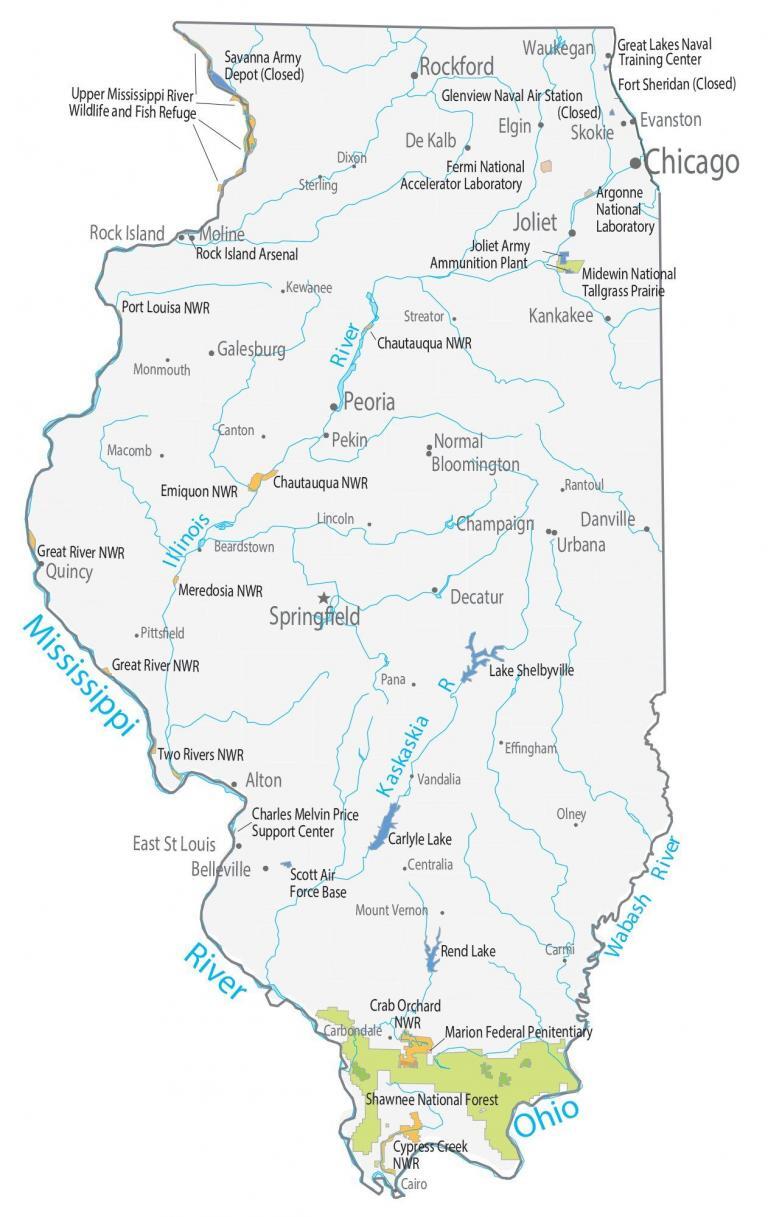
Accurate timekeeping anchors daily rhythms across the American Midwest, and Illinois sits squarely at the logistical and cultural center of this temporal grid. Operating primarily on Central Time, the state functions as a vital bridge connecting the financial markets of the East Coast with the tech and entertainment hubs of the West Coast. From the bustling trading floors of Chicago to the quiet agricultural fields downstate, local schedules, transportation networks, and daily routines align with a precise standard that keeps millions of people synchronized.
Understanding how time functions in Illinois requires looking past simple clock readings to examine the historical, economic, and practical realities of the Central Time Zone. Whether you're coordinating cross-country shipping logistics, scheduling virtual meetings, or planning a visit to the National Park Service sites across the region, knowing how the Midwest manages its hours matters.
The Mechanics of Central Time in Illinois
Nearly the entire state of Illinois observes Central Time, which is divided into two distinct seasonal shifts. During the standard winter months, Illinois operates on Central Standard Time (CST), sitting six hours behind Coordinated Universal Time (UTC-6). From the second Sunday in March until the first Sunday in November, the state shifts forward by one hour to Central Daylight Time (CDT), placing local clocks at UTC-5.
This seasonal adjustment changes the daily environment across the state. In mid-summer, residents enjoy daylight stretching past 8:30 PM in cities like Chicago and Peoria, providing extended windows for outdoor commerce and recreation. Conversely, winter sunsets arrive abruptly before 4:30 PM, forcing a distinct shift toward indoor routines, early evening commuter rushes, and altered commercial operating hours.
Historical Roots: Why Railroads Built the Time Zones
Modern timekeeping in Illinois isn't just an astronomical accident; it was forged by the expansion of the American railway network in the nineteenth century. Before standardized time zones, every town in Illinois set its own local solar time based on the overhead position of the sun. Noon in Chicago differed by several minutes from noon in Springfield or Cairo.
As steam locomotives began moving freight and passengers across state lines at unprecedented speeds, this patchwork of local times created dangerous scheduling conflicts and missed connections. Railway operators recognized that a unified system was essential for safety and efficiency. On November 18, 1883, American railroads officially adopted standardized hourly time zones.
Illinois fell naturally into the Central Time Zone, a designation that was later formalized by the federal government through the Standard Time Act of 1918. This federal standardization transformed how factories operated, how schools opened, and how workers caught their morning trains. For more details on federal time policies, you can review guidelines from the U.S. Department of Transportation.
Economic and Cultural Impact on Daily Life
Being positioned in the Central Time Zone grants Illinois businesses a unique operational advantage. A standard 9:00 AM workday in Chicago aligns conveniently with both coasts:
- Eastern Time Zone workers have already been at their desks for an hour, allowing early morning financial transactions and market openings to process smoothly.
- Mountain and Pacific Time Zone offices open just as Illinois workers reach mid-morning, creating a comfortable overlap for afternoon conference calls and coast-to-coast corporate management.
This geographic time advantage supports Chicago's status as a global financial and logistics powerhouse. Grain exchanges, futures markets, and freight rail terminals operate within a temporal sweet spot that minimizes communication delays.
Downstate life feels the influence of timekeeping through agriculture. During planting and harvest seasons, farm operators don't rely strictly on clock hours; they chase daylight. Central Time provides a reliable framework, but farmers routinely stretch their workdays from dawn until dusk, letting seasonal sunlight dictate productivity rather than office hours.
Common Misconceptions About Illinois Time
Out-of-state visitors and remote workers frequently trip up over a few persistent myths regarding timekeeping in Illinois:
- Assuming timezone splits within the state: Unlike neighboring states like Indiana or Kentucky, which are split across two different time zones, virtually all of Illinois observes Central Time. You won't need to adjust your watch when driving from Chicago down to St. Louis-adjacent Metro East.
- Forgetting the exact DST transition moments: Clocks change at 2:00 AM local time, not midnight. Missing this nuance routinely catches travelers off guard on Sunday mornings.
- Confusing UTC offsets: Remembering that Central Time is UTC-6 in the winter and UTC-5 in the summer prevents scheduling errors when booking international flights or digital server logs.
Frequently Asked Questions
Does all of Illinois stay on Central Time?
Yes. Unlike states with internal time zone borders, every county and municipality in Illinois observes Central Standard Time and Central Daylight Time.
When do clocks change in Illinois?
Clocks spring forward one hour on the second Sunday in March at 2:00 AM and fall back one hour on the first Sunday in November at 2:00 AM.
What is the time difference between Illinois and New York?
Illinois is consistently one hour behind New York. When it is 3:00 PM in Chicago, it is 4:00 PM in New York, regardless of the season.
Why did time zones get standardized in the first place?
Railroad expansion in the late nineteenth century made local solar times impossible to manage safely, prompting railway companies to establish uniform hourly zones that federal laws later adopted.



