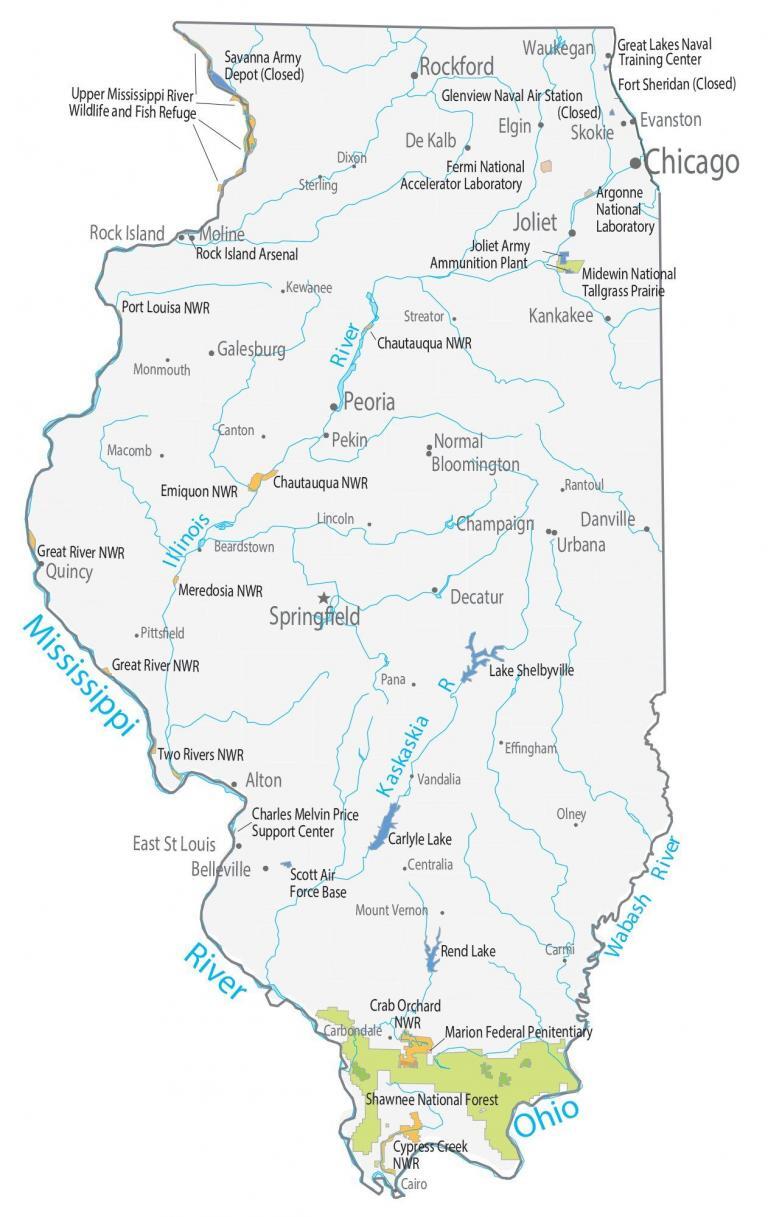
Springfield operates as the political heartbeat of Illinois, steering policy decisions that impact millions far beyond its municipal borders. While Chicago commands economic and cultural dominance, Springfield holds the keys to legislative power, anchoring the state's governance, judicial system, and administrative agencies. Understanding how this mid-sized Midwestern city punches above its weight class requires looking past the routine news cycles and examining the foundational structures that make state government tick.
At the core of Springfield's political engine sits the Illinois State Capitol, where lawmakers draft, debate, and pass laws that shape everything from education funding to infrastructure spending. Every year, legislators, lobbyists, journalists, and activists converge on the downtown complex, turning a quiet community into a high-stakes arena of negotiation. This article breaks down how Springfield functions as a capital city, the mechanics of its political influence, and the unique dynamics defining Illinois governance today.
The Historical Roots of Springfield as Capital
Springfield wasn't always the center of state power. When Illinois entered the Union in 1818, Kaskaskia served as the first capital, followed shortly by Vandalia. Legislators sought a more central location to accommodate a growing population shifting northward. In 1837, driven heavily by a young lawyer and politician named Abraham Lincoln alongside fellow politicians known as the "Long Nine," the General Assembly voted to relocate the capital to Springfield.
This relocation fundamentally altered the city's trajectory. Springfield evolved from a frontier trading post into a structured bureaucratic hub. The move established a physical separation between the financial engine of Chicago and the political machinery of the state government. This geographic split created a unique dynamic where lawmakers balance upstate urban priorities against downstate rural interests.
The Machinery of State Government
The daily operation of state politics relies on a dense ecosystem of constitutional offices, legislative chambers, and administrative departments.
The General Assembly and Legislative Power
The Illinois General Assembly consists of the state Senate and the House of Representatives. Lawmakers spend months drafting bills, holding committee hearings, and negotiating compromises before votes reach the floor. Because the legislature operates with specific session deadlines—such as the chaotic final days of the spring session—Springfield turns into a pressure cooker of last-minute deals.
Lobbying groups and special interests maintain a permanent presence near the Capitol building. They monitor committee assignments, sponsor events, and provide research to lawmakers. This proximity gives organized interests direct access to policymakers, shaping the legislative agenda long before a bill gets a vote.
The Executive Branch and Agency Oversight
Beyond the legislature, Springfield houses the offices of the Governor, Lieutenant Governor, Attorney General, Secretary of State, Comptroller, and Treasurer. These constitutional officers manage sprawling state agencies that employ tens of thousands of workers across Illinois.
The state budget serves as the ultimate battleground for executive and legislative power. Crafting the annual budget requires months of public hearings and closed-door negotiations. Agencies must justify their spending while lawmakers fight to secure funding for local infrastructure projects and social programs in their districts.
The Upstate-Downstate Political Divide
You can't understand Springfield politics without addressing the tension between Chicago and the rest of the state. Chicago and its surrounding suburbs account for the vast majority of Illinois' population and economic output. Downstate communities, by contrast, often feel overlooked by policies tailored to urban centers.
This divide manifests in debates over taxation, transportation funding, and gun legislation. Lawmakers from rural districts frequently argue that Chicago-centric policies ignore the economic realities of farming communities and smaller towns. Conversely, urban legislators point out that downstate infrastructure often relies heavily on tax revenues generated in the Chicago metropolitan area. Springfield acts as the permanent stage where these competing regional philosophies collide and compromise.
Economic and Cultural Impacts on the City
Politics drives Springfield's local economy. State government employment, consulting firms, law offices, and hospitality businesses thrive because the capital is anchored in place. When the General Assembly is in session, hotels book up, restaurants fill with political insiders, and local businesses experience a steady stream of patrons.
Yet, this reliance on state government also creates vulnerability. Budget impasses, such as the historic multi-year budget standoff under former Governor Bruce Rauner, directly hurt Springfield's local economy and social service providers. When state operations slow down, the city feels the financial shockwaves immediately.
Common Misconceptions About Illinois Politics
Many observers misunderstand how power is distributed and exercised within the state capital.
- Myth: Chicago completely dictates every state law. While Chicago legislators hold significant numerical strength, downstate lawmakers often use procedural rules, floor debates, and strategic alliances to block or modify controversial bills.
- Myth: Springfield politics is purely local. Decisions made in the Capitol regularly set national precedents, particularly regarding labor rights, environmental regulations, and criminal justice reform.
- Myth: Lobbyists write all the legislation. While interest groups wield influence, legislative staff and independent policy analysts draft the bulk of statutory language, subject to intense scrutiny from multiple opposing factions.
For a deeper dive into official legislative schedules, bill tracking, and state resources, consult the Illinois General Assembly Official Website or review state records managed by the Illinois State Archives.
Frequently Asked Questions
Why was Springfield chosen as the capital of Illinois?
Lawmakers voted to move the capital to Springfield in 1837 because of its central geographic location within the state, replacing Vandalia. Abraham Lincoln and other influential Springfield politicians lobbied heavily for the relocation.
How does the legislative session work in Springfield?
The General Assembly holds regular sessions each year, typically starting in January. The spring session is the most active period, culminating in a strict adjournment deadline at the end of May, after which a three-fifths vote is required to pass laws with an immediate effective date.
What role do lobbyists play in the Illinois Capitol?
Lobbyists represent businesses, labor unions, advocacy groups, and local governments. They provide testimony during committee hearings, educate lawmakers on technical aspects of proposed bills, and advocate for specific policy outcomes.
How does the budget process impact Springfield's economy?
Because state government is Springfield's largest employer, the annual budget process directly affects local jobs, housing, and commerce. Timely budget agreements keep the local economy stable, while prolonged stalemates create financial uncertainty for local businesses and public workers.


