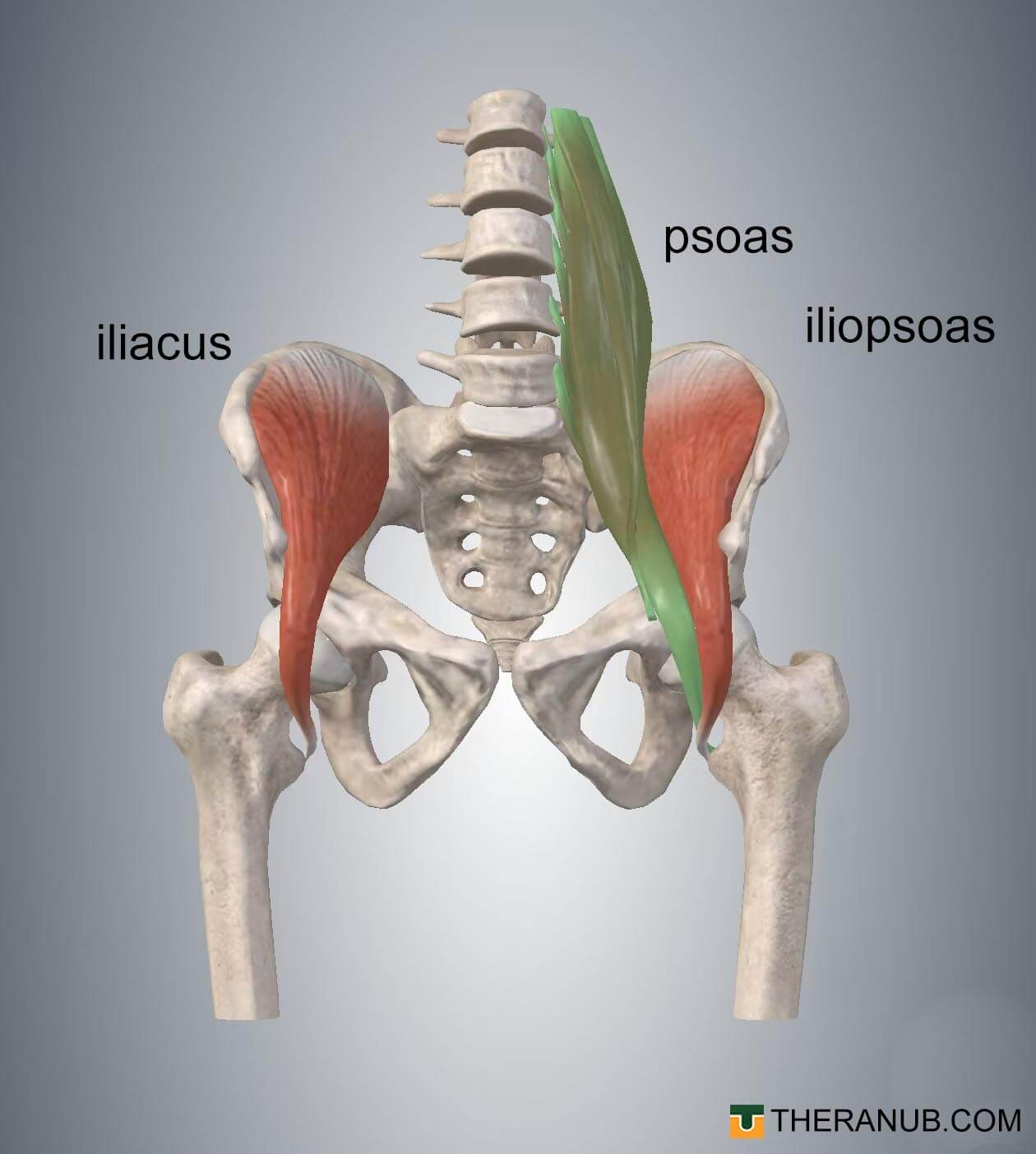
Tight hip flexors wreck posture, cause persistent lower back pain, and sabotage athletic performance. When you sit at a desk for hours every day, your iliopsoas muscle—the powerhouse connecting your spine and thigh bone—shortens and locks up. This adaptation pulls your pelvis forward, strains your lumbar spine, and shuts down your glutes.
Unlocking this area requires more than casual stretching. You need targeted mobility work, precise positioning, and consistent daily habits that address the entire hip complex.
Understanding the Iliopsoas Muscle Complex
The iliopsoas is actually a combination of two muscles: the iliacus and the psoas major. They originate in your lower back and pelvis, merging into a single tendon that attaches to the top of your femur.
This muscle group is your primary hip flexor. It lifts your knee toward your chest, stabilizes your core, and keeps you upright.
When you sit for prolonged periods, the psoas stays in a shortened position. Over time, the muscle tissue adapts to this shortened state, developing scar tissue and neuromuscular inhibition.
Standing up doesn't automatically lengthen it. Instead, a tight iliopsoas pulls on the lumbar vertebrae, creating an excessive arch in your lower back. This posture alters your gait, strains your hamstrings, and forces your lower back muscles to work overtime.
Identifying Signs of Tight Hip Flexors
You might not realize your iliopsoas is restricted until it causes pain elsewhere. Common indicators include:
- A dull, persistent ache in your lower back when standing or walking.
- Anterior pelvic tilt, where your stomach juts out and your butt sticks backward even when you stand straight.
- Stiffness in the front of your hips after getting up from a chair.
- Reduced explosive power or speed during running and jumping.
- Pinching sensations in the front of the hip joint during deep squats.
If you test your mobility with the Thomas Test—lying flat on a bench with one knee pulled to your chest while the other hangs off—and your hanging thigh floats upward instead of dropping parallel to the floor, your hip flexors are restricted.
The Foundation: Proper Iliopsoas Stretching
Traditional static stretching often fails because people stretch the wrong tissue or arch their lower back during the movement, neutralizing the stretch on the psoas.
To isolate the iliopsoas, you must posteriorly tilt your pelvis. This flattens your lower back and puts the psoas on stretch before you even move forward.
Here is a step-by-step guide to the half-kneeling hip flexor stretch, which is the gold standard for lengthening this area:
- Setup: Kneel on a soft mat with your right knee on the floor and your left foot flat on the ground in front of you, knee bent at a ninety-degree angle.
- Engage the Glutes: Squeeze the glute of your right (kneeling) leg. This action actively inhibits your hip flexors, allowing them to relax and lengthen further.
- Posterior Tilt: Tuck your tailbone under by tightening your abs. Imagine pulling your belt buckle up toward your belly button. You should feel a stretch in the front of your right hip immediately.
- Shift Forward: Keep your torso completely upright. Gently shift your weight forward about two inches. Do not arch your lower back or lean your chest forward.
- Hold and Breathe: Hold this position for forty-five to sixty seconds while taking slow, deep breaths into your diaphragm. Switch sides and repeat twice.
For more detailed anatomical insights on muscle recovery and movement mechanics, you can reference resources from the American Council on Exercise.
Dynamic Mobility Drills for Daily Relief
Stretching alone won't fix movement dysfunctions if your nervous system doesn't know how to control the newly opened range of motion. Integrate these dynamic drills into your routine several times a week.
The 90/90 Hip Switch
Sit on the floor with your right leg bent at ninety degrees in front of you (shin parallel to your chest) and your left leg bent at ninety degrees to your side (shin perpendicular to your torso).
Without using your hands if possible, rotate your knees upward and switch them to the opposite side so your left leg is now in front. Move smoothly between sides for ten to twelve repetitions. This drill opens internal and external rotation, which works in tandem with iliopsoas mobility.
Spiderman Stretch with Rotation
Start in a pushup position. Step your right foot forward and place it on the outside of your right hand, sinking your hips toward the floor.
Reach your right arm up toward the ceiling, twisting your upper body and following your hand with your eyes. Hold for three seconds, return your hand to the floor, and step back. Alternate sides for six reps per leg.
Common Mistakes That Sabotage Progress
Fixing hip tightness requires precision. Avoid these common errors:
- Arched Lower Back: If you let your lower back arch during a stretch, your spine takes the motion instead of your hip joint, rendering the stretch ineffective.
- Aggressive Bouncing: Ballistic bouncing triggers the stretch reflex, causing the muscle to contract tighter to protect itself. Stick to slow, controlled holds.
- Ignoring Glute Strength: Weak glutes force your hip flexors to work double-time to stabilize your pelvis. Combine your stretching routine with hip thrusts and bridges.
- Inconsistency: Doing one stretch session a week won't reverse years of daily sitting. Short, daily sessions yield faster results than one long weekly workout.
To track broader health benchmarks and fitness guidelines, consult the World Health Organization.
Frequently Asked Questions
How often should I stretch my iliopsoas?
Perform a dedicated hip flexor stretch routine daily, especially if you sit for more than six hours a day. Hold each stretch for forty-five to sixty seconds for two to three sets per side.
Can tight hip flexors cause knee pain?
Yes. When the hip flexors and surrounding stabilizers are tight, they alter your gait and force your knee to track incorrectly during walking, running, and squatting, leading to patellofemoral strain.
Why do my hips feel tight even after I stretch them?
Tightness is often a protective response by your nervous system to instability. If your core stabilizers and glutes are weak, your hip flexors tighten up to act as secondary stabilizers. Strengthening your core and glutes usually resolves this persistent tightness.
Is it safe to stretch tight hip flexors before a workout?
Static stretching immediately before explosive movements can temporarily decrease power output. Reserve static holds for post-workout cool-downs or dedicated mobility sessions, and use dynamic movements like leg swings before training.



