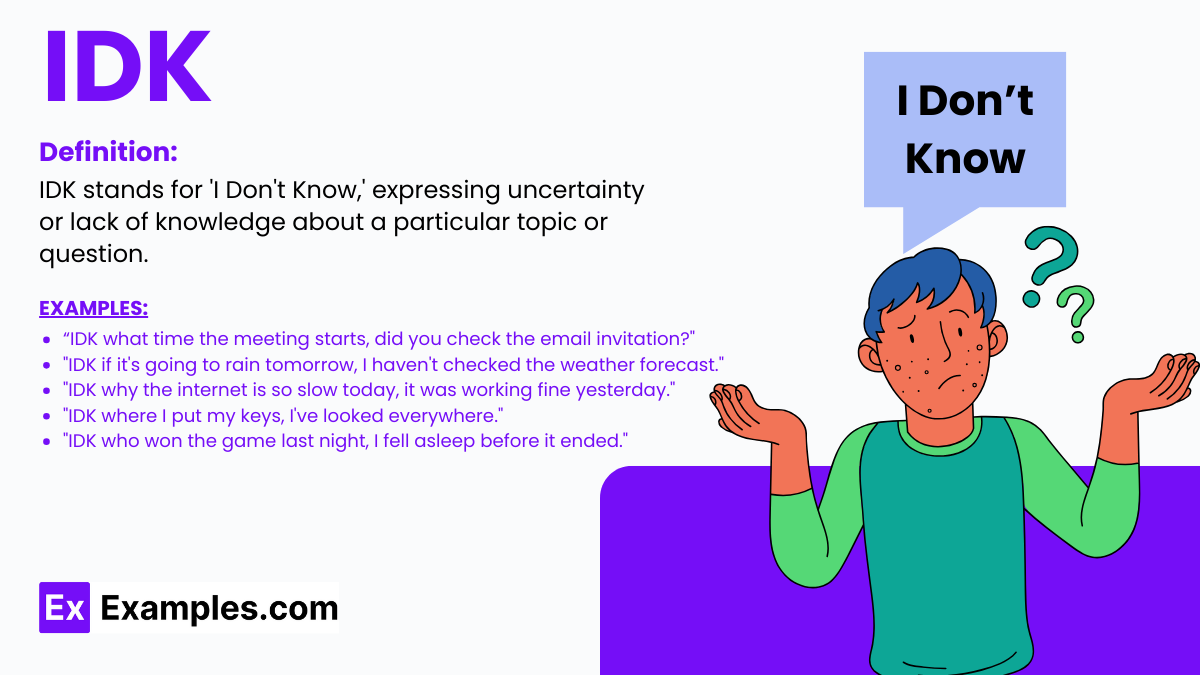
You won't find "IDK" listed in any textbook published by the CFA Institute, and it certainly doesn't stand for "Identified Knowledge" in standard banking. On trading desks, message boards, and financial forums, IDK is simply shorthand for "I don't know." When retail investors or professionals use it online, they're usually admitting uncertainty about a volatile stock, a complex market trend, or whether a company will beat its next earnings estimate.
The internet is packed with AI-generated articles claiming IDK is a secret financial term. It isn't. But real finance is full of genuinely confusing acronyms that trip up beginners every day. If you're trying to make sense of your bank statements, brokerage accounts, or economic news, you need to know the actual shorthand that matters. Let's break down the real financial terms, what they mean, and how to decode the jargon without getting lost.
Why Financial Jargon Exists
Financial terminology isn't designed to confuse you on purpose, even if it feels that way. Markets move in fractions of a second, and professionals need shorthand to communicate complex ideas quickly.
Saying "Compound Annual Growth Rate" takes too long when you're discussing portfolio performance; saying "CAGR" gets the point across instantly. Problems arise when these internal industry terms leak into consumer banking and investment apps without any plain-English translation. When you open a brokerage account and see terms like APY, SEC, NAV, and EPS thrown around without definitions, it's normal to feel like throwing your hands up and saying IDK.
Essential Banking and Account Acronyms
Your everyday financial life involves a handful of acronyms that directly affect your money. Knowing these helps you compare accounts and avoid hidden fees.
- APY (Annual Percentage Yield): This represents the real rate of return you earn on a savings account or certificate of deposit over a year, factoring in compound interest. Higher APY means your cash grows faster. For official guidance on how banks calculate these yields, check the Consumer Financial Protection Bureau.
- APR (Annual Percentage Rate): Unlike APY, APR is the yearly cost of borrowing money through a credit card, mortgage, or loan. It includes interest rates and standard fees, giving you a clearer picture of loan costs.
- FDIC (Federal Deposit Insurance Corporation): An independent federal agency insuring deposits in U.S. banks up to $250,000 per depositor, per ownership category. If an FDIC-insured bank fails, your money is protected. You can verify bank insurance status directly through the FDIC.
- ATM (Automated Teller Machine): The classic cash machine, though in modern finance, it also refers to electronic terminals where you check balances and deposit checks.
Investment and Market Acronyms
Once you start buying stocks, exchange-traded funds (ETFs), or mutual funds, a whole new layer of terminology appears. Here are the core terms you'll encounter on trading platforms.
- ETF (Exchange-Traded Fund): A basket of securities—like stocks or bonds—that trades on an exchange just like an individual stock. ETFs let you diversify your portfolio instantly instead of buying single company shares.
- EPS (Earnings Per Share): A company's net profit divided by its outstanding shares of common stock. It's a quick way to see how profitable a company is on a per-share basis.
- P/E Ratio (Price-to-Earnings Ratio): A valuation metric comparing a company's current share price to its per-share earnings. A high P/E can mean a stock is overvalued or that investors expect high growth.
- NAV (Net Asset Value): The per-share value of a mutual fund or ETF, calculated by taking the total value of the fund's assets minus its liabilities and dividing by the number of shares outstanding.
- SEC (Securities and Exchange Commission): The federal regulatory agency tasked with protecting investors, maintaining fair markets, and regulating public companies. You can look up corporate filings on the SEC EDGAR Database.
Common Mistakes When Dealing With Financial Terms
When people encounter unfamiliar financial acronyms, they often make costly errors out of confusion.
The biggest mistake is guessing what a term means instead of looking it up. For instance, confusing APY with APR can lead you to underestimate how much a loan will cost or overestimate what a savings account pays.
Another pitfall is trusting social media forums where users drop slang like IDK, FOMO, or YOLO to justify high-risk speculative trades. Real investing relies on clear definitions, careful research, and verified data—not internet acronyms. Always verify terms through official institutional sources before moving your money.
Frequently Asked Questions
Does IDK have any official meaning in banking?
No. In official banking, regulatory filings, and financial planning, IDK has no formal definition. If you see it online or in chat rooms, it means "I don't know."
How can I check if a financial term is legitimate?
Cross-reference unfamiliar terms using official regulatory sites like the SEC, FINRA, or the Consumer Financial Protection Bureau. Avoid relying on blogs that invent definitions for slang terms.
What is the difference between APY and APR?
APY measures how much interest you earn on savings over a year with compounding factored in. APR measures the true yearly cost of borrowing money on a loan or credit card.
Why do financial apps use so many acronyms?
Space constraints on mobile screens and the need for rapid communication among traders drive the heavy use of shorthand. However, consumer-facing apps should always provide clear definitions or tooltips for beginners.


