Navigating time zones in Idaho can catch travelers and remote workers off guard because the state is split cleanly across two different zones. While most people assume a state shares a single clock, Idaho's geography creates a unique scheduling boundary that splits the northern panhandle from the southern capital region. Understanding how these zones operate prevents missed flights, scheduling errors, and confusion during seasonal time changes.
Idaho is divided between the Pacific Time Zone and the Mountain Time Zone. The dividing line runs right through the middle of the state along the Salmon River, separating the northern counties from the rest of Idaho. If you're traveling across the state or coordinating calls between Boise and Coeur d'Alene, you need to know exactly where the boundary falls and how each region handles seasonal clock shifts.
Idaho's Dual Time Zone Split
The state of Idaho is one of a handful of American states split across multiple time zones. This division is managed by federal statute and regulated by the Department of Transportation, reflecting the historical economic and geographic ties of Idaho's distinct regions.
Northern Idaho and the Pacific Time Zone
The northern panhandle of Idaho operates on Pacific Standard Time (PST) and Pacific Daylight Time (PDT), matching the time zone used by Washington, Oregon, and California.
- Counties included: Boundary, Bonner, Kootenai, Benewah, Shoshone, and the northern portion of Idaho County down to the Salmon River.
- Major hubs: Coeur d'Alene, Post Falls, Sandpoint, and Lewiston.
- Economic alignment: Northern Idaho relies heavily on trade, transportation, and commuting links with Spokane, Washington, making Pacific Time essential for daily business coordination.
Southern and Central Idaho on Mountain Time
The vast majority of Idaho's land area and population operate on Mountain Standard Time (MST) and Mountain Daylight Time (MDT). This zone covers everything south of the Salmon River down to the Nevada and Utah borders.
- Counties included: Canyon, Ada, Twin Falls, Bannock, Bonneville, and 34 other southern and central counties.
- Major hubs: Boise, Meridian, Idaho Falls, Pocatello, and Twin Falls.
- Economic alignment: Southern Idaho connects closely with Salt Lake City and the Intermountain West, anchoring its financial, agricultural, and tech sectors to Mountain Time.
The Salmon River Time Zone Boundary
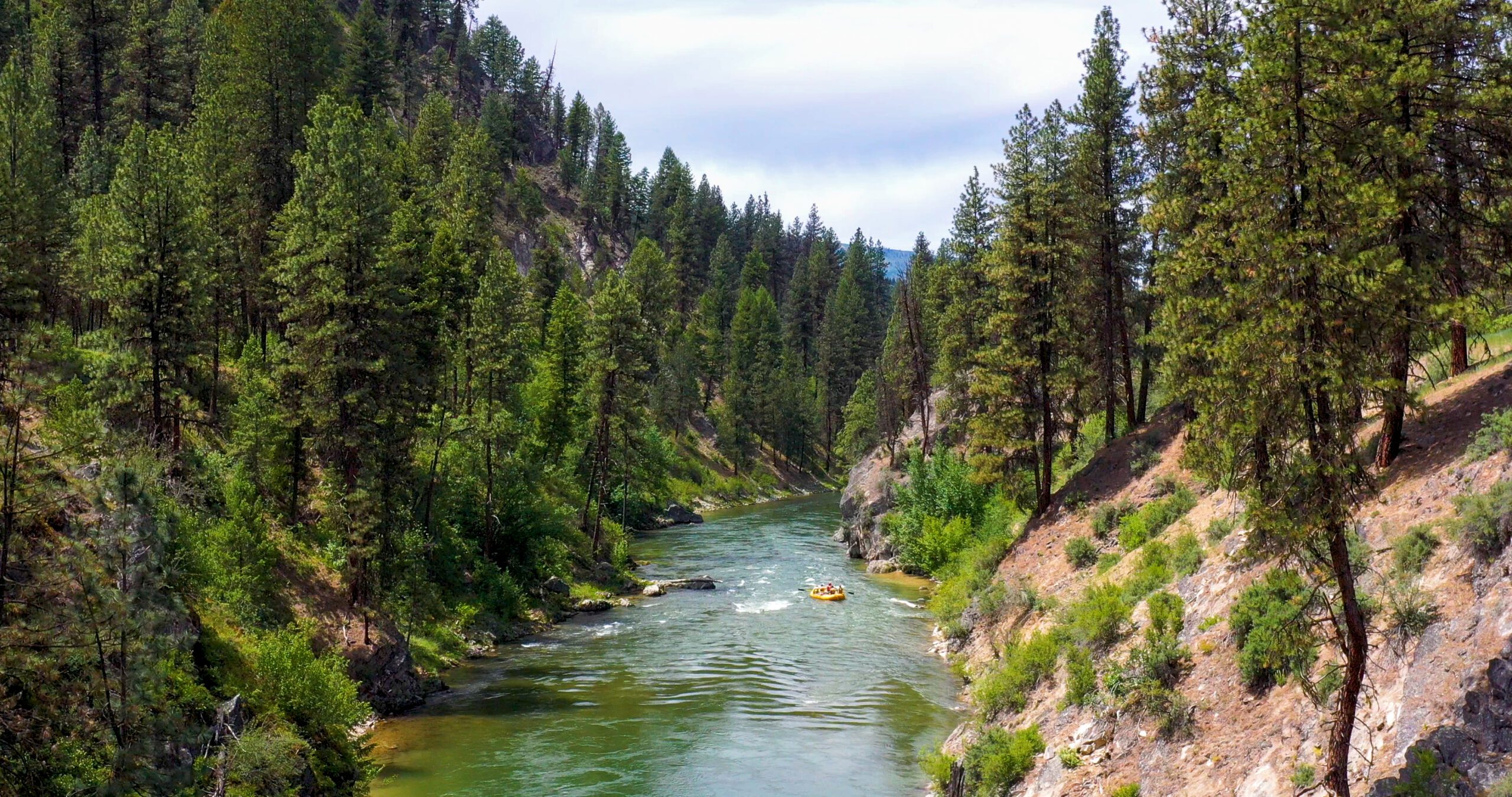
The precise border separating Idaho's two time zones is defined by the Salmon River from the Oregon border eastward to the Idaho-Montana border. This geographic barrier historically divided isolated mining and logging communities, creating natural administrative separation.
For motorists driving north on U.S. Route 95, crossing the Salmon River means springing forward or falling back by an hour depending on the direction of travel. Signage along major highways marks the transition point, but secondary roads and rural routes often lack prominent warnings. Remote workers living near Riggins or Grangeville frequently manage digital calendars that span both zones, requiring careful attention to meeting times when coordinating with clients across the state.
Daylight Saving Time Rules in Idaho
Unlike Arizona and Hawaii, which reject seasonal shifts entirely, Idaho observes Daylight Saving Time across its entire territory. Both the Pacific and Mountain portions of the state advance their clocks forward by one hour on the second Sunday in March and return to standard time on the first Sunday in November.
However, the state legislature has debated multiple bills in recent years to exempt Idaho from seasonal changes or move the entire state permanently to Daylight Saving Time. Because federal law requires congressional approval before a state can adopt year-round daylight saving time, Idaho's clocks remain tied to the federal biannual schedule. Businesses and agricultural producers must still account for the spring and autumn transitions, which impact livestock feeding schedules, irrigation timers, and freight logistics.
Practical Impacts for Travel and Remote Work
Managing schedules across Idaho's internal time boundary requires proactive habits, especially for logistics operators and digital teams.
- Intrastate transit: Commercial flights and long-distance bus routes originating in Boise and heading to Lewiston cross the time zone boundary. Travelers landing in the north must reset their watches immediately.
- Remote meetings: Internal company calls between Boise and Coeur d'Alene have a one-hour time difference, despite both cities lying within the same state boundaries.
- Broadcasting and media: Local television and radio stations broadcast from regional hubs, meaning northern Idaho viewers receive programming aligned with Pacific Time feeds, while southern viewers receive Mountain Time broadcasts.
Double-check calendar invitations when booking appointments that involve cross-border travel within Idaho. Setting explicit time zone locators in scheduling tools prevents missed commitments.
Frequently Asked Questions
Why does Idaho have two time zones?
Idaho was split in the early 20th century due to its rugged terrain and geographic isolation. Northern Idaho's economic ties ran west toward Washington and Oregon, while southern Idaho looked south and east toward Utah. Congress officially placed the northern panhandle in the Pacific Time Zone in 1912 to reflect these natural trade corridors.
Does any part of Idaho stay on standard time year-round?
No. Every county in Idaho observes Daylight Saving Time, moving clocks forward in March and back in November. Proposals to stay on daylight saving time year-round have been introduced in the state legislature, but federal law currently prevents implementation.
Which major cities in Idaho are in the Mountain Time Zone?
Boise, Meridian, Nampa, Idaho Falls, Pocatello, Twin Falls, and Caldwell all operate on Mountain Time.
How do I know when I am crossing the Idaho time zone boundary?
If you are traveling north on Route 95 or traversing central Idaho via backcountry routes, you cross the Salmon River boundary. Highway departments place informational time zone signs along primary state routes to alert drivers to the one-hour shift.



