Nuclear weapons changed global warfare forever in August 1945, when the United States dropped two fission bombs on Japan. Yet those weapons were merely a prologue. Less than a decade later, the introduction of thermonuclear weapons multiplied destructive capacities a thousandfold. The fundamental difference between an atomic bomb and a hydrogen bomb lies in their nuclear reactions: one splits heavy atoms through fission, while the other fuses light atoms together through fusion.
Understanding how these mechanisms differ requires looking past political history into nuclear physics. Fission weapons rely on destabilizing heavy atomic nuclei like uranium or plutonium to trigger a runaway chain reaction. Thermonuclear devices take this a step further by using a fission bomb as a miniature sun, generating the extreme temperatures and pressures required to force hydrogen isotopes to fuse. This secondary reaction unlocks vastly greater energy yields, turning regional devastation into existential destruction.
The Physics of Fission: Inside the Atomic Bomb
An atomic bomb derives its destructive force from nuclear fission. When a free neutron strikes the nucleus of a heavy fissile isotope, such as Uranium-235 or Plutonium-239, the nucleus absorbs the neutron and becomes unstable. It splits violently into two smaller daughter nuclei, releasing a massive amount of kinetic energy and ejecting two or three additional high-speed neutrons.
These newly freed neutrons slam into neighboring nuclei, causing them to split as well. This creates a self-sustaining fission chain reaction that cascades through the material in microseconds.
- Critical Mass: Before detonation, fissile material is kept in sub-critical assemblies. A conventional explosive charge rapidly compresses or merges these pieces into a super-critical mass.
- Mass Defecit: According to Einstein's equation $E=mc^2$, a tiny fraction of the nuclear mass converts directly into pure energy.
- Yield Limits: Pure fission weapons are constrained by how much material can be assembled before blowing itself apart prematurely, typically capping yields around 20 to 500 kilotons of TNT equivalent.
Historical examples include Little Boy, the uranium gun-type bomb dropped on Hiroshima, and Fat Man, the plutonium implosion-type weapon used on Nagasaki. While these devices flattened cities and killed over 100,000 people instantly, military scientists quickly sought even greater destructive efficiency.
The Leap to Fusion: The Thermonuclear Weapon
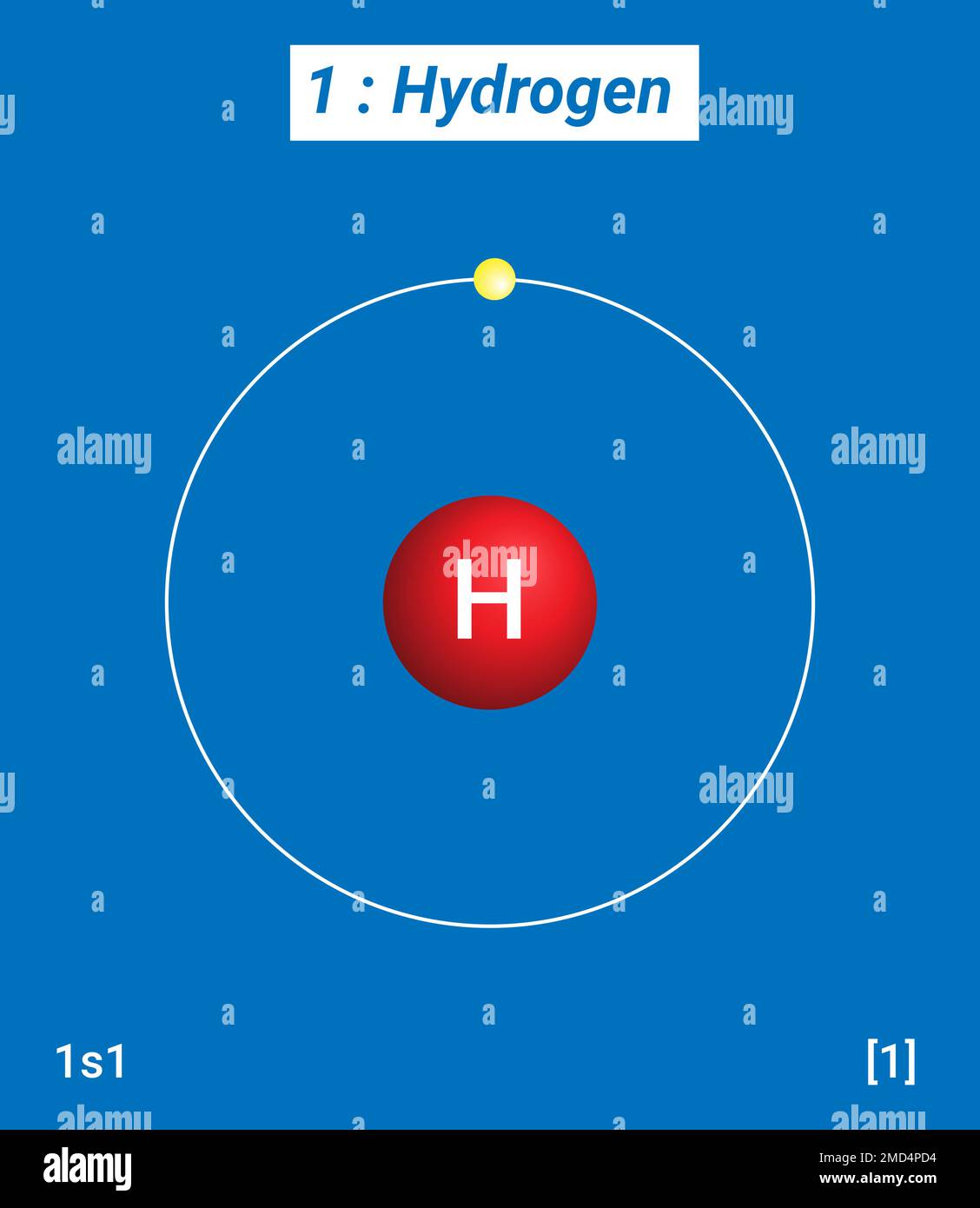
Fission has physical limits, but fusion offers a virtually limitless source of energy. Fusion is the process that powers the sun and stars, where light atomic nuclei—specifically hydrogen isotopes like deuterium and tritium—are forced together under immense heat and pressure to form helium.
The primary barrier to harnessing fusion on Earth is electrostatic repulsion. Positively charged atomic nuclei naturally repel one another. Overcoming this repulsion requires temperatures reaching tens of millions of degrees Celsius. Normal chemical explosives can't generate these conditions, which is why scientists had to use a fission bomb as a detonator.
The Teller-Ulam Design
Developed by physicists Edward Teller and Stanislaw Ulam during the early 1950s, the Teller-Ulam design solved the engineering problem of how to compress and ignite fusion fuel effectively.
- The Primary Stage: The weapon initiates with a conventional fission bomb. When detonated, it releases a massive pulse of high-energy X-rays inside a radiation-proof casing.
- Radiation Channeling: These X-rays rush through the casing, instantly vaporizing a foam channel and exerting immense radiation pressure on the secondary stage.
- The Secondary Stage: The secondary contains fusion fuel, usually lithium deuteride, wrapped around a central fissile "spark plug".
- Implosion and Ignition: The radiation pressure compresses the secondary stage inward with incredible force. This crushes the fusion fuel while simultaneously triggering the central spark plug via fission, generating the core heat and pressure needed to ignite the fusion reaction.
This multi-stage process creates an explosion measured in megatons rather than kilotons. The Ivy Mike test in 1952 yielded 10.4 megatons—over 700 times more powerful than the Hiroshima bomb. Read more about historical nuclear testing protocols at the Department of Energy.
Key Differences Between Fission and Fusion Weapons
Comparing these two classes of weapons highlights a stark evolution in military technology. While both release energy through the manipulation of atomic structure, their mechanics, efficiency, and scale differ entirely.
- Reaction Type: Atomic bombs rely exclusively on splitting heavy atoms. Hydrogen bombs use a fission trigger to drive a secondary fusion reaction, often followed by a final fast-fission stage of depleted uranium surrounding the casing.
- Energy Yield: Fission weapons max out in the kiloton range. Thermonuclear weapons scale upward freely, with yields reaching tens of megatons.
- Strategic Role: Atomic weapons were used in actual combat to force a surrender. Hydrogen weapons served primarily as strategic deterrents during the Cold War under the doctrine of Mutually Assured Destruction, ensuring that any full-scale exchange would guarantee mutual annihilation.
- Complexity: Fission devices require precise sub-critical assembly designs. Thermonuclear weapons demand advanced physics modeling, cryogenic cooling for liquid deuterium (in early designs), or stable lithium deuteride compounds, alongside precise radiation channeling geometry.
Common Misconceptions About Nuclear Bombs
Public perception of nuclear weapons is often shaped by outdated cold war media and simplified textbook definitions. Clarifying these details helps separate fact from science fiction.
- Hydrogen bombs do not use liquid hydrogen gas in modern arsenals. Early experimental designs like Ivy Mike required massive cryogenic flasks of liquid deuterium, but modern warheads use solid lithium deuteride, which is stable at room temperature.
- An atomic bomb is required to detonate a hydrogen bomb. You cannot trigger a fusion reaction without the immense initial heat and X-ray flux provided by a primary fission stage.
- Thermonuclear weapons are not "clean". While fusion produces helium, standard thermonuclear designs wrap the secondary stage in uranium-238 jackets that undergo fast fission from fusion-generated neutrons, producing massive quantities of radioactive fallout.
Frequently Asked Questions
Why is a hydrogen bomb called thermonuclear?
The prefix thermo- refers to heat. Fusion reactions require extreme temperatures to occur, meaning the hydrogen fuel must be heated to stellar levels by a primary fission explosion before fusion can take place.
Can a hydrogen bomb detonate on its own without a fission trigger?
No. Under normal terrestrial conditions, the Coulomb barrier prevents hydrogen isotopes from fusing spontaneously. Artificially lowering this barrier requires the specific pressure and temperature profile delivered by a nuclear fission explosion.
Which nations possess thermonuclear weapons?
According to assessments by the Federation of American Scientists, all five original nuclear-weapon states recognized by the Nuclear Non-Proliferation Treaty—the United States, Russia, China, the United Kingdom, and France—alongside a few other nuclear-armed nations, possess thermonuclear capabilities.
How much more powerful is a hydrogen bomb than an atomic bomb?
While standard atomic bombs generally range from 15 to 50 kilotons, modern tactical and strategic thermonuclear warheads typically start around 100 kilotons and scale upward into the megaton range, making them dozens to hundreds of times more powerful.



