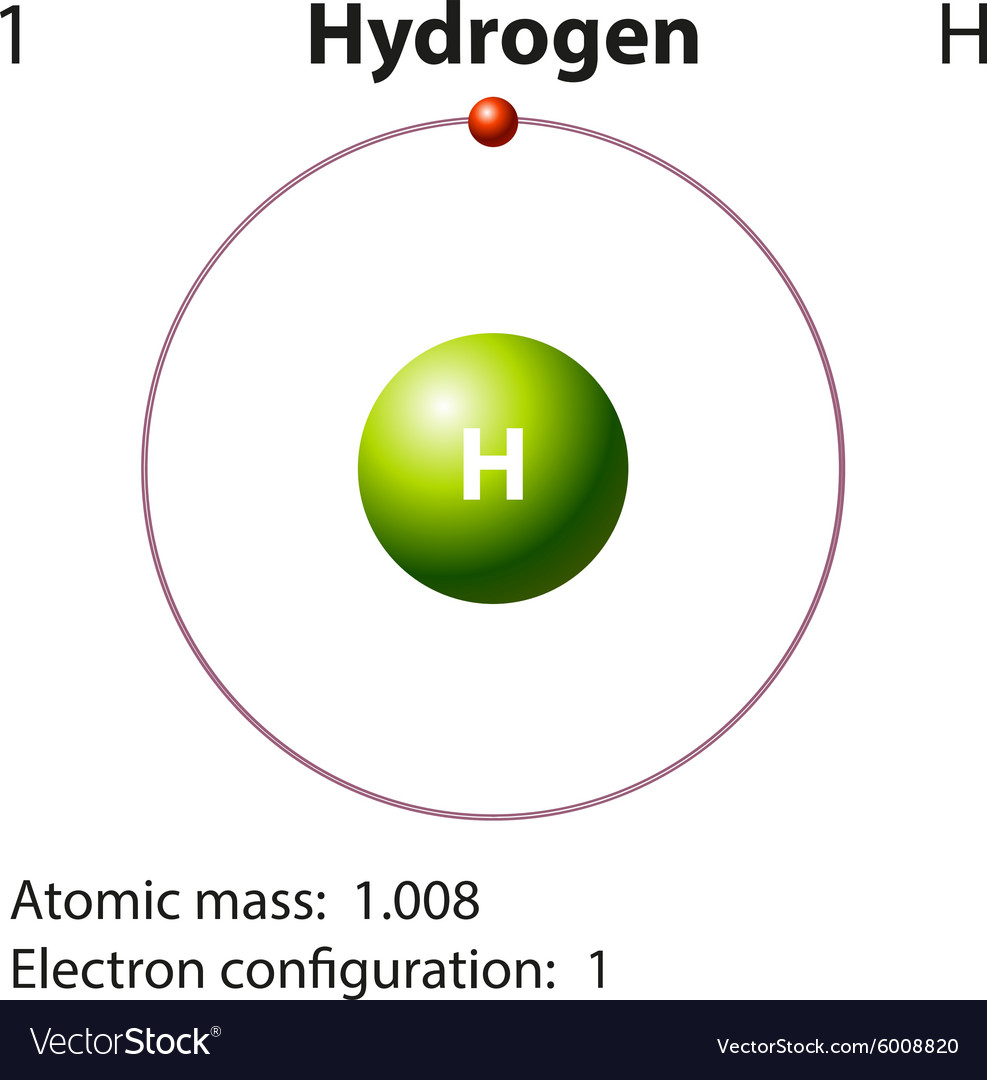
When people compare a hydrogen bomb to a standard nuclear bomb, they often look at a false dichotomy. A hydrogen bomb is a nuclear weapon. Specifically, a hydrogen bomb is a two-stage thermonuclear device, while a standard nuclear bomb usually refers to a first-generation fission weapon.
The primary difference lies in their inner physics. Fission bombs split heavy atoms like uranium or plutonium to release energy. Hydrogen bombs use fission to trigger a secondary nuclear fusion reaction, forcing hydrogen isotopes to fuse together. This multi-stage process creates an explosion exponentially more powerful than traditional fission devices.
The Physics of First-Generation Fission
To understand why hydrogen designs changed modern military engineering, we have to look at how first-generation weapons work. These are the devices dropped on Hiroshima and Nagasaki in 1945.
A fission bomb relies on a critical mass of fissile material, typically uranium-235 or plutonium-239. When a free neutron strikes the nucleus of these unstable atoms, the nucleus splits into smaller fragments. This split releases a massive amount of kinetic energy and two or three additional neutrons. To understand the complete picture, check out the excellent report by Wikipedia.
Those newly freed neutrons crash into neighboring atoms, causing them to split as well. This creates a self-sustaining chain reaction. The entire sequence happens in a fraction of a microsecond.
Despite their terrifying destructive power, fission weapons have hard physical limits. You can't just keep adding more plutonium to make the blast infinitely bigger. If you add too much material at once, the device can pre-detonate prematurely, fizzling out before achieving maximum yield. Most pure fission weapons max out around 500 kilotons of TNT equivalent.
The Thermonuclear Breakthrough
Mid-century physicists realized they needed a completely different approach to scale up explosive yields. That breakthrough was nuclear fusion—the same process that powers the sun.
Fusion involves taking light atomic nuclei, such as deuterium and tritium (isotopes of hydrogen), and forcing them together under extreme heat and pressure to form helium. When these atoms fuse, they lose a tiny fraction of their mass, which converts directly into a staggering amount of energy according to Einstein's equation.
The core engineering hurdle was simple: fusion requires millions of degrees of temperature and immense pressure to initiate. You can't just put hydrogen gas in a metal shell and light a match.
Scientists solved this by using a fission bomb as the trigger. In the standard Teller-Ulam configuration, the detonation of a primary fission stage releases a flood of X-rays. These X-rays travel inside a radiation-proof casing to compress a secondary stage containing lithium deuteride fuel.
Once compressed and heated by the primary blast, the secondary stage ignites its fusion reaction. In many modern designs, fast neutrons from the fusion stage then trigger a final round of fast fission in a surrounding uranium tamper. This creates a three-stage fission-fusion-fission cycle.
Yield, Scale, and Real-World Impact
The gap in explosive output between these two technologies is massive.
- First-Generation Fission: The weapon dropped on Hiroshima yielded roughly 15 kilotons of TNT. Modern tactical fission warheads typically range from 1 to 50 kilotons.
- Thermonuclear Hydrogen Bombs: Yields start where fission weapons peak and scale upward. Standard strategic hydrogen warheads range from 100 kilotons to over 1 megaton (1,000 kilotons).
To put that in perspective, the largest weapon ever tested—the Soviet Union's Tsar Bomba in 1961—yielded 50 megatons. It was roughly 3,800 times more powerful than the Hiroshima bomb. Over 95 percent of its energy came from thermonuclear fusion.
The destructive radius scales geometrically. A fission bomb destroys a city center, flattening concrete structures within a mile or two. A multi-megaton hydrogen bomb generates a fireball capable of consuming an entire metropolitan area, creating thermal radiation burns miles away and injecting radioactive fallout into the stratosphere.
Strategic Military Shifts
Military planners quickly realized that hydrogen designs rendered pure fission weapons obsolete for strategic deterrence.
Because thermonuclear weapons achieve vastly higher yields per pound of weapon weight, nations could build smaller warheads. This made it possible to place multiple independent reentry vehicles (MIRVs) onto a single intercontinental ballistic missile (ICBM). Instead of building massive bombers to carry heavy, low-yield atomic bombs, countries could deploy compact, high-yield hydrogen warheads on fast-flying missiles.
The economics changed too. While complex and expensive to manufacture initially, hydrogen bombs use secondary fusion materials like lithium-6 deuteride alongside non-fissile depleted uranium. This reduced the reliance on scarce, highly processed weapons-grade plutonium.
According to historical archives maintained by the Atomic Heritage Foundation, the transition to thermonuclear stockpiles permanently altered global defense doctrines during the Cold War, shifting strategy from regional destruction to absolute mutual assured destruction.
Frequently Asked Questions
Do all modern nuclear weapons use hydrogen technology?
Most strategic nuclear weapons deployed by major nuclear-armed states are thermonuclear weapons. Tactical weapons—smaller, lower-yield devices meant for localized battlefield use—frequently rely on boosted fission designs rather than full multi-stage thermonuclear setups.
Which weapon produces more radioactive fallout?
Standard fission bombs create substantial radioactive fallout because their entire yield depends on splitting heavy, radioactive elements like uranium and plutonium into lingering fission products. A pure fusion reaction creates relatively little fallout, but because most hydrogen bombs use a fast-fission uranium tamper for extra power, they actually generate massive amounts of radioactive fallout.
Can a hydrogen bomb detonate by accident?
No. Multi-stage thermonuclear weapons require a precise, highly synchronized sequence of events to detonate. The primary fission trigger must fire with exact timing to compress the secondary stage. Accidental fires, impacts, or partial explosions of the conventional explosives inside the primary stage will destroy the weapon, but they cannot initiate a nuclear chain reaction.
Why do countries still test or maintain smaller nuclear bombs if hydrogen bombs are stronger?
Smaller weapons offer tactical flexibility. A multi-megaton hydrogen bomb is often considered military overkill for localized targets. Governments maintain varied stockpiles so they can match specific strategic requirements without destroying entire regions unnecessarily.



