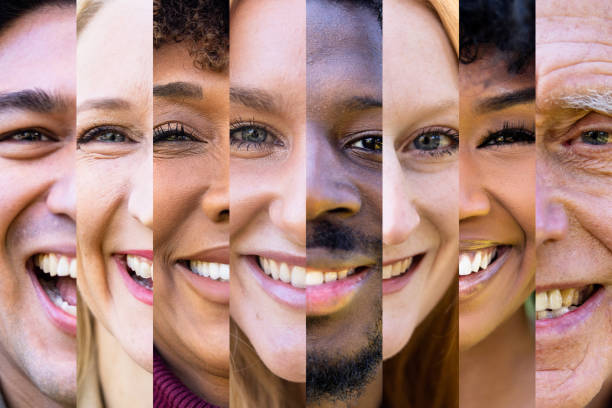
Human expression is the oldest language we possess. Long before our ancestors carved symbols into stone or developed complex vocal dialects, they communicated internal states through muscle contractions across the face, posture shifts, and vocal modulation. Every smile, wince, and raised eyebrow carries an evolutionary record shaped by millions of years of survival pressures, social bonding, and environmental adaptation.
Understanding how human expression evolved requires looking past modern digital filters and pop-psychology clichés. We need to examine what anatomical changes allowed early hominids to signal danger, how facial muscles transformed into social tools, and why specific emotional displays remain recognizable across isolated cultures today.
The Evolutionary Origins of Facial Mobility
Unlike most mammals, humans evolved an exceptionally dense and complex network of superficial facial muscles. While a domestic dog or a chimpanzee can bare teeth or retract lips, they lack the fine motor control required for subtle micro-expressions.
Early primate evolution prioritized visual communication because group living demanded constant negotiation of social hierarchy and safety. When hominids transitioned from dense forest canopies to open savannahs, spotting threats quickly became a matter of life and death.
- The Mandible Shift: As hominid diets shifted from tough, raw vegetation to cooked foods and softer meats, jaw muscles and chewing bones decreased in mass. This reduction freed up cranial space and allowed facial skin to attach to underlying bone via independent muscle slips.
- Signaling Vulnerability: Evolutionary biologists suggest that expressive eyebrows and mobile lips developed to display appeasement and reduce aggression within larger social groups. A lowered brow signals dominance or focus, while raised inner brows communicate harmlessness and social openness.
- The Social Brain Hypothesis: As group sizes expanded from dozens to hundreds of individuals, remembering who was cooperative or hostile required external cues. Facial expressions acted as immediate, low-energy readouts of internal intent.
The Science of Universality and Cultural Variation
For decades, researchers debated whether emotions are biological invariants or entirely constructed by culture. The debate shifted in the late 20th century through cross-cultural fieldwork conducted by psychologist Paul Ekman Facial Expression and Emotion.
Ekman traveled to remote populations, such as the Fore people of Papua New Guinea, who had no exposure to Western media. When shown photographs of faces expressing distinct emotional states, participants correctly identified the core reactions. This work isolated six universally recognized categories:
- Happiness
- Sadness
- Anger
- Fear
- Surprise
- Disgust
Yet, universality doesn't mean uniformity. While the core muscle movements are hardwired, display rules dictate when and how expressions are shown in public. For instance, cultures governed by high collectivist values often suppress negative expressions in group settings to maintain social harmony, whereas individualist cultures tend to encourage overt emotional signaling.
Historical Perspectives: From Philosophical Grimaces to Empirical Science
Long before modern electromyography measured electrical impulses in cheek muscles, thinkers attempted to decode the mechanics of expression.
In the 17th century, political philosopher Thomas Hobbes argued that facial movements were spontaneous deviations from a neutral baseline, viewing emotion as inherently tied to physical ticks and grimaces. By the late 19th century, Charles Darwin published The Expression of the Emotions in Man and Animals, arguing that expressions are vestigial remnants of useful survival actions. For example, the baring of teeth in anger is an evolutionary precursor to biting, while wide eyes in fear increase the field of vision to scan for predators.
William James expanded on this by suggesting that physical expression doesn't just reflect emotion—it reinforces it. Smiling, even artificially, triggers feedback loops in the brain that moderate stress hormone production.
Modern Applications and Common Misconceptions
Today, analyzing human expression extends into behavioral science, clinical psychology, and human-computer interaction. However, pop culture has generated several persistent myths about how we read faces.
Common Mistakes in Emotion Reading
- Assuming Micro-Expressions Are Infallible: Television dramas suggest that a fleeting twitch always exposes a liar. In reality, micro-expressions are brief, but they typically indicate cognitive processing, stress, or conflicting internal feelings rather than active deception.
- Ignoring Context: Reading a face in isolation leads to frequent errors. A person crying can be experiencing profound grief, overwhelming joy, or physical pain. Contextual cues, body posture, and vocal tone provide necessary calibration.
- Treating Symmetry as Absolute: True emotional expressions are rarely perfectly symmetrical. Natural facial asymmetry is common, and forced expressions often look far more rigid than spontaneous ones.
Frequently Asked Questions
Are blind individuals able to make the same facial expressions as sighted people?
Yes. Studies comparing sighted and congenitally blind athletes reveal identical facial expressions when experiencing victories or defeats, confirming that these motor patterns are genetically encoded rather than learned through visual mimicry.
Why do humans smile when they are nervous or stressed?
Nervous smiling is a submissive and appeasing signal. In evolutionary terms, it acts as a nonverbal white flag, communicating to others that an individual poses no threat despite feeling uncomfortable or cornered.
Can artificial intelligence accurately interpret human emotion through facial tracking?
AI models can detect specific muscle configurations with high accuracy, but they measure expression, not internal emotion. Because human expression is heavily modulated by context and intent, software frequently misinterprets cultural nuances, fatigue, or masking behaviors as genuine emotional states.
Do animals share our capacity for facial expression?
Many mammals—particularly primates, dogs, and horses—possess complex facial repertoires. Research shows that dogs, for instance, developed specific eyebrow movements (such as lifting the inner brow) that specifically target human caregiving instincts, altering their facial structure through domestication.



