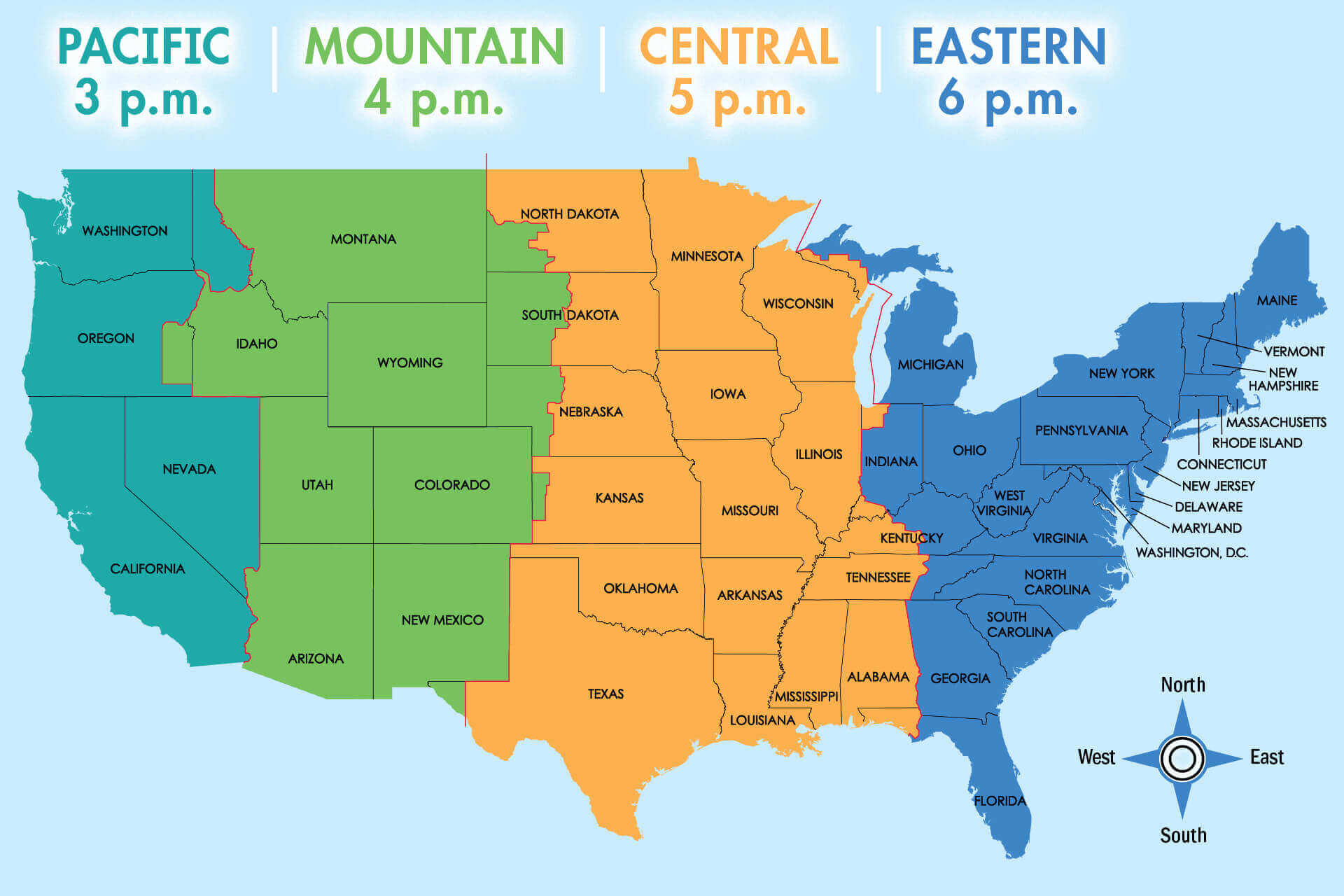
Coordinated global schedules rely on an invisible framework: timezones. They divide the rotating earth into segments to balance solar noon with administrative convenience, shaping how international commerce, transit, and daily routines function across borders.
Without standardized timezones, global logistics and remote communication would collapse into chaos. Understanding how these offsets work helps remote teams, travelers, and software engineers avoid costly scheduling errors and synchronize operations across continents.
The Mechanics of Solar vs. Civil Time
Solar time depends entirely on the sun's position relative to a specific meridian. As the earth rotates 360 degrees every 24 hours, local solar time changes continuously as you move east or west. Traveling just a few miles changes the exact moment the sun hits its zenith.
Civil time overrides this natural variation for practical reasons. Modern society requires uniform hours within defined regions so towns, states, and nations can coordinate train schedules, banking hours, and work shifts.
- Solar Noon: The exact moment the sun reaches its highest point in the sky for a specific longitude.
- Civil Time: The standardized clock time adopted by legal mandate across a specific region or country.
- Meridians: Lines of longitude spaced 15 degrees apart, forming the theoretical backbone of the 24 global timezone slices.
Why Timezones Don't Follow Straight Lines
If timezones followed pure lines of longitude, there would be exactly 24 straight zones stretching from pole to pole, each spanning 15 degrees. In reality, timezone boundaries zigzag wildly around national borders, mountain ranges, and economic zones.
Governments draw timezone lines to keep entire countries or administrative regions on the same clock. For instance, China spans five geographic timezones but operates entirely on a single timezone: Beijing Time (UTC+8). This political choice simplifies national governance, rail networks, and financial markets, even if workers in western provinces experience sunrise as late as 10:00 AM local time.
Similarly, the International Date Line bends around island nations like Kiribati and Samoa. These shifts ensure that island groups aren't split down the middle into different calendar days, which would paralyze local commerce and governance.
The Operational Cost of Timezone Mismanagement
Scheduling across international borders introduces friction that impacts productivity and revenue. According to workforce efficiency studies, recurring scheduling errors in distributed teams waste millions of hours annually in delayed meetings and missed deadlines.
Financial markets feel these frictions acutely. Global currency and stock exchanges rely on millisecond-precision overlap between major financial hubs like New York, London, and Tokyo. When daylight saving adjustments desynchronize these windows—such as when North America and Europe transition on different weekends—trading volume fluctuations and execution errors spike.
- Daylight Saving Discrepancies: Spring and autumn transitions rarely happen on the same calendar date globally, creating temporary 1-hour offsets between trading partners.
- Half-Hour and Forty-Five-Minute Offsets: Jurisdictions like India (UTC+5:30), Nepal (UTC+5:45), and parts of Australia introduce non-standard offsets that break naive integer-based conversion software.
- Remote Team Fatigue: Consistently scheduling cross-border syncs outside core working hours leads to burnout and high turnover in multinational organizations.
Managing Complex Offsets and Edge Cases
Handling international time requires robust software design and clear administrative protocols. Developers and project managers often rely on the IANA Time Zone Database (tzdb), which tracks historical and predicted changes to civil time worldwide.
When building schedules that span multiple regions, best practice dictates storing all timestamps in Coordinated Universal Time (UTC) and converting to local time only at the presentation layer. Hardcoding static offsets like -5 or +2 fails the moment a region alters its daylight saving rules or shifts its standard meridian.
For more details on how global standards are maintained, you can review the National Institute of Standards and Technology time coordination guidelines or explore the International Bureau of Weights and Measures UTC tracking data.
Frequently Asked Questions
Why do some countries use half-hour or 45-minute timezone offsets?
Countries adopt fractional offsets to better align civil noon with true solar noon across their specific geographic width, or as a political compromise between neighboring major timezones. For example, India chose UTC+5:30 to sit precisely halfway between the eastern and western extremes of its national territory.
Do all countries observe daylight saving time?
No. The majority of countries near the equator do not observe daylight saving time because seasonal changes in daylight length are minimal. Even among temperate nations, countries like Japan, China, and most of India do not shift their clocks.
What is the difference between GMT and UTC?
Greenwich Mean Time (GMT) is a time zone historically based on the local solar time at the Royal Observatory in Greenwich, London. Coordinated Universal Time (UTC) is an atomic time scale maintained by a network of precise atomic clocks worldwide. While they share the same current offset during standard time, UTC is a scientific standard independent of any single location's solar observation.
How do international airlines handle timezone changes during long flights?
Airlines schedule all flight plans, departures, and arrivals using the local civil time of the respective departure and destination airports. Flight manifests and crew rosters convert these local times into UTC internally to prevent confusion during transmeridian travel.



