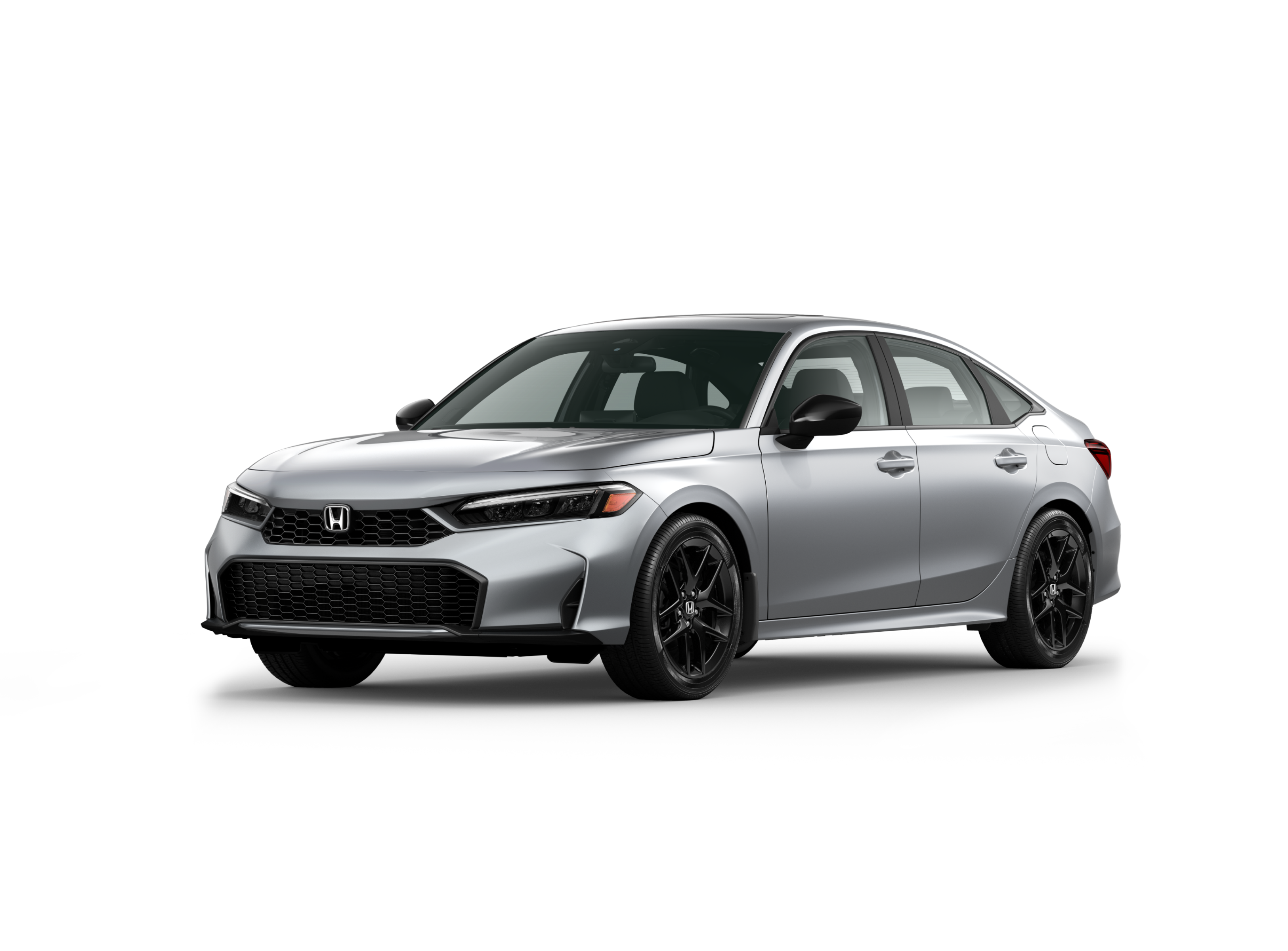
When you're shopping for a compact car that balances utility with driving enjoyment, understanding the physical footprint of your vehicle matters. The Honda Civic Hatchback weight and specs dictate everything from your daily fuel economy at the pump to how the car rotates through tight corners. If you're comparing trims or trying to figure out cargo capacities, knowing exact poundage and dimensional data saves you from guesswork.
Across recent production years, the Civic Hatchback generally spans a curb weight range from roughly 2,900 pounds to over 3,200 pounds depending on whether you choose a base naturally aspirated engine, a punchy turbocharged setup, or a manual transmission. That mass directly correlates with how the car handles crosswinds, absorbs highway bumps, and delivers EPA fuel economy ratings. Let's break down the exact weight numbers, dimensions, powertrain specifications, and real-world trade-offs you need to consider before signing paperwork.
Understanding Civic Hatchback Weight Differences
Curb weight isn't a single universal number for any car model. It shifts based on what's bolted onto the chassis. Manufacturers measure curb weight with all standard equipment, necessary operating fluids, and a full tank of fuel, but without passengers or cargo.
The entry-level LX and Sport trims keep things lean by utilizing smaller alloy wheels, simpler audio hardware, and standard cloth seating surfaces. As you move up into EX-L or Sport Touring grades, leather upholstery, moonroof assemblies, heated power seats, and premium multi-speaker audio systems add cumulative weight.
Let's look at how specific trim choices affect the scale:
- Base LX Trim: Tipping the scales at roughly 2,935 pounds, this version carries the least mass. Its lighter front end allows for nimble, eager turn-in and maximizes every horsepower from the 2.0-liter engine.
- Sport Trim: Ranging around 2,952 to 3,021 pounds depending on transmission choice (CVT versus the 6-speed manual), the Sport adds slightly larger wheels and distinct chassis bracing.
- EX-L Trim: Pushing closer to 3,085 pounds, this trim introduces sound-deadening insulation, acoustic glass, and power-adjustable leather seating that adds physical heft to the cabin.
- Sport Touring Trim: As the heavyweight champion of the lineup, this top-tier variant reaches approximately 3,168 to 3,252 pounds. Every luxury feature, larger 18-inch wheel package, and heavier tire profile contributes to this peak number.
Powertrain Options and Performance Specs
Weight only tells half the story. You have to pair those poundage figures with engine output to understand the power-to-weight ratio. Honda equips the Civic Hatchback with two primary engine choices depending on the trim level.
The standard naturally aspirated 2.0-liter four-cylinder engine generates 158 horsepower and 138 lb-ft of torque. It pairs exclusively with a continuously variable transmission (CVT) on lower trims. It's built for efficiency, giving you predictable power delivery during city commutes.
For sharper acceleration, the 1.5-liter turbocharged four-cylinder engine kicks output up to 180 horsepower and 177 lb-ft of torque. This turbo motor delivers peak torque much lower in the RPM band—starting right around 1,700 RPM—which makes highway passing effortless even when the car is loaded down with luggage. You can pair this turbo engine with either a slick-shifting 6-speed manual transmission or a revised CVT with paddle shifters.
To see how these specifications compare against other compact hatchbacks, you can review manufacturer specifications directly on the Honda Official Site.
Exterior Dimensions and Cargo Capacity
One of the main reasons buyers choose a hatchback over a sedan is the cargo versatility. The rear liftgate opens up a wide aperture that swallows bulky items which would never fit through a traditional trunk opening.
The Civic Hatchback measures approximately 179 inches in total length, sitting on a 107.7-inch wheelbase. Its total height stands at roughly 55.7 inches, and width spans 70.9 inches without mirrors. That footprint gives it a planted stance on the highway while remaining short enough to squeeze into tight urban parking spaces.
Behind the rear second-row seats, you get roughly 24.5 cubic feet of cargo space. When you fold those 60/40 split-folding rear seats flat, that volume expands significantly, allowing you to transport bicycles, small pieces of furniture, or camping gear.
Fuel Economy and Real-World Efficiency
Because curb weight directly impacts fuel consumption, your choice of trim influences your annual fuel budget. Lighter models with the base 2.0-liter engine typically achieve EPA estimates around 30 mpg city and 38 mpg highway.
Turbocharged variants trade a tiny fraction of that absolute fuel economy for significantly better drivability. Models equipped with the 1.5-liter turbo engine return roughly 31 mpg city and 39 mpg highway for CVT-equipped models, while manual transmission variants sit closer to 28 mpg city and 37 mpg highway.
Keep in mind that adding passengers, roof racks, or heavy cargo increases the rolling resistance, which pulls real-world figures slightly below EPA laboratory estimates.
Common Mistakes Buyers Make When Comparing Specs
When evaluating vehicle specifications, shoppers often fall into predictable traps. Avoiding these missteps will help you pick the right model for your lifestyle:
- Ignoring Gross Vehicle Weight Rating (GVWR): Curb weight is just the empty car. GVWR tells you the maximum allowable total weight—including you, your passengers, fuel, and cargo. Overloading your car strains brakes, wears out suspension components prematurely, and ruins handling balance.
- Chasing Max Trims Without Testing: Assuming the top-tier Sport Touring is universally better can backfire if you prefer nimble steering feel. The heavier front-end weight of loaded trims slightly dulls initial turn-in response compared to the lighter base LX.
- Overlooking Unsprung Weight: Upgrading to larger 18-inch alloy wheels looks aggressive, but heavier wheels require more energy to spin and stop, which can degrade ride comfort over broken pavement.
Frequently Asked Questions
Is the Honda Civic Hatchback heavier than the sedan?
Yes, the hatchback variant typically weighs between 50 to 80 pounds more than its sedan counterpart. This extra mass comes from the reinforced rear structural pillars, the heavy liftgate assembly, and the modified rear glass framing required for the hatchback design.
Does the manual transmission weigh less than the CVT?
Generally, manual transmission variants are slightly lighter than their automatic or CVT equivalents because they lack heavy torque converters, hydraulic fluid pumps, and complex electronic control modules.
How much weight can you safely put inside a Civic Hatchback?
The maximum payload capacity—which includes the combined weight of all passengers and cargo—typically hovers around 850 to 950 pounds depending on the specific trim level. Check the yellow placard on your driver-side door jamb for the exact payload limit of your specific vehicle.
Does adding a roof rack affect fuel economy?
Yes. Installing crossbars and roof attachments increases aerodynamic drag and adds static weight to the roof. At highway speeds, this can reduce your fuel economy by 2 to 5 mpg, even when the racks are empty.



