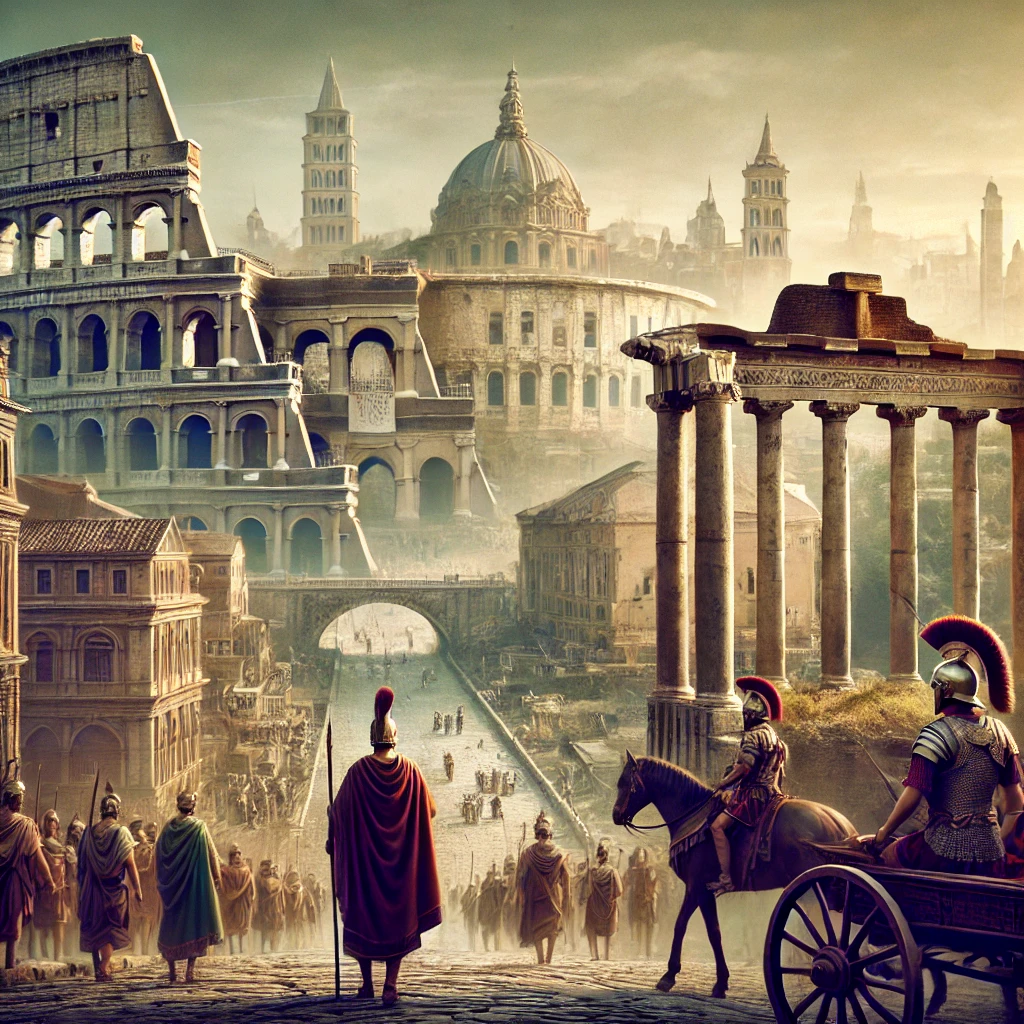
Vatican City became an independent nation through a turbulent mix of medieval land grabs, the unifications of modern Italy, and a 1929 political compromise. Spanning just 44 hectares (about 110 acres) as an enclave within Rome, it holds the title of the world's smallest sovereign state. Yet its tiny footprint masks a millennium of geopolitical maneuvering, religious power, and territorial loss.
The transformation from ruling vast Italian territories to operating out of a single walled hill district didn't happen overnight. It took centuries of shifting alliances between popes, Roman emperors, foreign monarchs, and fascist dictators to forge the modern microstate we recognize today.
From Imperial Gardens to Christian Shrine
Long before the papacy claimed the land, Vatican Hill was a swampy, snake-infested area across the Tiber River from ancient Rome. Agrippina the Elder drained sections of it in the first century AD to build gardens, and her son, Emperor Caligula, built a private circus there for chariot races. Nero later completed this racetrack, which historians now call the Circus of Nero.
In the wake of the Great Fire of Rome in 64 AD, Emperor Nero blamed Christians for the disaster and executed them brutally within this circus. According to Christian tradition, the apostle Peter was crucified upside down on this site and buried in a modest cemetery nearby on Vatican Hill.
Everything changed in 313 AD when Emperor Constantine issued the Edict of Milan, legalizing Christianity. Believing he stood on the burial place of Saint Peter, Constantine ordered the construction of a massive basilica over the old cemetery. This original St. Peter's Basilica drew thousands of pilgrims, transforming a pagan execution ground into the spiritual heartbeat of Western Christendom.
The Rise and Fall of the Papal States
As the Roman Empire fractured in the fifth century, citizens turned to the bishop of Rome—the pope—for leadership and physical protection against invading Germanic tribes. Through land donations and royal patronage, the papacy accumulated vast tracts of land across central Italy, known as the Patrimony of St. Peter.
The formal foundation of the Papal States arrived in 756 AD via the Donation of Pepin. Pepin the Short, King of the Franks, defeated the Lombards and handed captured Italian territories over to Pope Stephen II. For more than a thousand years, popes functioned as temporal monarchs, ruling a substantial swathe of the Italian peninsula.
At their peak, the Papal States covered thousands of square miles and wielded immense political and military clout. Popes raised armies, levied taxes, and fought bloody wars to protect their sovereignty against rival Italian city-states and foreign invaders.
The Risorgimento and the "Roman Question"
The golden age of papal territorial rule crashed to a halt during the Risorgimento—the 19th-century movement for Italian unification. As nationalist forces swept across the peninsula, folding separate kingdoms and principalities into a single nation under King Victor Emmanuel II, the Papal States stood in the way.
In September 1870, Italian troops breached the walls of Rome near the Porta Pia and captured the city, ending the temporal power of the popes. Rome became the sparkling new capital of unified Italy.
Pope Pius IX refused to accept Italian sovereignty over Rome, declaring himself a "prisoner of the Vatican." He locked himself inside the apostolic palace, and his successors followed suit for nearly 60 years. This bitter diplomatic standoff between the Italian government and the Catholic Church became known as the "Roman Question." Popes forbade Italian Catholics from voting in national elections or participating in government, creating a deep ideological rift in the newly minted country.
The Lateran Treaty of 1929
The stalemate finally ended on February 11, 1929, when the Italian government and the Holy See signed the Lateran Pacts. Negotiated between Cardinal Pietro Gasparri for the papacy and fascist dictator Benito Mussolini for Italy, the agreement was designed to buy mutual legitimacy and stability.
The package consisted of three core components:
- A political treaty recognizing the full independence and sovereignty of the newly minted State of the Vatican City, spanning 44 hectares.
- A financial convention providing the Vatican with 1.75 billion lire in cash and government bonds as compensation for the loss of the old Papal States.
- A concordat establishing Roman Catholicism as the sole religion of the Italian state, granting tax exemptions, and validating church marriages under civil law.
By shrinking the papal domain down to the immediate grounds around St. Peter's Basilica, the Vatican and Italy resolved decades of hostility. Mussolini gained crucial political backing from conservative Catholics, while the pope secured guaranteed autonomy to exercise his global spiritual authority free from foreign interference.
Modern Vatican City
Today, Vatican City operates as an absolute elective monarchy where the pope holds absolute executive, legislative, and judicial power. Despite its tiny size, it functions like a fully equipped nation. It maintains its own railway station, post office (whose stamps are prized by collectors), radio station, police force (the Swiss Guard), and publishing house.
Its borders are defined entirely by medieval and Renaissance stone walls, except at St. Peter's Square, which remains open to the streets of Rome. Millions of visitors pass through these checkpoints annually to view priceless cultural treasures housed within the Vatican Museums and the Sistine Chapel. Through smart diplomacy and a legacy stretching back to antiquity, a plot of land smaller than most university campuses remains one of the most influential sovereign entities on Earth.
Frequently Asked Questions
Why is Vatican City not part of Italy?
Vatican City remains independent because of the 1929 Lateran Treaty. When Italy annexed the Papal States in 1870, the pope refused to recognize Italian rule. The Lateran Treaty resolved this conflict by carving out a tiny, sovereign enclave where the Holy See could govern without Italian oversight.
Who actually rules Vatican City?
The pope serves as the absolute monarch and head of state of Vatican City. Day-to-day administrative duties are delegated to a governor and various departments within the Roman Curia.
How many people live inside Vatican City?
The permanent population hovers around 800 to 900 residents. Most citizens are clergy members, high-ranking officials, administrative workers, or members of the Swiss Guard, many of whom hold dual citizenship with their home countries.
Is Vatican City a member of the United Nations?
No, Vatican City is not a full UN member state. Instead, the Holy See maintains permanent observer status at the United Nations, allowing it to participate in debates and moral advocacy without voting on resolutions. You can learn more about international relations via the United Nations.



