Understanding Hindi Language Meaning And Origins
Hindi belongs to the Indo-Aryan branch of the Indo-European language family. Spoken by hundreds of millions of people worldwide, it ranks among the most widely used tongues on Earth. The literal meaning of the word "Hindi" traces back to the Persian term Hind, which designated the region surrounding the Indus River. Over centuries, this geographic label evolved to describe the diverse dialects spoken across northern and central India.
The roots of the language stretch back thousands of years. It didn't appear overnight. Instead, it formed through a gradual linguistic evolution from ancient speeches into the standardized modern form recognized today. Grasping this trajectory reveals how political shifts, trade routes, and cultural exchanges shaped a major global medium of communication.
From Ancient Roots To Apabhramsha
Every major modern Indo-Aryan language shares a common ancestry. The linguistic journey of Hindi moves through three distinct historical phases: Old Indo-Aryan, Middle Indo-Aryan, and New Indo-Aryan.
The Sanskrit Foundation
The earliest phase centers on Sanskrit, an ancient classical language of South Asia. Vedic Sanskrit gave way to Classical Sanskrit, which served as the vehicle for sacred texts, philosophy, and classical literature. While common speakers didn't use classical Sanskrit in daily life, it formed the lexical and grammatical bedrock for future vernaculars.
The Prakrit Transition
As spoken dialects diverged from elite literary standards, regional spoken forms known as Prakrits emerged. These popular dialects simplified the complex consonant clusters of Sanskrit, making everyday communication faster and more fluid. Over centuries, Prakrits transformed further into intermediate vernaculars called Apabhramshas. Specifically, Shauraseni Apabhramsha spoken in north-central India served as the direct precursor to Western Hindi dialects.
The Rise Of Hindustani And Cultural Contact
Around the 12th century, regional vernaculars coalesced into a lingua franca across the Indo-Gangetic plain. The primary catalyst was Khari Boli, a dialect originating around the Delhi region.
During the Delhi Sultanate and the subsequent Mughal Empire, local dialects came into contact with Persian, Arabic, and Turkic administrative languages. This interaction birthed a contact variety often called Hindustani. Hindustani functioned as a shared medium for trade, governance, and poetry, bridging different communities across urban and rural spaces. It accommodated vocabulary from multiple linguistic traditions without breaking its core grammatical structure.
Common loanwords entered daily speech during this period:
- Kitab (book) from Arabic.
- Duniya (world) from Arabic through Persian.
- Kursi (chair) from Arabic.
- Paisa (money) from regional monetary terms.
Standardization And The Modern Era
The colonial period introduced administrative changes that split Hindustani into two distinct literary standards: Hindi and Urdu. Writers favoring a Sanskrit-derived vocabulary adopted the Devanagari script, while those leaning toward Persian and Arabic influences utilized the Perso-Arabic script.
Following India's independence in 1947, the country established Hindi written in the Devanagari script as an official language of the Union under Article 343 of the Indian Constitution. Educational institutions, government bodies, and media networks standardized spelling, grammar, and formal terminology, drawing heavily on Sanskrit roots for technical and scientific coinages.
For official administrative guidelines regarding linguistic policies, consult the Ministry of Home Affairs.
Key Structural Features Of Hindi
Hindi maintains specific structural traits inherited from its ancient Indo-Aryan lineage.
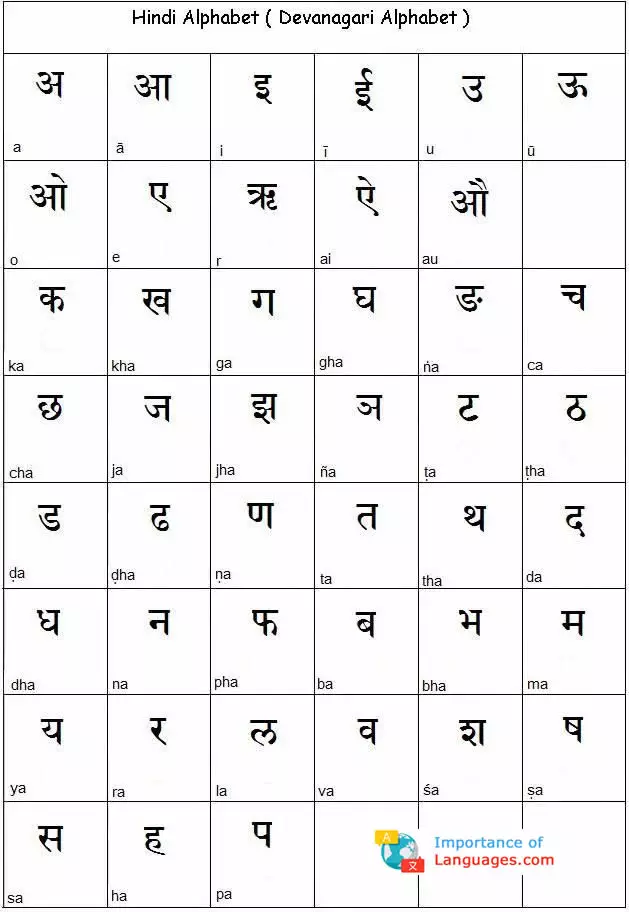
- Phonology: The Devanagari script functions phonetically, meaning words are written exactly as they sound. It features ten vowels and a rich set of consonants, including retroflex sounds pronounced by curling the tongue tip back against the palate.
- Sentence Structure: Unlike English, which follows a Subject-Verb-Object pattern, Hindi relies on a Subject-Object-Verb word order. The verb generally anchors the very end of the sentence.
- Grammatical Gender: Every noun in Hindi possesses a specific grammatical gender—either masculine or feminine—which dictates the agreement of surrounding adjectives and verb forms.
To explore academic resources on language evolution, visit UNESCO.
Common Mistakes In Understanding Hindi Origins
Many learners and casual observers hold misconceptions about how the language developed.
- The Myth of a Single Creator: People often search for a specific historical founder of Hindi. Languages spoken by millions do not have inventors; they evolve organically through centuries of dialectal contact, migration, and social interaction.
- Confusing Hindi with Sanskrit: While Hindi descends from Sanskrit, they are distinct tongues separated by millennia of phonetic simplification and vocabulary shifts. Speaking modern Hindi does not grant automatic fluency in classical Sanskrit.
- Equating Hindi with All of India: Although Hindi serves as an official union language with hundreds of millions of speakers, India features hundreds of distinct languages across multiple separate language families, such as the Dravidian family spoken widely in the southern states.
Frequently Asked Questions
Is Hindi the national language of India?
Hindi is not the national language, because the Indian Constitution does not designate a single national language. Instead, Hindi and English serve as the official languages for central government operations.
What script is used to write Hindi?
Hindi uses the Devanagari script, which reads from left to right and features a prominent horizontal line running along the top of the letters called a shirorekha.
How closely related are Hindi and Urdu?
Spoken Hindi and spoken Urdu share a nearly identical grammatical structure and core vocabulary, forming the basis of colloquial Hindustani. They diverge primarily in their formal literary registers and the scripts used to write them.
Why do some Hindi words sound similar to European languages?
Because Hindi belongs to the Indo-European language family, it shares a distant common ancestor with European languages like English, Greek, and Latin. This shared ancestry explains cognates like matar (mother in ancient roots, mata in Hindi) and bhrata (brother).



