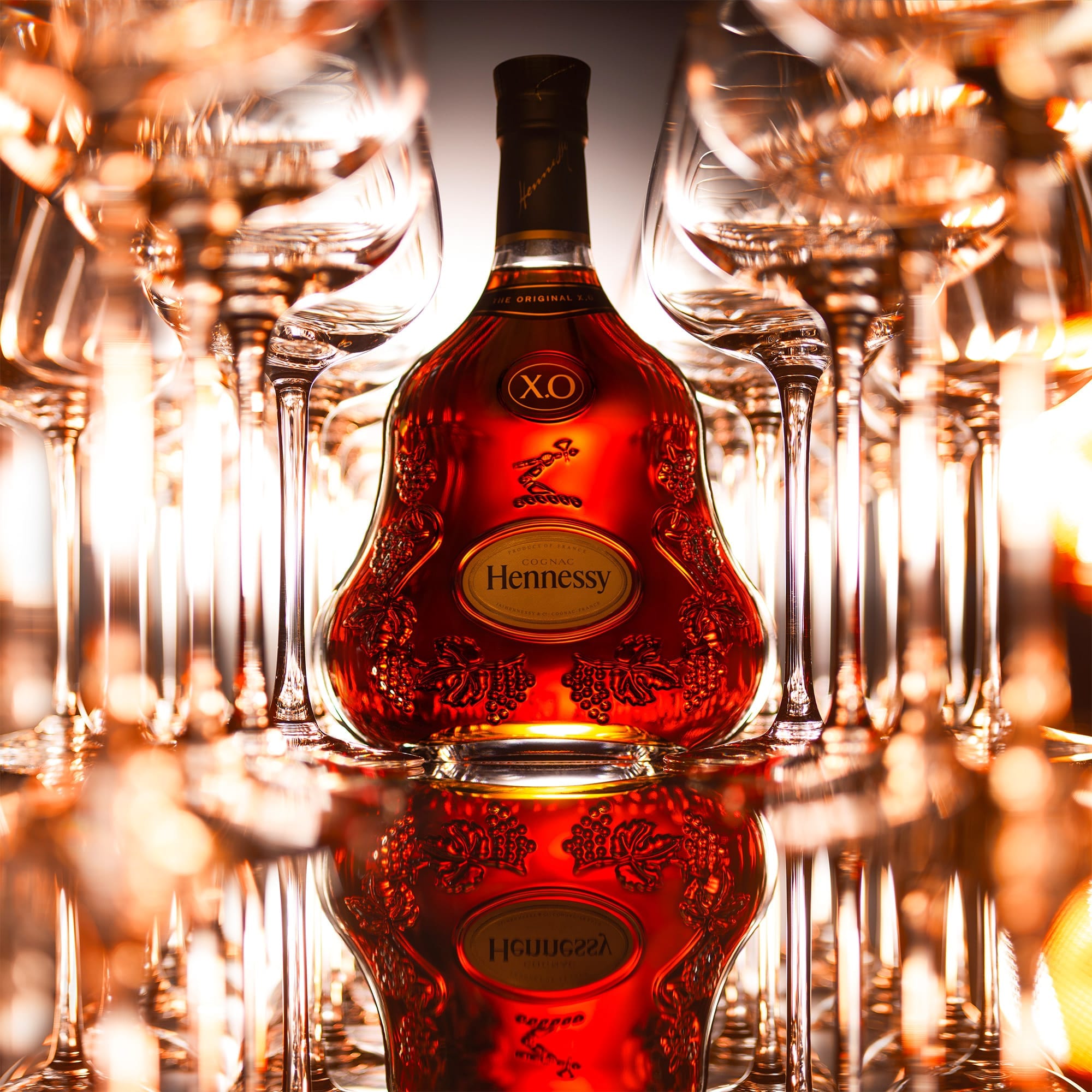
Navigating spirit volumes often feels confusing because the industry sits between old imperial traditions and modern metric standards. If you're looking at a Hennessy size chart to translate historical quarter measurements into exact imperial and metric units, you need direct numbers without filler. Whether you are stocking a home bar, calculating cocktail recipes, or trying to understand what a "quarter bottle" actually contains compared to a standard fifth, getting the measurements right prevents costly mistakes.
Spirit bottle naming conventions carry decades of history rooted in the old US and British imperial gallon systems. While global producers mostly rely on metric milliliters and liters today, everyday labels and older terminology still use terms like pints, quarts, and fifths. Let's break down the exact mathematics behind every Hennessy bottle tier, how quarter sizes translate to imperial fluid ounces, and what you're actually getting when you buy.
Understanding the Roots of Spirit Measurements
Centuries ago, liquid volumes were measured against the standard wine gallon. A standard US gallon equals 128 fluid ounces, while the old British imperial gallon was roughly 160 fluid ounces. Because merchants shipped and taxed spirits by fractions of these gallons, terms like "pint," "quart," and "fifth" became standard industry shorthand.
When the United States officially adopted metric standards for distilled spirits in the late 1970s, the industry didn't completely abandon legacy terminology. Instead, manufacturers mapped traditional volumetric categories to neat metric equivalents. A traditional "fifth" became 750 milliliters because 750 ml is close to one-fifth of a US gallon (actually about 757 ml). Understanding this transition clarifies why modern bottles carry metric numbers while buyers still use imperial nicknames.
The Complete Hennessy Size and Conversion Chart
When mapping out bottle capacities, keeping track of metric milliliters alongside US fluid ounces ensures you always know your exact volume. The table below outlines standard cognac and spirit formats from miniature splits up to large handles, detailing their precise metric and imperial metrics.
- Miniature (Nip): 50 ml, which equals 1.7 US fluid ounces (roughly 1 standard shot).
- Quarter Bottle / Quarter Pint: 100 ml to 200 ml depending on the market, translating to 3.4 to 6.8 US fluid ounces. In strict historical terms, a quarter pint is 100 ml (3.4 oz), while a modern half-pint flask is 200 ml (6.8 oz).
- Pint / Half Liter: 375 ml, which equals 12.7 US fluid ounces (about 8.5 shots).
- Standard Fifth: 750 ml, which equals 25.4 US fluid ounces (about 17 shots). This remains the global benchmark for retail spirits.
- Liter: 1,000 ml, which equals 33.8 US fluid ounces (about 22.5 shots). Frequently found in duty-free shops and international markets.
- Handle (Half Gallon): 1,750 ml (1.75 L), which equals 59.2 US fluid ounces (about 39 shots).
For further context on how standard volumes compare across different categories, you can review this Liquor Bottle Sizes Guide.
Decoding the Quarter Formats
The term "quarter" creates the most confusion among buyers because it shifts meaning depending on regional labelling and historical context. In some international markets, a quarter bottle refers to a 200ml format (often called a quart in wine terminology, representing a quarter of a gallon or two large glasses). In other manufacturing contexts, a quarter pint translates strictly to 100ml.
When buying Hennessy Very Special (VS) or VSOP, you'll encounter small-format bottles marketed for gifting, travel, or single-serving cocktails. A 50ml miniature is your classic single-serve nip. A 200ml bottle acts as a quarter-gallon equivalent in traditional wine scaling, providing roughly four to five standard 1.5-ounce pours. If you're mixing a specific cocktail recipe that calls for imperial ounces, a 200ml bottle gives you precisely 6.76 fluid ounces to work with.
Practical Conversion Formulas for Buyers
If you have a recipe or a collection note written in imperial measurements and need to verify metric bottle contents, or vice versa, keep these conversion factors handy:
- To convert fluid ounces to milliliters, multiply the ounce value by 29.5735.
- To convert milliliters to US fluid ounces, divide the milliliter value by 29.5735 (or multiply by 0.0338).
- One standard US shot equals 1.5 fluid ounces, which translates to roughly 44.4 milliliters.
Knowing these ratios lets you calculate exactly how many cocktails you can pour from any given bottle. A standard 750ml bottle gives you roughly 16.9 standard pours, making party planning straightforward. If you're scaling up to a 1.75-liter handle, you're getting approximately 39.4 pours.
Common Mistakes When Buying Spirit Sizes
Buyers often stumble when comparing price-per-ounce values across different bottle tiers. Don't assume that a larger bottle automatically offers the best deal without checking the label. Duty-free shops often stock 1-liter (1,000ml) bottles instead of the standard 750ml domestic bottles, which alters the math when calculating cost per ounce.
Another frequent error involves confusing imperial fluid ounces with dry ounces or UK imperial ounces. The US fluid ounce is slightly larger than the British imperial fluid ounce (28.4 ml vs 29.57 ml), though most commercial spirits sold globally standardize their metric labels to avoid confusion. Always check the metric volume printed on the back label rather than relying solely on colloquial names like "pint" or "quart."
For official product specifications and details on how cognac expressions are bottled, check the Hennessy Official Site.
Frequently Asked Questions
What is the difference between a 750ml bottle and a liter bottle?
A standard 750ml bottle holds 25.4 fluid ounces, while a liter bottle holds 33.8 fluid ounces. The liter bottle contains about 33 percent more liquid, making it a common find in international or duty-free retail channels.
How many shots are in a 200ml Hennessy bottle?
A 200ml bottle contains 6.8 fluid ounces. At 1.5 ounces per standard shot, you'll get about 4.5 pours out of it.
Why do people still call a 750ml bottle a fifth?
The name dates back to the mid-20th century before the liquor industry adopted metric measurements. Back then, standard liquor bottles held one-fifth of a US gallon (roughly 757 ml). When the industry shifted to metric units, 750ml became the official standard, but the nickname stuck.
Are Hennessy bottle sizes the same worldwide?
No. While 750ml is standard in the United States, many European and international markets use 700ml bottles as their standard baseline due to regional regulatory standards. Always check the label volume when buying across borders.