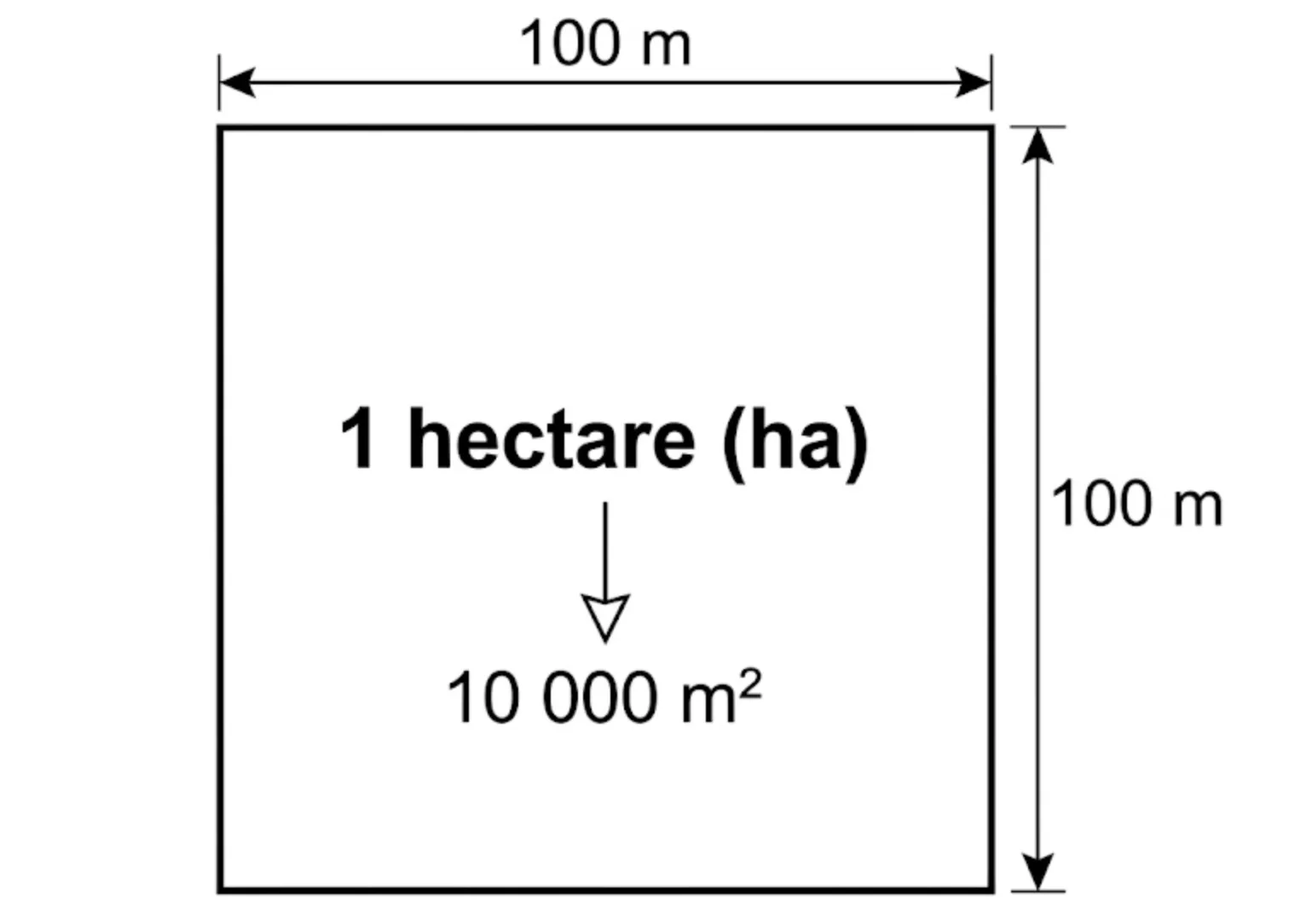
The correct abbreviation for a hectare is ha, without a period or plural "s". Recognizing this standard prevents costly errors in legal contracts, property surveys, and agricultural reports where precision matters.
Official international metrology bodies and land registry offices maintain strict rules for unit symbols. Knowing how to write, pluralize, and format this unit keeps your professional writing accurate and compliant.
The Official Standard Defined by Metrology Bodies
Global measurement standards come from the International Bureau of Weights and Measures, known as the BIPM. Their publications confirm that the official symbol for a hectare is ha.
The hectare itself equals 10,000 square meters. While it isn't a foundational unit in the International System of Units, it's fully accepted for use alongside SI units.
Why use ha instead of h or hect? Historical metric variants caused widespread confusion. A standalone letter "a" once stood for an "are" (100 square meters), so prefixing it with "hecto" (meaning one hundred) created "hectare" as 100 ares. Shortening that to ha provides a distinct, unambiguous code that prevents mix-ups with meters, hours, or chemical symbols.
Correct Formatting and Grammar Rules
Professional documentation requires strict adherence to unit formatting. Messing up a land measurement symbol can introduce ambiguity into legal or financial records.
Follow these practical rules for writing hectares:
- No periods: Write ha, never "ha." or "H.A."
- No plural form: Keep it ha for both singular and plural values. Never write "5 has".
- Case sensitivity: Always use lowercase letters. Capitalizing it as "HA" or "Ha" violates international unit conventions.
- Spacing: Always include a space between the numeric value and the symbol, such as 12 ha, not 12ha.
In general prose, you can spell out the full word hectare or hectares to improve readability, particularly at the beginning of a sentence. Reserve the ha symbol for data tables, property descriptions, technical specifications, and maps.
Real-World Consequences of Non-Standard Usage
Using informal or improvised abbreviations creates serious risks in professional workflows.
Land title deeds require exact legal phrasing. If a surveyor writes "hr" or "hect" on a property transfer document, a title examiner might misinterpret the figures. That clerical slip can halt real estate transactions or trigger costly litigation.
Agricultural and environmental reporting suffers similar data corruption. When crop yields or forest cover change logs use ambiguous symbols like "H" or "het", automated data processing tools fail. Clean data relies on standardized inputs.
Global Context and Regional Differences
While countries using the metric system rely entirely on the hectare, regional habits vary. In the United States, acres remain the dominant unit for real estate and farming.
Yet, US entities frequently encounter hectares during international trade, carbon credit verification, or scientific collaboration. Translating US acres into hectares requires precise conversion factors (one acre equals approximately 0.0404686 ha). Using the proper ha symbol ensures seamless communication with overseas partners and regulatory agencies.
Frequently Asked Questions
Is the hectare part of the metric system?
Yes, it originated as part of the metric system and remains officially accepted for use with the International System of Units, despite not being a base SI unit itself.
How do you convert acres to hectares?
Multiply your acreage value by 0.0404686 to find the equivalent value in hectares. For example, a 100-acre farm equals approximately 4.05 ha.
Should I capitalize the hectare symbol at the beginning of a sentence?
No. Unit symbols remain lowercase even when starting a sentence, though a better editorial practice is to spell out the full word hectares in that position.
Does the symbol take a plural "s"?
Never. Whether you are writing about one hectare or one thousand hectares, the symbol remains ha.