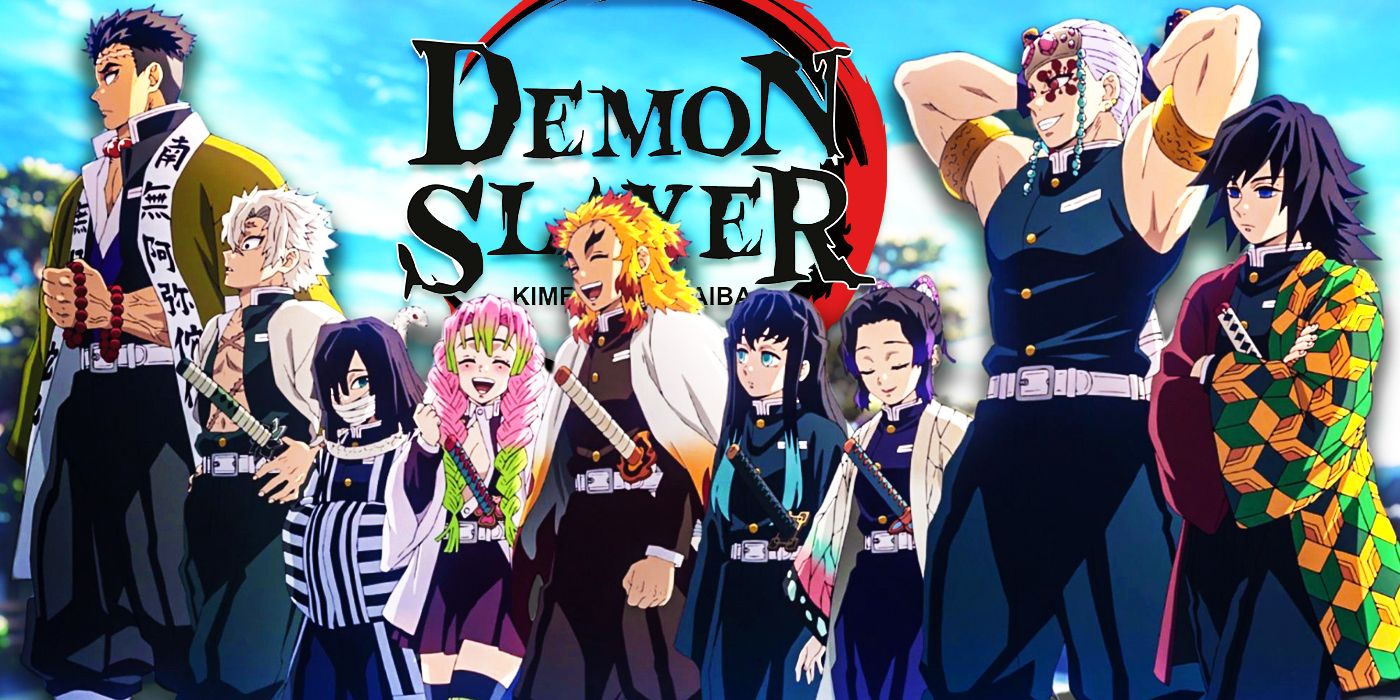
Ranking the Hashira from Demon Slayer means analyzing canonical feats, combat experience, weapon utility, and how they handle Upper Rank demons. While every Pillar is an elite master of swordsmanship, their power levels vary drastically when facing top-tier threats like Muzan Kibutsuji or Kokushibo.
Gyomei Himejima stands at the undisputed peak as the strongest Hashira, while specialized fighters like Shinobu Kocho sit near the bottom in pure physical output despite their lethal efficiency. Looking at manga feats, databooks, and final arc performances reveals the definitive strength hierarchy of the Demon Slayer Corps.
Tier S: The Absolute Apex
Gyomei Himejima - The Stone Hashira
Gyomei is universally recognized as the strongest Hashira in the generation. Before joining the Demon Slayer Corps, he beat a demon to death with his bare hands as a civilian. His physical strength is unmatched, and he wields a massive spiked flail and axe that bypass standard sword limitations.
During the Infinity Castle arc, Gyomei awakens his Demon Slayer Mark, accesses the Transparent World, and gains a Red Nichirin Blade. Upper Rank One, Kokushibo, explicitly notes that Gyomei possesses peak human physical conditioning honed to its absolute limit.
Sanemi Shinazugawa - The Wind Hashira
Sanemi’s ferocity and durability place him right behind Gyomei. His Wind Breathing forms generate explosive, gale-force pressure capable of shredding opponents at close and medium ranges.
He possesses rare marechi blood, which intoxicates demons and slows their cognitive functions. Combined with his ability to fight through fatal injuries by tightening his stomach muscles to keep his organs from spilling out, Sanemi proves to be a literal nightmare for Upper Moons.
Tier A: Elite Powerhouses
Giyu Tomioka - The Water Hashira
Giyu is a master of fundamentals who elevated his craft by inventing an entirely original eleventh form of Water Breathing: Dead Calm. This defensive technique instantly neutralizes incoming attacks.
His duel against Upper Rank Three, Akaza, proves his worth. Giyu awakens his Demon Slayer Mark and holds his ground against an opponent with infinite stamina, earning Akaza's explicit praise for his technique.
Muichiro Tokito - The Mist Hashira
A descendant of Kokushibo, Muichiro achieves Hashira rank just two months after picking up a sword. He is a textbook prodigy.
During the Swordsmith Village arc, Muichiro becomes the only modern Hashira to solo an Upper Rank demon (Upper Rank Five, Gyokko) after awakening his mark. His speed and execution of Mist Breathing create illusions that baffle even high-level adversaries.
Obanai Iguro - The Serpent Hashira
Obanai’s combat style centers on unique, twisting blade trajectories that mimic a snake's movement, making his attacks nearly impossible to predict or parry.
Fighting alongside his white snake, Kaburamaru, Obanai compensates for partial blindness with razor-sharp tactical awareness. In the final battles against Muzan, Obanai manifests a Red Nichirin Blade and unlocks the Demon Slayer Mark, stepping up when other fighters are exhausted.
Tier B: Heavy Hitters and Specialized Masters
Kyojuro Rengoku - The Flame Hashira
Rengoku possesses immense raw power, deep tactical knowledge, and unyielding spirit. While he didn't awaken the Demon Slayer Mark during his lifetime, his performance on the Mugen Train against Akaza showcases elite tier capabilities.
He nearly decapitates the Upper Rank demon using sheer physical drive and advanced Flame Breathing techniques, keeping him pinned until sunrise despite suffering mortal wounds.
Mitsuri Kanroji - The Love Hashira
Mitsuri’s physical muscle density is eight times that of an average human, giving her superhuman strength beneath a deceptively slender frame.
She wields an ultra-flexible, ribbon-like sword that requires whip-like mastery. When she awakens her Demon Slayer Mark, her speed and attack velocity skyrocket, allowing her to tear off pieces of Muzan's flesh and trade blows with Upper Rank Four, Hantengu's emotional clones.
Tengen Uzui - The Sound Hashira
A former shinobi, Tengen relies on specialized physical conditioning, musical score combat prediction, and dual cleavers connected by a chain.
He boasts the fastest running speed among all Hashira and high resistance to poisons. While he lacks the Demon Slayer Mark, his coordination with Tanjiro during the Entertainment District arc makes him instrumental in defeating Upper Rank Six, Gyutaro and Daki. He retires early due to losing an eye and a hand.
Tier C: Tactical Specialists
Shinobu Kocho - The Insect Hashira
Shinobu is physically the weakest Hashira, lacking the arm strength required to decapitate a demon with a standard katana. She compensates for this limitation by functioning as a master pharmacologist and chemist.
Her rapier-style blade injects lethal, wisteria-based poisons tailored to destroy demons from the inside out. Her speed is exceptional, and her ultimate sacrifice against Upper Rank Two, Doma, paves the way for his defeat.
Frequently Asked Questions
Who is the weakest Hashira in Demon Slayer?
In terms of physical strength and the ability to cut off a demon's head, Shinobu Kocho is the weakest Hashira. However, her tactical brilliance, poison expertise, and speed make her lethal against specific opponents.
Did any Hashira survive the series?
Out of the nine active Hashira, only two survive the final battles against Muzan: Giyu Tomioka and Sanemi Shinazugawa. Both retire from active combat as the Demon Slayer Corps disbands.
What is the Demon Slayer Mark and who gets it?
The Demon Slayer Mark is a birthmark-like pattern that awakens under near-fatal conditions—specifically when a slayer's heart rate exceeds 200 bpm and their body temperature surpasses 39 degrees Celsius (102.2°F). Gyomei, Sanemi, Giyu, Muichiro, Obanai, and Mitsuri all awaken their marks.
Why couldn't Tengen Uzui beat Upper Rank Six alone?
Tengen faced Gyutaro and Daki, who required simultaneous decapitation. Without specialized support from Tanjiro, Zenitsu, and Inosuke, the unique poison mechanics of Upper Six made solo victory mathematically impossible. You can read more about the historical context of swordsmanship on Britannica.



