When people look at elite higher education, Harvard and the Massachusetts Institute of Technology often blur together. They sit just miles apart across the Charles River in Cambridge, Massachusetts, share cross-registration agreements, and draw hyper-competitive applicant pools from around the globe. Yet despite their geographic proximity, they operate on completely different educational philosophies, campus cultures, and institutional missions.
Harvard functions as a traditional, broad-based liberal arts powerhouse emphasizing human institutions, historical context, and global leadership. MIT operates as a hands-on technical engine built on the motto mens et manus (mind and hand), prioritizing empirical problem-solving, building, and quantitative research. Understanding how they diverge helps applicants and observers see past the shared prestige and pinpoint what separates these two academic giants.
The Core Academic Philosophy
The most profound difference between the two institutions lies in how they teach and what they expect from students. Harvard relies on a foundational liberal arts model. Students choose a "concentration" (major) while completing rigorous general education requirements across arts, humanities, social sciences, and sciences. The workload leans heavily into reading, writing, critical analysis, and seminar discussions. You're expected to write extensive papers, interpret complex texts, and debate historical or economic policies.
MIT structures its curriculum around intense technical depth and project-based learning. Every undergraduate, regardless of their eventual major, must complete a rigorous Core Curriculum that includes calculus, physics, chemistry, and biology. The academic pace at MIT is famously intense—often described by students as "drinking from a firehose". Instead of long essay prompts, your assignments are complex problem sets, coding projects, and lab prototypes.
Consider how this plays out in popular fields of study:
- Economics: Harvard’s economics department is heavily oriented toward public policy, theoretical frameworks, and institutional structures. MIT’s economics program leans aggressively quantitative, heavily mathematical, and data-driven.
- Engineering: While Harvard has expanded its engineering and applied sciences footprint significantly, MIT remains the global gold standard for engineering across every sub-discipline.
- Interdisciplinary overlap: Because of the institutional proximity, students can easily cross-register for classes at either campus, allowing a Harvard student to take advanced robotics at MIT, or an MIT student to take public governance at Harvard.
Admissions Standards and Selection Criteria
Both institutions boast acceptance rates hovering between 4% and 5%, meaning raw academic perfection is merely the baseline for entry. However, their admissions offices look for distinct signals in an applicant's profile.
Harvard seeks the "well-rounded" class or the "sharp-peaked" individual who shows exceptional promise for leadership and broad societal impact. Because Harvard fields massive cohorts across humanities, social sciences, and pre-professional tracks like law and medicine, admissions officers hunt for intellectual vitality, distinct personal voice, and community influence. Standardized testing is strictly required, and extracurriculars often span debate, writing, student government, or community organizing alongside scientific research.
MIT explicitly states that it does not build a class of generalists; it builds a community of makers, builders, and analytical problem-solvers. MIT evaluates applicants for a "maker mindset." They want to see tangible evidence that you build things, fix broken systems, conduct rigorous independent research, or dive deep into competitive math and science olympiads. If you love humanities and write poetry, you can thrive at MIT, but your application must still demonstrate a genuine passion for empirical inquiry and technical rigor.
Campus Culture and Student Life
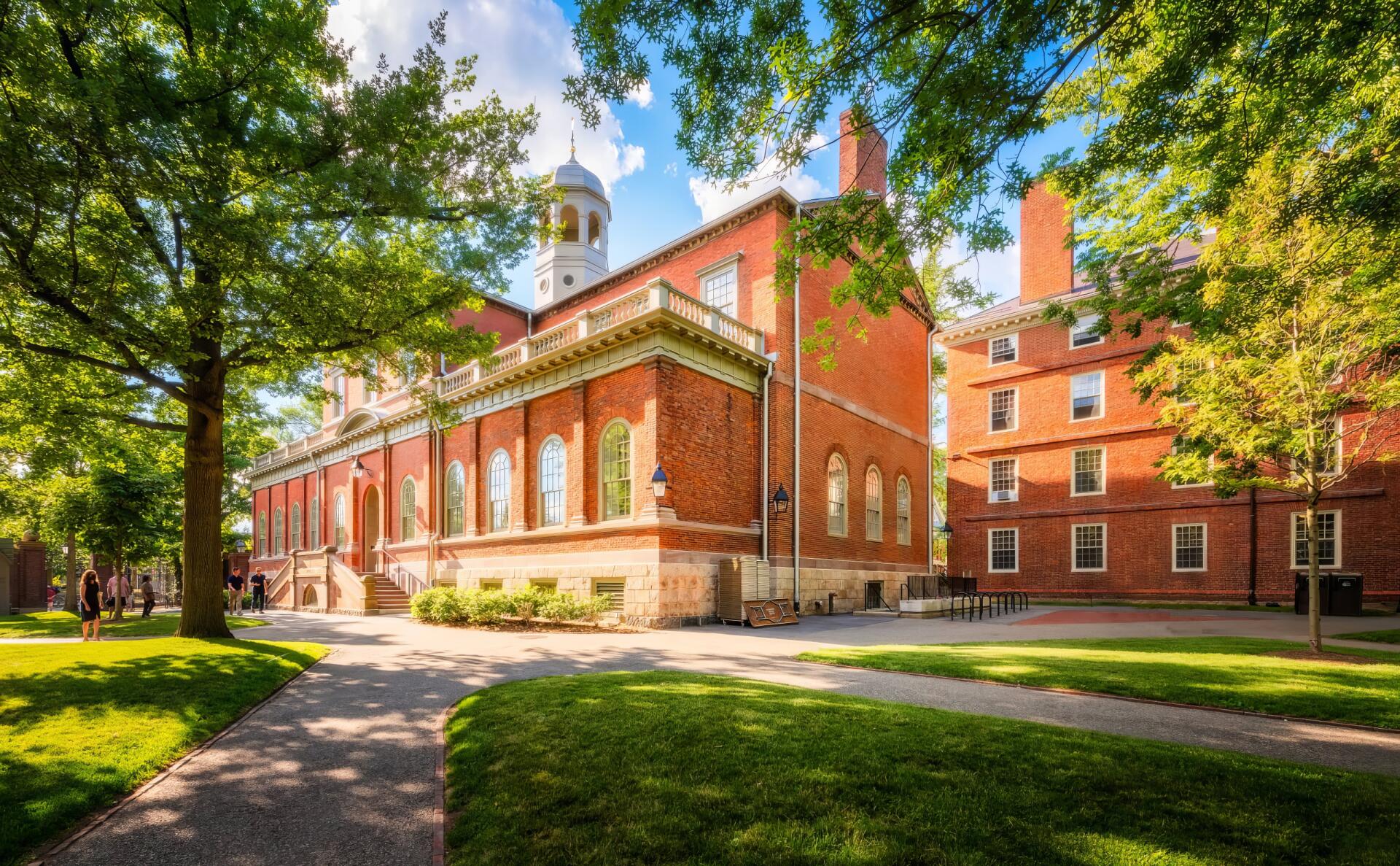
Campus culture flows directly from institutional history. Harvard’s campus feels classic and collegiate. Red-brick Georgian architecture, historic courtyards like Harvard Yard, and traditional residential houses define the undergraduate experience. Social life is often shaped by a rich ecosystem of student clubs, publications, cultural organizations, and historic final clubs.
MIT’s campus features modern, industrial, and brutalist architecture designed for high-tech research. The student culture is famously eccentric, collaborative, and driven by "hacker culture"—referring not to computer security breaches, but to elaborate, physics-defying campus pranks known as "hacks". MIT students live in a dorm culture where sleep deprivation is worn as a badge of honor, and collaboration on grueling problem sets builds tight-knit academic communities.
Financial accessibility is a strong point for both. Each school operates a need-blind admission policy for domestic applicants and meets 100% of demonstrated financial need with grant-based aid rather than loans, ensuring that families earning typical middle-class incomes often pay little to nothing out of pocket.
Common Misconceptions
Several persistent myths cloud public perception of these universities.
One common myth is that you cannot study humanities or arts at MIT. While MIT is a STEM powerhouse, it houses world-class departments in linguistics, economics, writing, and music. Conversely, people often assume Harvard is weak in science. In reality, Harvard’s life sciences, medical research output, and biotech integration are among the best globally.
Another misconception is that cross-registration makes the two schools functionally identical. While taking classes across the river is entirely possible, your home institution dictates your core graduation requirements, advising network, and primary peer group. An MIT student immersed in the Infinite Corridor experiences a fundamentally different daily reality than a Harvard student walking through the historic Yard.
Frequently Asked Questions
Can Harvard students easily take classes at MIT?
Yes. Harvard and MIT maintain a long-standing cross-registration agreement. Undergraduates at either institution can enroll in classes at the other for credit, provided they secure the necessary departmental approvals. This serves as a vital bridge for students who want Harvard's liberal arts breadth alongside MIT's specialized technical depth.
Which school is harder to get into?
Statistically, their admissions rates are virtually identical, resting in the 4% to 5% range. However, the applicant pools differ slightly in composition. MIT tends to attract a self-selecting cohort of elite math and science students, while Harvard draws a broader applicant pool across humanities, social sciences, and STEM, making both exceptionally difficult to crack.
Do employers favor one over the other?
Employers treat degrees from both institutions with maximum respect, but they look for different traits. Graduates from MIT are typically recruited heavily for quantitative trading, software engineering, aerospace, robotics, and deep-tech venture creation. Harvard graduates frequently move into management consulting, investment banking, public policy, law, medicine, and corporate leadership roles.
Is MIT part of the Ivy League?
No. The Ivy League is an athletic conference consisting of eight private northeastern universities: Brown, Columbia, Cornell, Dartmouth, Harvard, Penn, Princeton, and Yale. MIT is an independent institution and is not a member of the Ivy League, though its academic prestige matches or exceeds Ivy standards.



