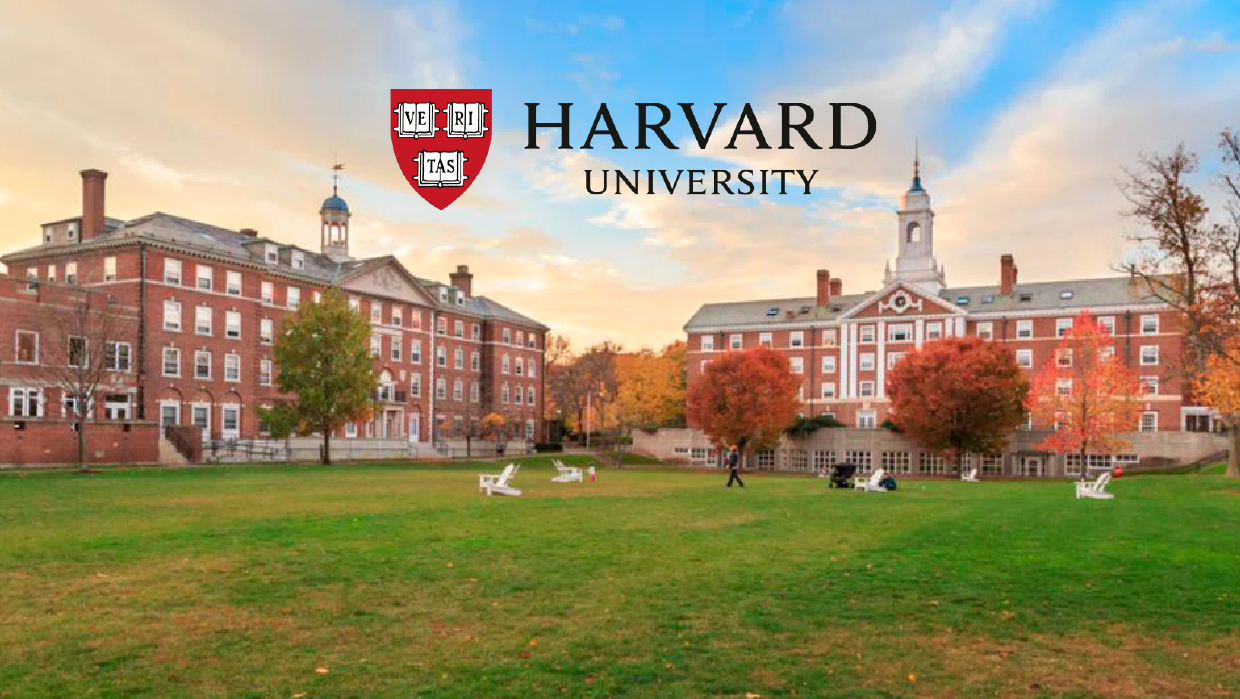
The Harvard University Department of Government operates as a central hub for training political scientists, public administrators, and international leaders. Situated within the Faculty of Arts and Sciences in Cambridge, Massachusetts, the program merges rigorous quantitative data analysis with political theory. If you're looking to understand how academic institutions shape global policy, examining this specific department reveals how elite institutions train people to navigate and manipulate administrative power structures.
For decades, the department has served as an incubator for political elites, diplomats, and policy architects. While critics often point to its elite positioning, its structural approach to political science sets a benchmark for how universities study institutions, electoral behavior, and international relations. Let's break down the curriculum, the research culture, and how this academic machinery actually functions behind closed doors.
The Curriculum and Analytical Framework
Undergraduate and graduate tracks in the department break away from simple political commentary. Students don't just read historical speeches; they construct statistical models to predict voting behavior and analyze institutional design. The curriculum splits into distinct subfields: American politics, comparative politics, international relations, and political theory.
Students learn early on that studying government requires mastering multiple methodologies. Quantitative problem sets sit alongside close readings of canonical philosophy.
- Methodological Rigor: Classes require proficiency in statistical software, game theory, and causal inference to evaluate public policy outcomes.
- Theoretical Foundations: Seminars force students to grapple with power dynamics through texts written by political theorists from antiquity to the modern era.
- Subfield Specialization: Upper-level undergraduates choose a concentration that dictates whether they spend their senior year writing a thesis on congressional gridlock or comparative authoritarian regimes.
This dual focus on hard data and foundational theory creates a specific type of thinker. Graduates are trained to view political crises not as emotional outbursts, but as mechanical failures of institutional design.
Faculty Research and Real-World Impact
The department's professors drive much of contemporary political discourse. Faculty members don't stay locked inside ivory tower libraries; they advise federal agencies, testify before congressional committees, and author influential policy papers.
Research output inside the department heavily influences how federal programs operate. Scholars examine why state capacity varies across different countries, how voting laws suppress or encourage turnout, and what economic policies prevent sovereign debt crises.
- State Capacity Studies: Faculty research frequently looks at bureaucratic efficiency, tracking how agencies implement laws passed by legislatures.
- Electoral Mechanics: Work from department affiliates investigates Gerrymandering, campaign finance reform, and the historical evolution of the franchise.
- International Security: Professors publish analyses on nuclear deterrence, trade pacts, and the shifting balance of power between superpowers.
This active engagement means students are reading theories written by the same people currently advising world leaders. That proximity to applied power is a major draw for ambitious students entering the program.
The Institutional Pipeline to Public Office
Critics often debate the existence of an institutional pipeline moving graduates straight from Cambridge seminar rooms to government offices. Historically, the department has counted numerous heads of state, Supreme Court clerks, and cabinet secretaries among its alumni.
This network operates through mentorship, undergraduate research assistantships, and fellowship placements. Students gain access to Washington policy circles through alumni networks and specialized internship programs funded by the university.
Yet, navigating this pipeline isn't a guaranteed golden ticket. The modern political landscape demands more than a degree brand; it requires navigating complex media environments and polarized legislative bodies. Many alumni find that the theoretical models learned in class collide harshly with partisan gridlock and public skepticism.
Adapting to Twenty-First Century Politics
Political science has shifted dramatically over the last twenty years. The department has had to modernize its course offerings to address algorithmic polarization, climate migration, and the decline of traditional democratic norms.
Data science now permeates courses that once relied solely on archival research. Students write scripts to scrape social media data, tracking how misinformation spreads during elections.
- Digital Governance: Classes evaluate how social media platforms alter public debate and affect election security.
- Climate Politics: Seminars analyze the political economy of green transitions and international climate treaties.
- Democratic Backsliding: Researchers study why long-standing democratic institutions fail in various parts of the world.
These adaptations keep the curriculum relevant, ensuring graduates understand modern threats to governance rather than just historical governance models. You can review current degree requirements directly on the Harvard Department of Government portal. For broader context on higher education rankings and research output, the American Political Science Association provides useful industry data.
Frequently Asked Questions
What undergraduate degree does the Harvard Government Department offer?
Students earn a Bachelor of Arts (A.B.) in Government through Harvard College. The concentration allows students to pursue honors by writing a senior thesis based on original empirical or theoretical research.
How does the department differ from a public policy school?
While Harvard Kennedy School focuses on applied public administration and professional training, the Department of Government focuses on political science research, theory, and empirical analysis of political systems.
Is prior political experience required for admission?
No. Admissions committees evaluate academic potential, analytical writing, and mathematical aptitude rather than prior political activism or government internships.
What career paths do graduates typically pursue?
Beyond elected office, alumni enter fields like data analysis, journalism, law school, non-profit management, consulting, and academic research.



