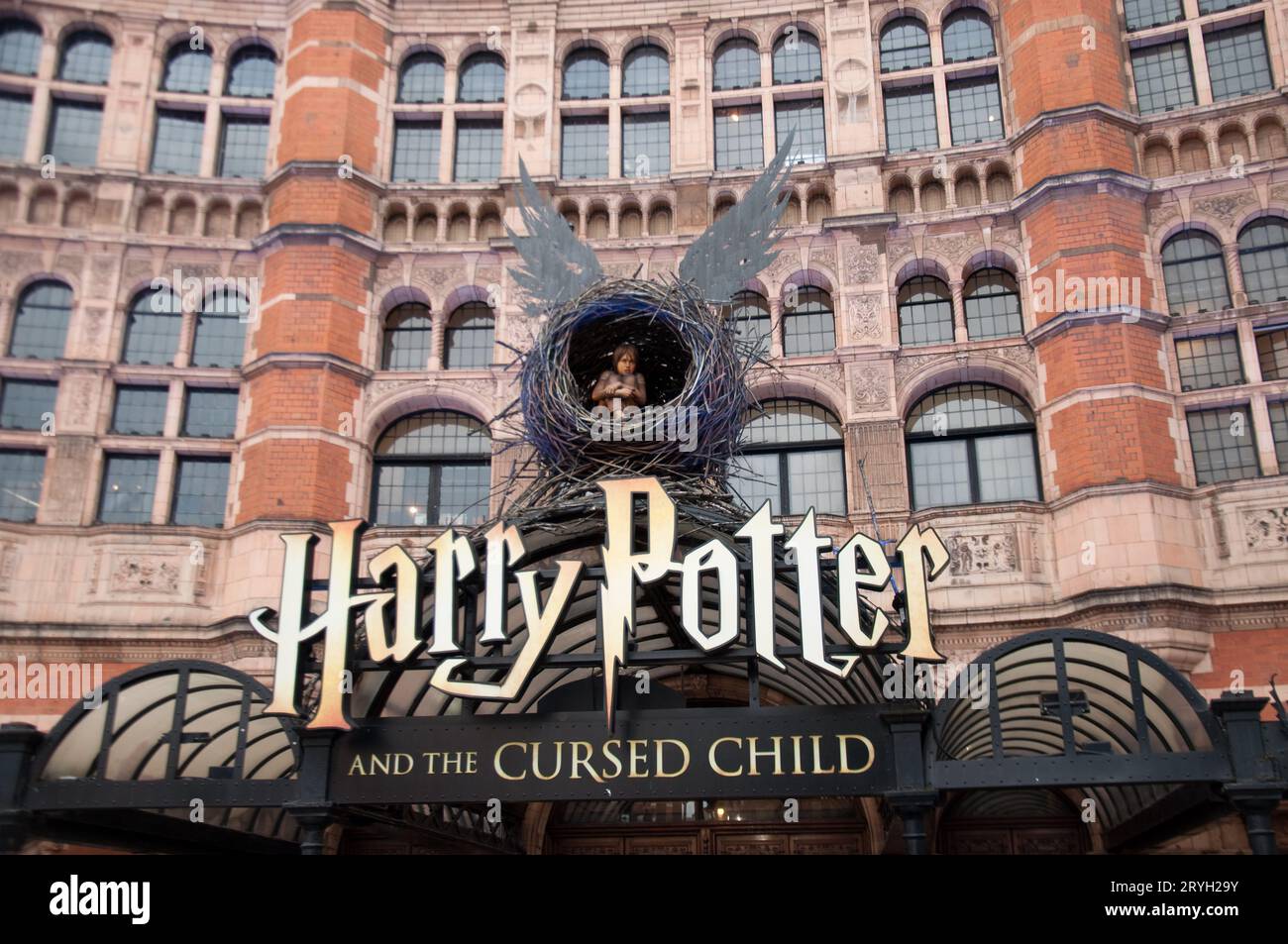
When the final pages of Harry Potter and the Deathly Hallows closed on an epilogue set nineteen years later, many readers felt a distinct mixture of closure and curiosity. We left Harry, Ron, and Hermione watching their children board the Hogwarts Express, stepping into an untracked future. Years later, that exact narrative bridge materialized on stage in Harry Potter and the Cursed Child, exploring how the golden generation handles middle age while their children face the heavy weight of family legacies.
Instead of writing a traditional prose novel, J.K. Rowling, Jack Thorne, and John Tiffany chose the medium of a stage play to examine this next chapter. The story tackles the complex dynamics of parenthood, unresolved childhood trauma, and the dangerous allure of trying to fix the past. Let's look at how this production connects two distinct eras of the wizarding world and why it remains a fascinating anchor for the franchise.
The Shift from Heroes to Parents
In the original series, Harry, Ron, and Hermione fought an external war against Voldemort. In this continuation, the primary conflicts are internal and relational. Harry is now an overworked Head of the Department of Magical Law Enforcement at the Ministry of Magic, struggling to connect with his youngest son, Albus Severus Potter.
This role reversal forms the emotional core of the narrative:
- The Burden of Legacy: Albus feels crushed by the expectation to live up to his father's legendary status, leading to a deep sense of isolation at Hogwarts.
- Parental Imperfection: Harry doesn't have all the answers anymore; his fear of failing as a father often causes him to overcompensate or pull away.
- Redefining Rivalries: In a surprising twist, Albus forms a close friendship with Scorpius Malfoy, Draco's son, forcing both Harry and Draco to confront their own high-school animosities for the sake of their children.
By shifting the lens from invincible heroes to flawed parents, the story grounds the magic in recognizable family struggles. It's a sharp pivot that forces older fans to view the original trio through a more mature, empathetic lens.
Navigating Time and Consequences
Time travel has always been a volatile mechanic in the wizarding world. While Prisoner of Azkaban utilized a closed-loop system where past actions were already accounted for, this stage play introduces a much more disruptive type of temporal interference. When Albus and Scorpius acquire an illegal, experimental Time-Turner, their attempts to save Cedric Diggory trigger massive alterations to history.
Each trip backward creates alternate timelines where major events played out differently:
- Universes where Voldemort won the Battle of Hogwarts.
- Realities where beloved characters never survived or never met.
- Dark dystopias governed by fear and authoritarian rule.
These narrative detours serve as a cautionary tale about nostalgia. The story argues that wishing you could undo past pain or rewrite history is a trap. You can't outrun the consequences of change, and trying to force perfection onto a messy world usually breaks it further.
Bridging the Fandom Generations
One of the most interesting aspects of this project is how it bridges two different demographics of fans. Parents who grew up reading the books in the late 1990s and 2000s are now taking their own children to experience the production live on stage.
This generational handoff mirrors the plot itself. Younger audiences get introduced to the Wizarding World through the eyes of teenagers navigating school pressure and identity crises, while veteran fans get the comfort of seeing older versions of characters they've known for decades.
You can explore more about current stagings, ticket availability, and global productions directly on the Official Harry Potter and the Cursed Child Website. If you want to dive deeper into the overarching lore and character histories, the Wizarding World Collection offers great background resources.
Common Misconceptions About the Play
Because the format shifted from a standard novel to a script book, many readers approach it with the wrong expectations. Here's what to keep in mind:
- It's Not a Novel: Reading a script means you're consuming dialogue and stage directions rather than rich internal monologues. The real magic happens through the physical staging, special effects, and acting.
- Canon Status: J.K. Rowling has endorsed the story as part of the official canon, though it was co-authored by Jack Thorne.
- Production Evolution: The show originally ran as a massive two-part theatrical event, but major hubs like London's West End have adapted it into a streamlined, one-part production to make it more accessible.
Frequently Asked Questions
Do I need to read the script before seeing the show?
You don't have to. In fact, most people recommend seeing the production live first if you can, because the theatrical illusions and stagecraft are designed to surprise the audience in real-time.
Where is Harry Potter and the Cursed Child currently playing?
Major permanent productions run in cities like London, New York, Tokyo, and Hamburg, alongside periodic regional tours. Check local listings for current cast details and venue schedules.
Is the story suitable for younger children?
The producers generally recommend the show for ages 8 and up. Keep in mind that it features intense thematic elements, dark magical moments, and a runtime close to three hours.
How does the play connect back to the original books?
It relies heavily on nostalgia, featuring familiar locations like Hogwarts and the Ministry of Magic, alongside children of legacy characters who inherit the unresolved tensions of the past.



