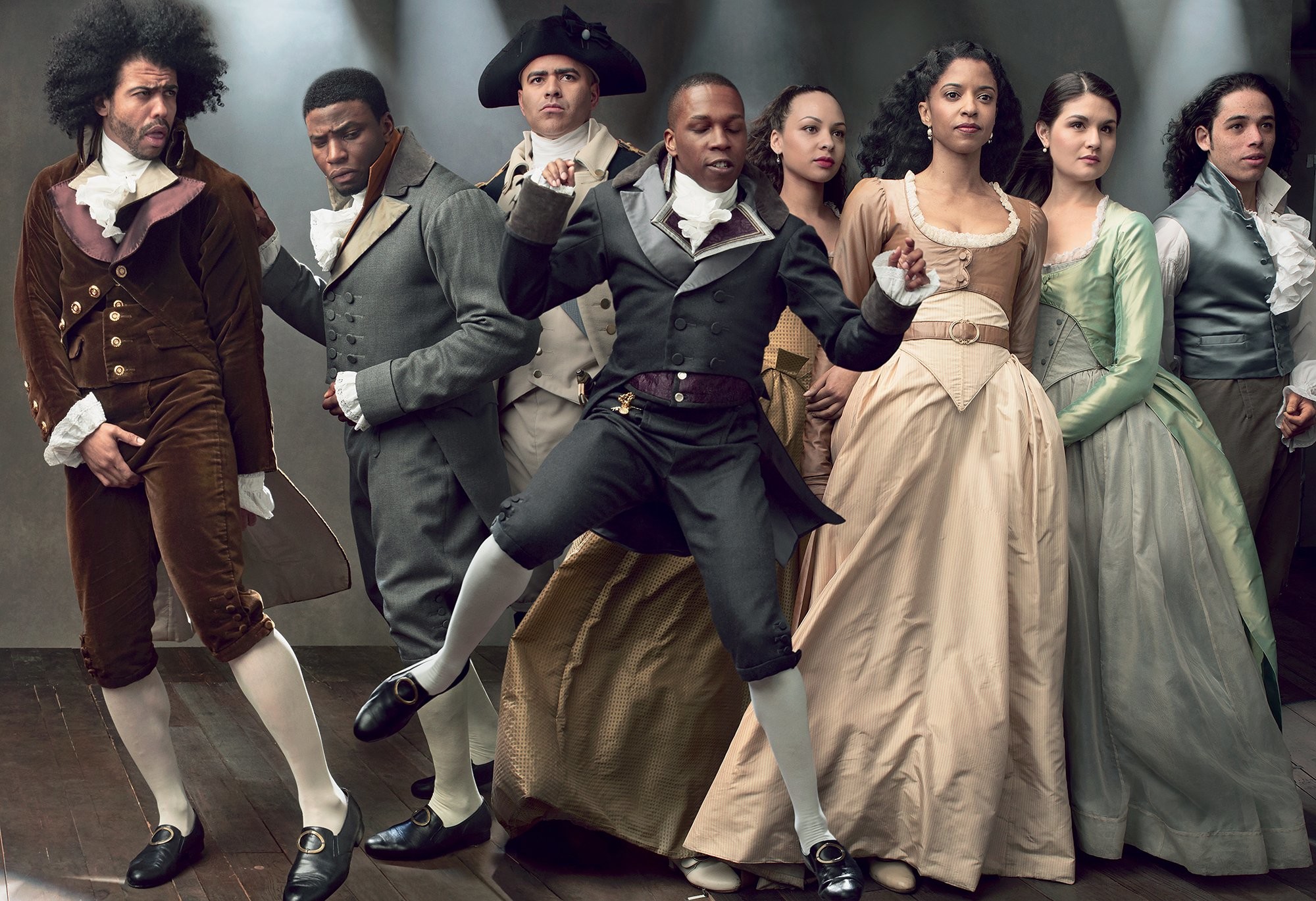
When Hamilton premiered on Broadway, it didn't just introduce hip-hop to the Great White Way; it completely dismantled how background performers operate on stage. Traditional stage productions often relegate the ensemble to static scenery, crowd filler, or brief dance interludes. Hamilton weaponized its chorus into a living, breathing narrative engine that drives the entire historical drama forward.
The secret to this shift lies in the seamless fusion of relentless movement, physical staging, and multi-layered vocal tracking. Choreographer Andy Blankenbuehler didn't just design dance routines; he mapped out physical representations of political tension, societal pressure, and internal anxiety. When you look at how the original company operated, you see a masterclass in shifting perspective where the background never truly sleeps.
Breaking the Mold of Traditional Broadway Choruses
For decades, musical theater followed a predictable hierarchy. Stars handled the heavy lifting of exposition and emotional arcs, while the chorus filled out the soundboard during massive production numbers. Hamilton erased these strict boundaries from its first scene.
- Constant Stage Presence: The ensemble remains on or near the stage for nearly the entire runtime, reacting to political shifts even when they aren't the primary focus.
- Dual Characterization: Ensemble members seamlessly transition from Founding Fathers' aides to anonymous pub patrons, bullet personifications, and grieving citizens without leaving the building.
- Physical Scenery: Instead of relying solely on heavy wooden flats or complex digital projections, the cast uses their own bodies to construct physical barriers, spinning tables, and battlefield formations.
This approach transforms passive viewers into active witnesses. You aren't just watching Alexander Hamilton talk about ambition; you're watching the ensemble physically manifest the suffocating weight of that ambition pressing in from all sides.
The Choreography of Political Momentum
Movement in Hamilton serves as a secondary dialogue. In numbers like "Non-Stop" or "My Shot", the ensemble creates kinetic architecture. They move like a swarm of bees or a tidal wave, mirroring the chaotic birth of a new nation.
Andy Blankenbuehler's choreography borrows heavily from jazz, hip-hop, and classic modern dance, but its genius rests in its narrative efficiency. Notice how the dancers interact with the turntable built into Broadway's Richard Rodgers Theatre stage. As the stage rotates forward, the ensemble moves against it, physically visualizing the relentless march of time. When characters sing about running out of time, the chorus rushes past them in reverse motion, creating an immediate, visceral sense of urgency that dialogue alone could never achieve.
Vocal Layering and Harmonic Density
Music director Alex Lacamoire crafted vocal arrangements where the ensemble functions like a Greek chorus commenting on the action. In traditional shows, harmonies support the lead melody. In Hamilton, the ensemble often carries counter-melodies that challenge the soloist's perspective.
Take the track "Satisfied". While Angelica Schuyler relives her painful choice, the ensemble rewinds time physically and vocally, echoing phrases that reinforce her internal conflict. They don't just sing backup; they provide the psychological atmosphere. They are the ticking clock, the gossip in the parlor, and the public judgment breathing down the neck of every historical figure.
Common Misconceptions About Ensemble Integration
Many modern productions attempt to replicate Hamilton's fluid ensemble style, but they often stumble by misunderstanding how the mechanics actually function.
- Mistake: Treating movement as mere decoration. Directors sometimes add fast-paced choreography to slow songs just to keep the audience visually stimulated, which clutters the narrative instead of clarifying it.
- Mistake: Overcrowding the focal point. In Hamilton, the ensemble knows precisely when to freeze or recede into the shadows so the eye naturally gravitates toward the primary speaker.
- Mistake: Neglecting individual identity. Even within a unified mob scene, original ensemble members like Emmy Raver-Lampman or Jon Rua maintained distinct physical traits and reactions, making the crowd feel like a collection of real people rather than an anonymous blob.
Frequently Asked Questions
Did the original ensemble members have solo lines?
Yes. Many ensemble members covered swing tracks and understudied major principal roles, while also executing distinct scripted moments, such as the bullet personification or specific messenger roles within the narrative structure.
How did the revolving stage enhance the ensemble work?
The physical turntable allowed the ensemble to interact with characters across time and space simultaneously. They could push a character forward into a new scene or pull them backward into memory without a single blackout or set change.
Why is the ensemble referred to as a "living set"?
Because the production relies on minimal physical scenery, the actors use their bodies, arms, and grouping formations to build doors, cannons, courtroom walls, and street corners on an almost bare stage.
How did hip-hop influence the physical staging?
Hip-hop culture emphasizes battles, crew dynamics, and sharp, isolated movements. The creative team translated these elements into theatrical staging, giving the historical narrative a modern street-level grit and collective energy.