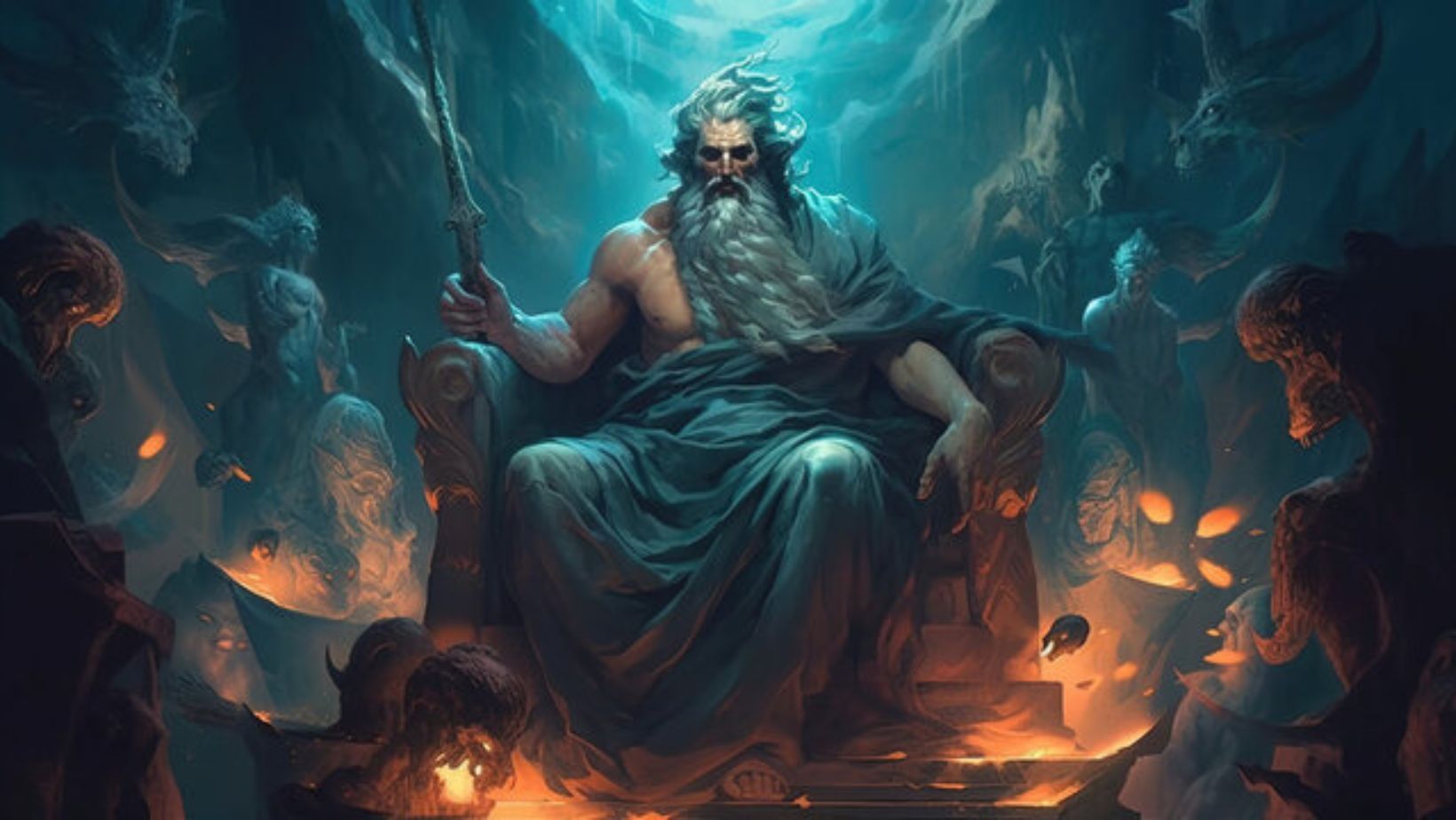
When Rick Riordan introduced Hades in The Lightning Thief, the Lord of the Dead arrived not as a mindless monster, but as a corporate-suited executive brooding over stolen property. This modern reframing did more than populate a children's adventure series—it transformed how contemporary fantasy handles mythological archetypes. Instead of relying on the flat, one-dimensional villainy found in classical cautionary tales, Riordan positioned Hades as a nuanced antihero, proving that darkness in storytelling requires psychological weight rather than simple malice.
Classical myth casts Hades as an austere, isolated sovereign who rarely intervenes in human affairs outside of kidnapping Persephone or punishing the damned. Yet in the Percy Jackson & the Olympians series, his character reflects the emotional friction of systemic burnout and familial exile. He operates outside the golden halls of Mount Olympus, nursing a bitter grudge born from being cheated out of the sky and the sea. By anchoring Hades in legitimate grievance rather than cartoonish evil, modern urban fantasy creates a bridge between ancient fears of mortality and contemporary struggles with institutional unfairness.
Understanding why this specific character redesign changed modern narrative pacing requires looking at how ancient pantheons translate into YA fiction. We'll examine how Riordan modernized the Underworld, why reluctant mentors outrank traditional villains, and how this mythic blueprint influences current fantasy writing.
The Evolution of the Underworld from Ancient Text to Modern Page
Ancient Greek writers treated the Underworld as a geographic inevitability—a damp, dreary final station where identity faded into pale smoke. In Homer’s Odyssey, Achilles famously laments that he would rather be a living serf to a landless peasant than king over all the departed shades. Hades himself was rarely worshipped directly; Greeks avoided speaking his name aloud, opting for euphemisms like Plouton (the wealthy one) to avoid drawing his attention.
Riordan flipped this bleak geography into a bureaucratic purgatory complete with security gates, an arrival lounge, and endless waiting lines. This structural choice serves a dual storytelling purpose:
- Relatability through Bureaucracy: Transforming the River Styx and the Fields of Punishment into systems governed by processing errors makes ancient dread digestible for young readers.
- Moral Neutrality: The Underworld isn't a torture chamber designed by a sadistic ruler; it's a cosmic mechanism. Hades is portrayed as the overworked CEO of a massive, thankless municipal utility.
By shifting the narrative away from fire-and-brimstone clichés, modern storytelling allows readers to view death not as a punishment inflicted by an angry god, but as a natural boundary that even immortals must respect. This demystification removes the barrier of ancient language, letting readers focus on the relational friction between gods and mortals.
Why Reluctant Mentors Outperform Classic Villains
Traditional pulp fiction relies on clear binaries: the hero is pure, the villain is corrupt, and conflict resolves through overwhelming force. Hades shatters this binary. When Percy first encounters him in Los Angeles, the tension doesn't stem from a desire to conquer the mortal world, but from a family dispute over a stolen Master Bolt and a Helm of Darkness.
Hades doesn't want world domination; he wants respect, equal real estate, and an end to being treated as an outcast by his younger brothers, Zeus and Poseidon. This shift from global tyrant to aggrieved sibling introduces a mature psychological dynamic into youth fiction.
- Accountability over Absolution: Hades never apologizes for his cold demeanor, nor does he coddle Percy. He forces characters to confront hard truths about sacrifice and inevitability.
- The Weight of Isolation: His centuries-long exclusion from Olympus highlights the dangers of institutional ostracism, giving readers an allegorical figure for social alienation.
Writers note that contemporary audiences reject spotless heroes and mustache-twirling villains. They crave figures who occupy moral gray zones. Hades works because his anger is justified by the text's own internal logic—the Olympians did cheat him out of a fair share of the cosmos.
The Mythological Roots of Modern Antiheroes
The archetype of the dark sovereign who guards forbidden knowledge traces back centuries, but its modern execution owes a debt to how urban fantasy integrates ancient lore into contemporary settings. When authors drop classical deities into modern cities—as seen in media discussed by platforms like Tor.com—they must preserve the core essence of the myth while giving the entity a stake in contemporary conflicts.
Hades embodies the ultimate outsider perspective. While Zeus obsesses over public relations and Poseidon swings between paternal warmth and oceanic wrath, Hades remains stationary. He is the only Olympian whose domain expands automatically every single day, fueled by the natural end of mortal life.
This permanence gives him a sobering philosophical weight. In a genre saturated with characters seeking immortality or infinite power, Hades represents the quiet dignity of acceptance. He reminds heroes that power without boundaries becomes tyranny, and that true authority requires carrying the burden of finality.
Common Misconceptions About Hades in Modern Adaptations
Adapting Greek mythology for modern readers often invites specific narrative traps. Writers and fans frequently misinterpret how Hades functions within both ancient sources and modern retellings.
- Mistake 1: Equating Hades with Satan. Unlike the Christian devil, Hades does not tempt mortals to sin, nor does he actively corrupt souls. He merely administers a neutral post-life holding facility.
- Mistake 2: Assuming he acts out of malice. Most of Hades' conflicts in modern fiction stem from defensiveness and protection of his borders, not offensive expansionism.
- Mistake 3: Ignoring his domestic context. Mythologically and narratively, Hades' partnership with Persephone grounds his character, showing that even the god of the dead values companionship and seasonal renewal.
Recognizing these distinctions helps writers avoid recycling tired tropes when building their own myth-infused fictional universes.
Frequently Asked Questions
Why is Hades often portrayed as the villain in media despite being neutral in ancient myths?
Pop culture historically conflated Hades with Christian concepts of the devil because he rules the underworld. Modern works like Percy Jackson actively subvert this by showing him as a strict administrator rather than an evil tempter.
How does Hades differ from Zeus and Poseidon in personality?
While Zeus values flashy authority and Poseidon favors emotional volatility, Hades values order, isolation, and strict adherence to ancient cosmic boundaries. He prefers administrative precision to divine theatrics.
Why do modern readers connect more with underworld figures than traditional heroes?
Underworld figures like Hades represent realism, mortality, and the consequences of trauma or exile. They acknowledge that life involves loss and hard boundaries, which resonates deeply with adolescent and adult readers alike.
How did Rick Riordan change the perception of Greek gods for younger generations?
Riordan modernized the gods by giving them contemporary flaws—ADHD, dyslexia, marital disputes, and institutional politics—making ancient mythologies accessible and emotionally relevant to modern readers.



