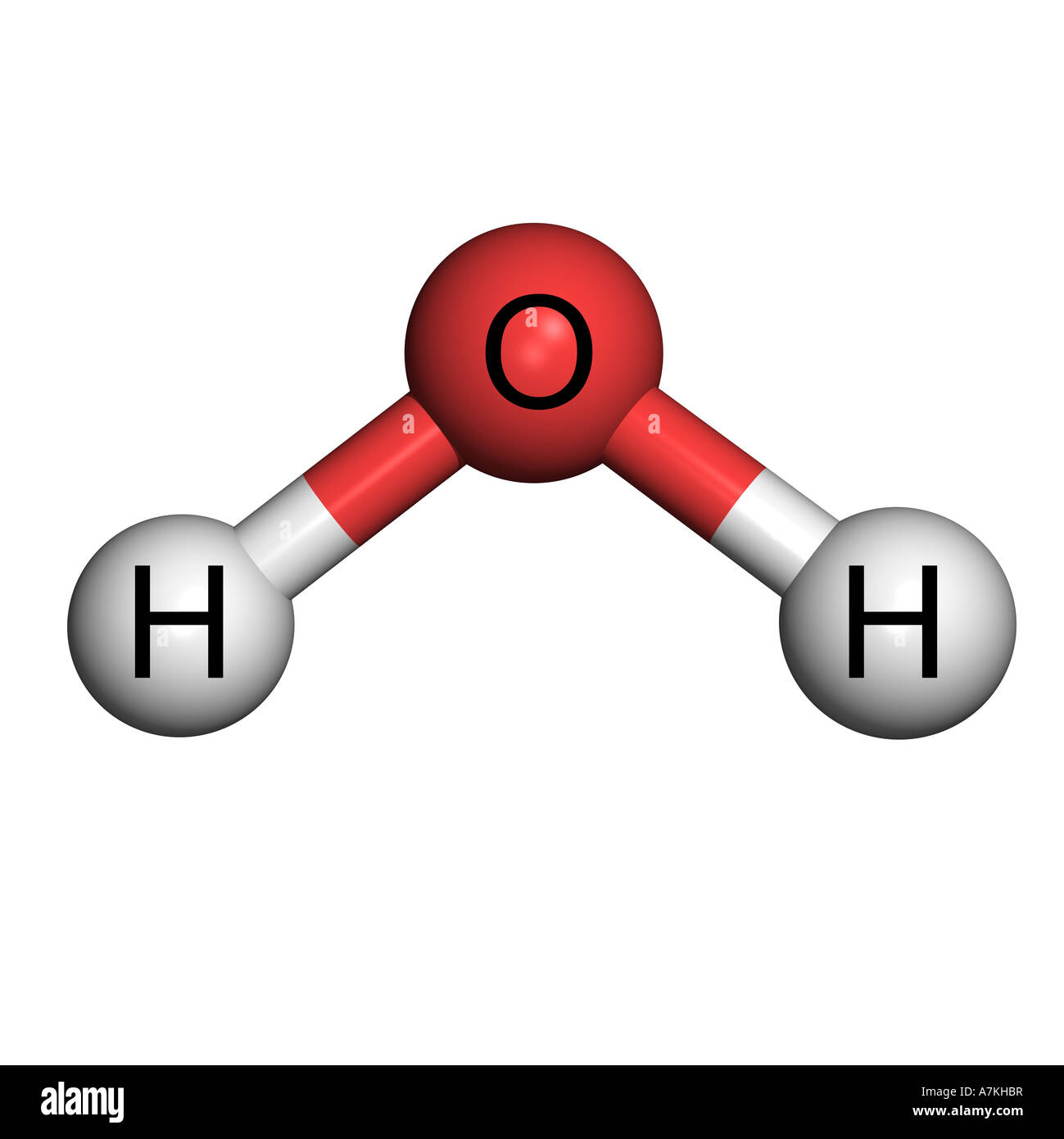
The H2O water chemical name refers to a simple molecular structure composed of two hydrogen atoms bonded to a single oxygen atom. This foundational substance covers most of our planet and forms the biological matrix for every living cell. When we look closer at individual molecules, we find a complex network of physical forces and chemical behaviors that make life possible.
At its core, the H2O water chemical name tells us about atomic composition, but it doesn't capture the bent geometry or polar charge distribution that drives its everyday behavior. Understanding why water behaves unlike almost any other liquid requires looking at covalent bonds, hydrogen bonding networks, and thermal characteristics that regulate both global ecosystems and human physiology.
The Atomic Structure of Water
Every single molecule of water consists of one oxygen atom covalently bonded to two hydrogen atoms. These bonds form through electron sharing, but the sharing isn't equal. Oxygen has a much higher electronegativity than hydrogen. This means oxygen pulls the shared electrons closer to its own nucleus, creating a partial negative charge near the oxygen atom and partial positive charges near the two hydrogen atoms.
This unequal charge distribution creates a permanent dipole moment, turning each molecule into a microscopic magnet with positive and negative poles. The molecule doesn't sit in a straight line; instead, it features a bent shape with an angle of approximately 104.5 degrees. This specific angle is dictated by lone electron pairs on the oxygen atom pushing the hydrogen atoms downward. Without this bent geometry, water would lose its polarity and its ability to form tight networks with neighboring molecules.
Covalent Versus Hydrogen Bonds
Intramolecular covalent bonds hold the internal atoms together inside a single molecule, requiring significant energy to break apart. Intermolecular hydrogen bonds form between separate molecules, connecting the positive hydrogen of one molecule to the negative oxygen of another. These hydrogen bonds are individually weak, constantly breaking and reforming in liquid water at room temperature.
Collectively, however, these bonds create immense collective strength. They explain why water remains a liquid at temperatures where lighter gases should exist, and they dictate the unique phase changes we observe in nature. For instance, most substances shrink and become denser as they freeze, but water expands. As temperatures drop below zero degrees Celsius, hydrogen bonds lock molecules into an open, crystalline hexagonal lattice. This lattice takes up more space than the liquid state, which is why ice floats on lakes and oceans.
Unique Physical Properties
The polarity and hydrogen bonding of water produce extraordinary physical traits that distinguish it from other simple hydrides like hydrogen sulfide. These properties dictate everything from weather patterns to biological nutrient transport.
- Universal Solvent Capabilities: Water dissolves more substances than any other liquid. Its charged poles attract the positive and negative ions of salts, pulling ionic crystals apart into solution.
- High Specific Heat Capacity: Water absorbs vast amounts of thermal energy with only minimal changes in its own temperature. This thermal inertia protects aquatic life from sudden temperature swings.
- Surface Tension and Capillary Action: Cohesive forces cause molecules to cling tightly to one another at the surface, creating high surface tension. Adhesive forces allow water to pull itself upward through narrow plant tissues against gravity.
For example, when a tall redwood tree draws moisture from its roots up to its highest canopy leaves, it relies entirely on capillary action and transpirational pull enabled by hydrogen bonding. You can explore more about these foundational physical properties through the U.S. Geological Survey Water Science School.
Chemical Reactivity and Acid-Base Behavior
Water is not just a passive background solvent; it participates actively in numerous chemical reactions. One of its most important chemical behaviors is autoionization. In any pure sample of water, a tiny fraction of molecules spontaneously transfer a proton from one molecule to another. This produces hydronium ions and hydroxide ions.
This equilibrium forms the foundation of the pH scale, which ranges from zero to fourteen. Pure water maintains a neutral pH of 7 at standard temperature because hydronium and hydroxide concentrations remain balanced. When acids or bases enter the solution, they shift this balance, altering the chemical environment for biochemical processes inside living tissue.
Beyond acid-base chemistry, water acts as a primary reactant in hydrolysis reactions. During digestion, enzymes use water molecules to break chemical bonds in complex carbohydrates, proteins, and fats, releasing usable energy for cellular work. Without this reactive participation, metabolism would halt instantly.
Common Misconceptions About Water Chemistry
Many people misunderstand how water behaves under different environmental conditions or assume that pure water acts as an electrical conductor. Let's clear up these frequent errors.
- Assuming pure water conducts electricity: Pure, deionized water is actually a poor electrical conductor because it lacks free-moving ions. Tap water conducts electricity only because of dissolved minerals and salts.
- Confusing heavy water with regular water: Heavy water contains deuterium (an isotope of hydrogen with an extra neutron) instead of standard hydrogen. While it looks similar, it has a higher density and behaves differently in biological systems.
- Believing boiling removes all contaminants: Boiling kills biological pathogens, but it doesn't remove heavy metals, volatile organic chemicals, or dissolved minerals. In fact, boiling can concentrate certain non-volatile impurities as the volume decreases.
Frequently Asked Questions
Why is water called H2O?
The designation represents its chemical formula. 'H' stands for hydrogen, '2' indicates there are two hydrogen atoms, and 'O' stands for a single oxygen atom in each molecule.
Does water have a taste?
Pure water has virtually no taste, but the water we drink contains dissolved minerals like calcium, magnesium, and sodium chloride, which give different tap and bottled brands distinct flavor profiles.
Why doesn't oil mix with water?
Oil molecules are nonpolar and hydrophobic. They don't have positive or negative poles to attract water molecules, so water's strong hydrogen bonds push the oil molecules aside, causing them to separate.
How does water regulate global climate?
Oceans absorb massive amounts of solar radiation during warm months and release that stored heat slowly during cooler months, moderating coastal temperatures and preventing extreme weather fluctuations across the globe.


