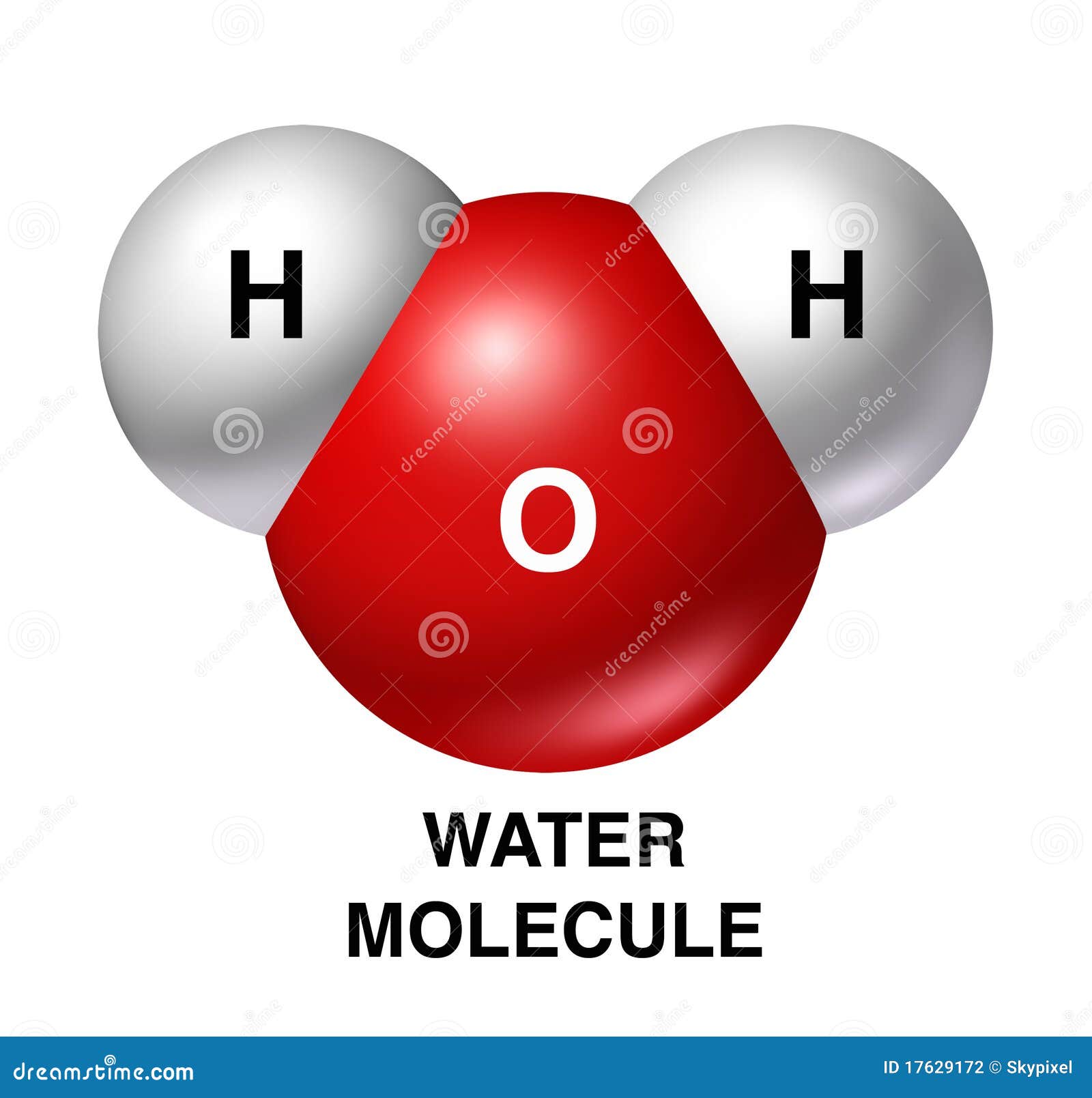
Water chemistry shapes every biological process, climate system, and geological formation on Earth. At its core, the H2O molecule is deceptively simple—two hydrogen atoms bonded to a single oxygen atom—yet its unique atomic architecture creates extraordinary physical behaviors that defy standard chemical trends. Without the specific molecular quirks of H2O, life as we know it couldn't exist, as water would freeze solid at room temperature and fail to dissolve essential nutrients.
Understanding H2O chemistry requires looking closely at subatomic electrical charges, orbital geometry, and intermolecular forces. When you analyze how water molecules interact with each other and foreign substances, you unlock the underlying reasons behind ice floating, high boiling points, and capillary action. Let's examine the exact chemical principles that turn a tiny triatomic molecule into the universal solvent.
Atomic Architecture: The Structure of H2O
Each water molecule consists of one central oxygen atom covalently bonded to two hydrogen atoms. This bond forms when oxygen shares electrons with each hydrogen atom, creating stable electron pairs. However, oxygen and hydrogen don't share these electrons equally.
Oxygen has a much higher electronegativity than hydrogen. That means oxygen pulls shared electrons closer to its own nucleus than the hydrogen atoms do. This unequal sharing creates a partial negative charge near the oxygen atom and a partial positive charge near the two hydrogen atoms. Chemists call a molecule with this uneven charge distribution a polar molecule.
The geometry of the H2O molecule is bent rather than linear. Because of lone electron pairs on the oxygen atom pushing down on the bonds, the molecule forms an angle of roughly 104.5 degrees. This specific angular shape ensures that the electrical charges don't cancel each other out. If water were linear, it would act like a nonpolar substance, drastically altering its boiling point, freezing point, and solvency.
Hydrogen Bonding and Intermolecular Forces
The polarity of H2O creates powerful forces between neighboring molecules. The partially positive hydrogen atom of one water molecule attracts the partially negative oxygen atom of an adjacent water molecule. This electrostatic attraction is known as a hydrogen bond.
Individual hydrogen bonds are relatively weak compared to covalent bonds, but collectively they pack immense power. In a glass of water, billions of hydrogen bonds constantly form, break, and reform in fractions of a picosecond. This molecular network gives water an unusually high boiling point of 100 degrees Celsius at sea level. If hydrogen bonds didn't exist, H2O would boil at around minus 80 degrees Celsius, turning Earth into a dry, lifeless rock.
Hydrogen bonding also generates high surface tension. Water molecules at the surface experience inward pulls from neighboring molecules because they have no neighbors above them. This creates a microscopic skin that allows insects to walk across ponds and water droplets to form spherical beads on waxed surfaces. You can read more about molecular binding dynamics through resources provided by the National Institute of Standards and Technology.
Water as the Universal Solvent
Water earns its title as the universal solvent because it dissolves more substances than any other liquid. This ability stems directly from its polarity. When you drop a ionic compound like sodium chloride into water, the polar H2O molecules aggressively target the crystal lattice.
The partially negative oxygen atoms surround positively charged sodium ions, while the partially positive hydrogen atoms surround negatively charged chloride ions. These electrostatic interactions pull the ions away from each other, causing the salt crystal to dissolve completely.
Nonpolar substances like oils and fats, however, don't mix with water. Because hydrocarbons lack significant electrical charges, they cannot form hydrogen bonds with H2O. Instead, water molecules form a tight cage around nonpolar molecules, driving them together in a process known as the hydrophobic effect. This phenomenon dictates how cell membranes form and how proteins fold into functional biological shapes.
Anomalous Expansion: Why Ice Floats
Almost all liquids contract and increase in density as they cool down toward freezing point. Water follows this normal rule until it reaches 4 degrees Celsius. Below that threshold, as H2O approaches its freezing point of 0 degrees Celsius, something strange happens.
Instead of packing closer together, hydrogen bonds force the molecules into a rigid, open hexagonal lattice structure. This crystal arrangement keeps individual molecules slightly farther apart than they are in liquid water. As a result, ice is less dense than liquid water, which causes it to float.
This single chemical anomaly protects aquatic ecosystems worldwide. If ice were denser than liquid water, lakes and oceans would freeze from the bottom up, crushing marine life and preventing global thaw cycles. Instead, floating ice layers act as thermal insulation, keeping liquid water warm enough for fish and microorganisms to survive harsh winters.
Autoionization and pH Balance
Even pure water undergoes a subtle internal chemical reaction known as autoionization. A tiny fraction of water molecules spontaneously transfer a proton from one molecule to another, producing hydronium ions and hydroxide ions.
In pure water at 25 degrees Celsius, the concentration of both hydronium and hydroxide ions is exactly one ten-millionth of a mole per liter, establishing a neutral pH of 7. This delicate balance allows water to act as both an acid and a base depending on the chemical environment. Biological systems rely entirely on this amphoteric nature to regulate internal chemistry and metabolic pathways. You can explore further biochemical data via the National Institutes of Health.
Common Misconceptions About H2O Chemistry
Many people assume that pure water conducts electricity brilliantly. In reality, highly purified deionized water is a poor conductor because it contains very few free ions. It's the dissolved minerals, salts, and impurities in tap water or ocean water that allow electrical current to flow freely.
Another frequent error involves confusing temperature with heat capacity. Water has one of the highest specific heat capacities of any known substance. It takes a massive amount of energy to raise the temperature of water by just one degree Celsius. This property helps coastal regions moderate extreme weather temperatures and prevents human bodies, which are roughly 60 percent water, from overheating during intense physical exertion.
Frequently Asked Questions
Why is the bond angle of water 104.5 degrees instead of 180 degrees?
The bond angle is driven by valence shell electron pair repulsion theory. Oxygen has two lone pairs of electrons in its outer shell. These unbonded electron clouds repel the bonded hydrogen atoms more strongly than the bonded pairs repel each other, compressing the angle down from the tetrahedral 109.5 degrees to 104.5 degrees.
Can water dissolve every chemical substance?
No. While water dissolves many ionic compounds and polar covalent molecules, it cannot dissolve nonpolar substances like fats, waxes, and alkanes. Like dissolves like, so nonpolar solvents are required to break down nonpolar materials.
Why does water expand when it freezes?
Hydrogen bonding forces water molecules into a rigid, open hexagonal crystal lattice structure at freezing temperatures. This lattice takes up more physical space than the random, fluid arrangement of liquid water molecules, causing expansion and decreased density.
How does water's high heat capacity affect the global climate?
Oceans absorb massive amounts of solar energy during warm months and release it slowly during colder months. This thermal buffer stabilizes global weather patterns and prevents extreme temperature swings between day and night across the planet.


