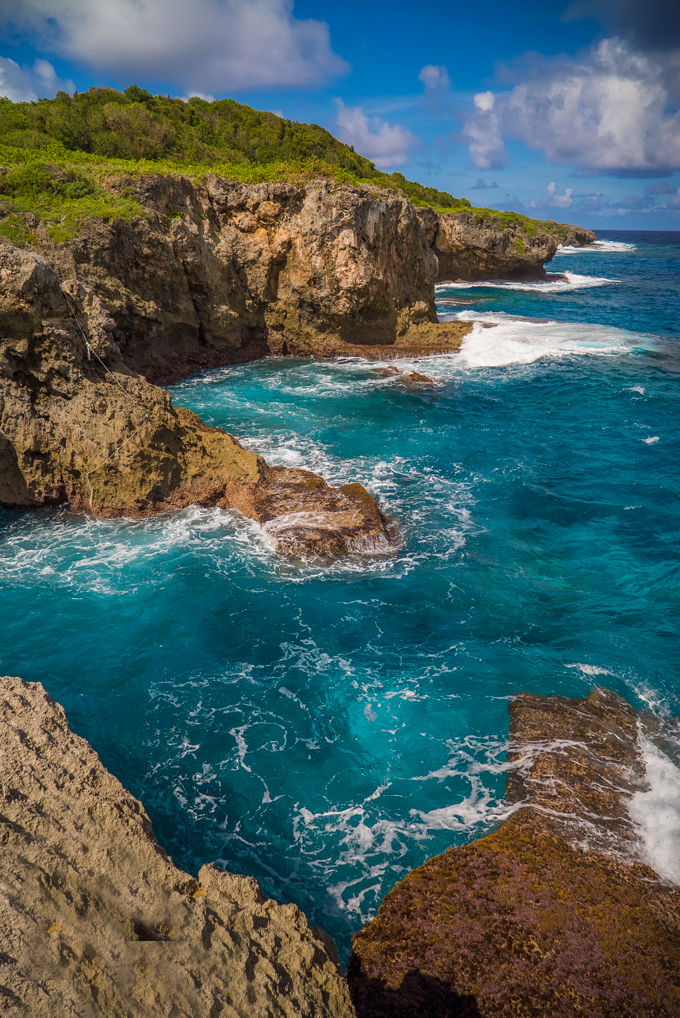
Guam sits in the western Pacific Ocean as an unincorporated US territory, blending ancient indigenous heritage with distinct Spanish and American influences. It draws travelers looking for crystal-clear waters, World War II historic sites, and dense jungle hikes without the overwhelming crowds found in more commercialized tropical destinations.
The island operates as a major hub in Micronesia. You'll find modern resort infrastructure alongside secluded coastal pockets and ancient latte stone sites left behind by the indigenous Chamorro people. Understanding how to navigate the island's geography helps you balance beach relaxation with outdoor exploration.
Understanding Guam's Geography and Regions
Guam spans about 30 miles long and 4 to 12 miles wide, making it easy to drive across the entire island in under an hour. However, the northern plateau looks entirely different from the southern volcanic hills.
The northern half features rugged limestone cliffs, dense jungle patches, and hidden coves. The southern half showcases rolling green hills, cascading waterfalls, and quiet coastal villages. This geographic split dictates where you'll stay and how you spend your days.
Tumon Bay and the Central Tourist Hub
Most visitors base themselves around Tumon Bay on the western coast. This area houses high-end resorts, duty-free shopping malls, and calm waters protected by an offshore reef.
Tumon Bay provides ideal conditions for beginner snorkelers and families. The water stays calm and shallow for a considerable distance off the sand. You can easily rent paddleboards, book parasailing trips, or grab dinner within walking distance of your hotel.
While convenient, Tumon represents only a small fraction of what the island offers. Leaving this central tourist zone reveals the true character of the island.
The Rugged Southern Coast
Driving south from Hagåtña, the capital, the urban density fades into rural villages and scenic overlooks. Talofofo Bay and Umatac Bay offer deep historical significance and dramatic coastal views.
Umatac is where Portuguese explorer Ferdinand Magellan famously landed in 1521. Today, it's a quiet village featuring Spanish-era bridges, stone fortifications, and monuments marking early contact between European explorers and the Chamorro people.
Rich History and Chamorro Culture
Human habitation on Guam dates back over 4,000 years. The ancient Chamorro society built complex social structures and erected latte stones—megalithic pillars topped with hemispherical capstones used as foundations for their elevated wooden homes.
Spanish colonization began in earnest in 1668 with the arrival of Jesuit missionaries. Spain ruled the island for over two centuries, leaving behind Catholic traditions, Spanish surnames, and stone architecture like Fort Nuestra Señora de la Soledad in Umatac.
Following the Spanish-American War in 1898, the United States took control of Guam. Its strategic location turned it into a crucial naval station until World War II, when Japanese forces occupied the island for nearly three years. Liberation Day, celebrated annually on July 21st, marks the 1944 return of US forces and remains the island's most significant cultural holiday.
Experiencing Local Culture
You can immerse yourself in Chamorro heritage by visiting the Guam Museum in Hagåtña, which houses artifacts, photographs, and interactive exhibits detailing millennia of island history.
Food forms a central pillar of local culture. Traditional Chamorro cuisine combines ingredients like coconut, soy sauce, vinegar, and fiery local peppers known as donni' sali. Key dishes to try include:
- Kelaguen: Finely chopped chicken, beef, or fish mixed with fresh lemon juice, grated coconut, and hot peppers, served cold.
- Red Rice: Rice colored and flavored with achiote seeds, garlic, and onions.
- Finadene: A ubiquitous table condiment made from soy sauce, vinegar, onions, and chili peppers, splashed over almost any savory dish.
Best Outdoor Adventures Beyond the Beaches
While lounging on the sand is a primary draw, Guam rewards active travelers who venture into the jungle and coastal waters.
Hiking to Tarzan Falls and Mount Lamlam
Jungle hiking on Guam requires respect for the heat, humidity, and muddy trails, especially during the rainy season from July to December. Popular trails lead through dense sword grass fields down to hidden freshwater waterfalls.
Tarzan Falls is a rewarding hike that starts near the LeoPalace resort area and winds through a river valley to a twin-tiered waterfall. For a different challenge, you can climb Mount Lamlam. While its elevation is only 1,332 feet above sea level, measuring from the bottom of the nearby Mariana Trench makes it technically the highest mountain in the world.
Diving World War II Wrecks
Guam offers world-class scuba diving because two distinct world wars left sunken relics in Apra Harbor. You can dive down to the SMS Cormorant, a German cruiser scuttled by its crew in 1917, and the Tokai Maru, a Japanese freighter sunk in 1943. These two ships lie touching each other underwater, allowing divers to swim through wrecks from both World War I and World War II during a single dive.
Practical Planning Tips for Travelers
Planning a trip to Guam requires knowing a few logistical details to ensure a smooth journey.
Entry Requirements and Transportation
As a US territory, US citizens don't need a passport if traveling directly from the US mainland or Hawaii, though a Real ID-compliant driver's license or passport is recommended. Citizens of many other countries can enter visa-free under the Guam-CNMI Visa Waiver Program.
Renting a car is essential if you want to explore the southern villages, hidden waterfalls, and secluded beaches. Public transit options outside Tumon are limited, and taxis get expensive quickly.
Best Time to Visit
Guam enjoys a warm tropical climate year-round, with average temperatures hovering around 85 degrees Fahrenheit. The dry season runs from January to June, offering lower humidity and less frequent rain showers. July through December brings the rainy season, characterized by brief afternoon tropical downpours and occasional typhoon activity.
Frequently Asked Questions
Do I need to exchange currency when visiting Guam?
No, Guam uses the United States Dollar (USD). Major credit cards are widely accepted at hotels, restaurants, and shopping centers throughout Tumon and Hagåtña, though having some cash helps when visiting rural roadside stands or village fiestas.
Is English widely spoken on Guam?
Yes, English is the official language of Guam and is spoken fluently across the island. Chamorro is also spoken by native residents, and you'll frequently hear Japanese due to the island's popularity with Asian tourists.
Can I drive around the entire island in one day?
Yes, you can easily drive the perimeter of Guam in a single day. The island is small enough that you can tour southern historical sites in the morning and relax on a northern beach by the afternoon.
What should I pack for a trip to Guam?
Pack lightweight, breathable clothing, sturdy hiking shoes for jungle trails, reef-safe sunscreen, and a waterproof bag for electronics. A light rain jacket is also useful year-round to combat sudden tropical showers.



