Guam occupies a unique position where American federal law intersects with deep indigenous roots in the Western Pacific. Residents hold United States citizenship yet experience a political reality distinct from residents of the fifty states. Understanding this balance requires looking past simple legal definitions to examine how history, language, and culture shape everyday life on the island.
The core identity of Guam is anchored by the Chamorro people, the indigenous inhabitants of the Mariana Islands. Centuries of Spanish colonization, followed by administration under the United States naval government and civilian rule, reshaped the island's demographics and governance. Today, defining nationality on the island means navigating a dual heritage that bridges the Pacific and Washington, D.C.
The Legal Framework of U.S. Territorial Citizenship
The legal status of Guam's population stems from territorial acquisition and subsequent congressional legislation. Following the Spanish-American War of 1898, Spain ceded Guam to the United States via the Treaty of Paris. For decades afterward, residents were classified as U.S. nationals without full statutory citizenship, a status that sparked decades of local advocacy.
That framework changed with the passage of the Organic Act of Guam, enacted by the U.S. Congress in 1950. This legislation established civilian government on the island and granted statutory U.S. citizenship to people born in Guam. Subsequent adjustments, including the 1968 Elective Governor Act, expanded local political self-determination. To get more context on the matter, detailed reporting is available on The New York Times.
Despite holding citizenship, residents face specific political limitations rooted in the island's status as an unincorporated territory. While residents pay federal income taxes through a mirroring system, they do not vote in presidential elections and are represented in the U.S. House of Representatives by a non-voting delegate. This structural arrangement creates a distinct political identity where individuals are fully American by law yet lack full representation in national governance. Learn more about the island's administrative framework through the Office of Insular Affairs.
Indigenous Heritage and Chamorro Culture
Legal citizenship is only one component of life on the island. The indigenous Chamorro culture provides the foundational cultural identity for much of the population, defining social structures, family values, and community practices.
- Inadahi: Traditional concepts of mutual respect, community obligation, and stewardship of the land continue to guide rural and urban social circles alike.
- Language Preservation: Chamorro holds co-official status alongside English under territorial law, though generations of colonial language policies have reduced fluent native speaker counts. Current community programs actively work to restore everyday usage.
- The Fixture of Faith and Family: Extended family networks and community celebrations, such as village fiestas honoring patron saints, blend Spanish Catholic influences with indigenous traditions.
These cultural markers exist independently of federal statutes. For many residents, cultural identity is anchored in genealogy, ancestral ties to specific villages, and participation in traditional practices rather than a passport designation.
Demographic Shifts and Multicultural Coexistence
Guam's identity is not monolithic. Over the past century, economic migration and military positioning have created a diverse multicultural society.
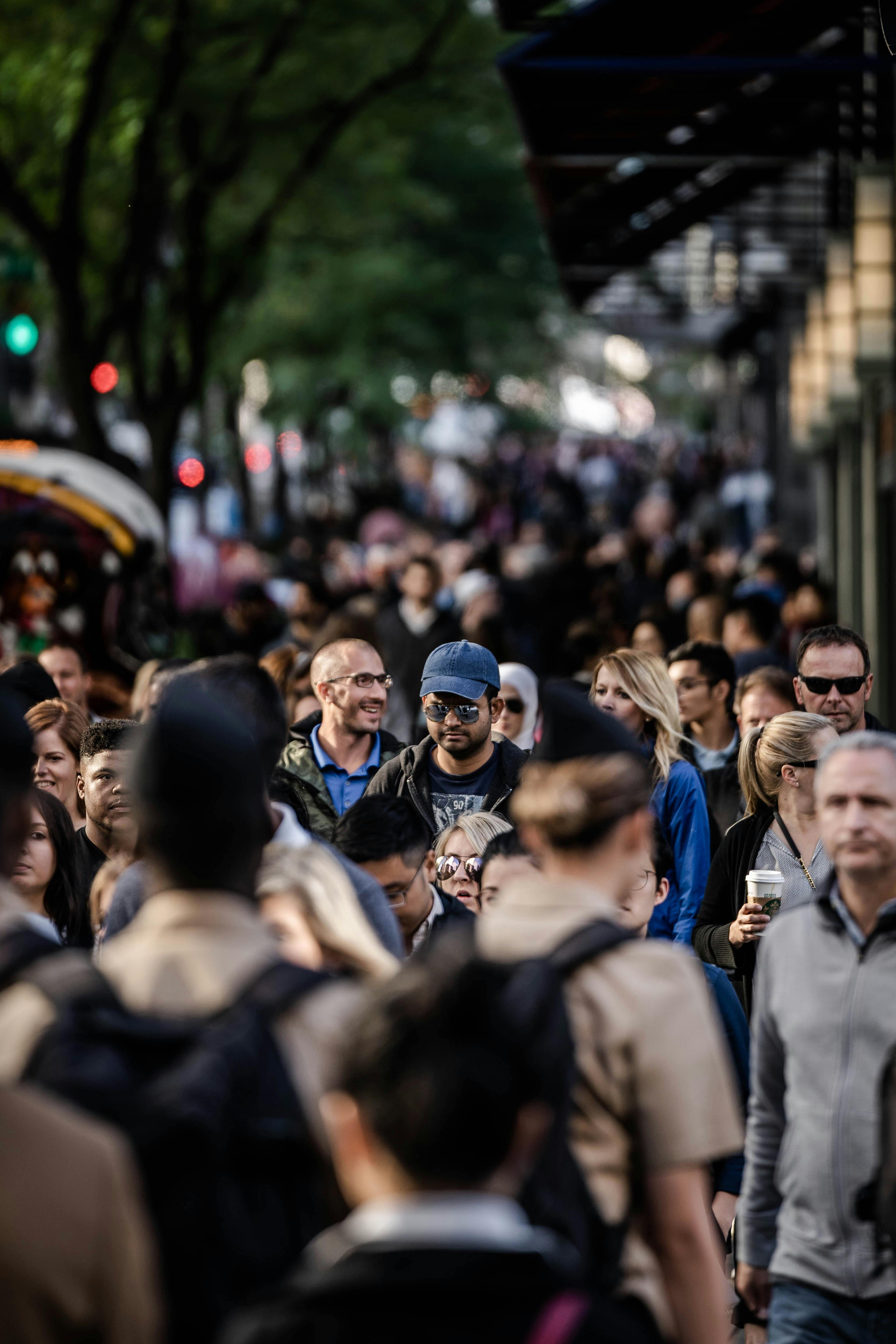
According to data compiled by the U.S. Census Bureau, the island's population reflects a rich mix of ethnic groups. Alongside the indigenous Chamorro population, a substantial Filipino community makes up a major percentage of residents, alongside individuals of Caucasian, Micronesian, Asian, and Hispanic descent.
This diversity shifts how daily community life functions. Multiple languages are spoken across households, including Tagalog, Chuukese, and various Asian dialects. This multi-ethnic tapestry means that modern Guamanian identity is inherently pluralistic, shaped by Pacific Islander roots and regional Asian-Pacific migration patterns.
Political Status Debates and Future Horizons
The question of Guam's ultimate political future remains an active topic of discussion among residents, local leaders, and federal policymakers. Several models for political development are frequently debated:
- Statehood: Transitioning into the 51st U.S. state, which would grant full voting representation in Congress and participation in presidential elections.
- Free Association: Entering into a relationship similar to the Federated States of Micronesia, where the island would manage its own foreign affairs while maintaining economic ties with the United States.
- Enhanced Commonwealth: Negotiating a more autonomous commonwealth status that grants greater local control over federal lands, immigration, and marine resources.
Progress on these paths requires approval from the U.S. Congress, balancing local desires for self-determination against national security interests in the Indo-Pacific region, where the military maintains a significant footprint.
Frequently Asked Questions
Are people born in Guam U.S. citizens?
Yes. Individuals born in Guam acquire U.S. citizenship at birth through federal statute, specifically via the Organic Act of 1950.
Do residents of Guam vote for the U.S. President?
No. Because Guam is an unincorporated territory rather than a state, residents do not cast ballots in the federal electoral college for president.
What are the official languages of Guam?
English and Chamorro are the two co-official languages recognized under territorial law, with English serving as the primary language for business and education, and Chamorro serving as an indigenous cultural anchor.
What is the primary ethnic makeup of the island?
The population is diverse, with the indigenous Chamorro population representing the largest single ethnic group, followed closely by significant Filipino communities and various other Pacific Islander and Asian populations.



