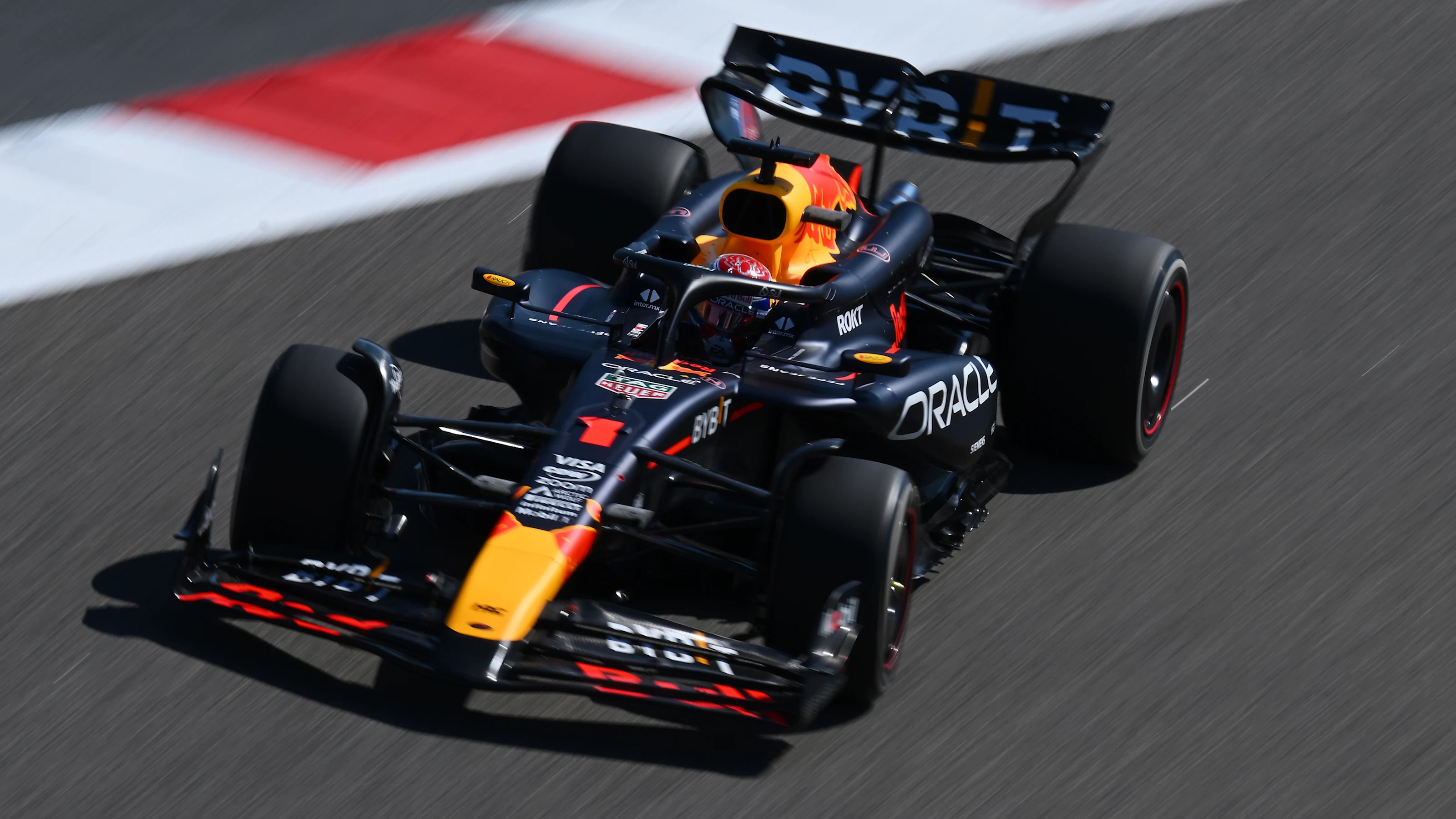
Formula One races are won on Sunday afternoons, but they are engineered years in advance behind closed doors. While drivers grab the headlines and lift the trophies, the sport's true trajectory belongs to the technical directors and aerodynamicists who manipulate air, weight, and materials. A handful of visionaries rewrote the rulebook entirely, transforming crude tube-frame racers into lethal carbon-fiber weapons.
If you want to understand how modern motorsport evolved, you have to look past the cockpit. The greatest F1 car designers didn't just build fast vehicles; they exposed loopholes, harnessed invisible aerodynamic forces, and forced governing bodies to rewrite the regulations. These are the masterminds who shaped the grid.
Colin Chapman: The Weight-Cutting Revolutionary
Founder of Team Lotus, Colin Chapman operated under a brutally simple philosophy: simplify, then add lightness. Before Chapman entered the paddock, racing cars were heavy, rigid monsters built like road vehicles. Chapman brought aircraft design principles into motorsport, recognizing that shedding every unnecessary ounce made a car faster in corners, kinder to its tires, and quicker to stop.
His introduction of the monocoque chassis with the Lotus 25 replaced traditional spaceframes with a stressed skin structure that was both lighter and torsionally stiffer. Later, Chapman pioneered ground effect aerodynamics, sealing the sides of the car and using underbody tunnels to suck the machine onto the asphalt. Rivals protested, fans cheered, and the sport changed forever. Chapman proved that brainpower and structural efficiency could easily defeat brute engine horsepower.
Adrian Newey: The Aerodynamic Maestro
No discussion of modern engineering is complete without Adrian Newey. Widely recognized as the most successful designer in Formula One history, Newey holds a rare distinction: he has engineered championship-winning cars for three different constructor teams—Williams, McLaren, and Red Bull Racing. His ability to visualize airflow sets him apart in an era heavily reliant on computers.
Newey's career spans decades of shifting regulations. In the 1990s, his Williams designs dominated the grid, though they also wrestled with tragic regulatory shifts. When ground effects returned in 2022, Newey's interpretation with Red Bull birthed the RB18, an absolute benchmark of modern ground-effect engineering. He doesn't just design cars; he interprets rule changes faster than anyone else in the pit lane, exploiting tiny grey areas to unearth crucial tenths of a second. You can read more about his career trajectory on the Formula 1 Official Website.
Gordon Murray: The Radical Out-of-the-Box Thinker
Gordon Murray brought a fierce, uncompromising creativity to Brabham and McLaren during the 1970s and 1980s. Murray never hesitated to challenge convention, famously pushing engineering boundaries to the absolute edge of legality.
His most notorious creation, the Brabham BT46B "Fan Car", featured a massive rear-mounted fan that sucked air out from under the chassis. It generated immense downforce and won its only race appearance before Brabham withdrew it under political pressure. Later, Murray penned the legendary McLaren MP4/4, which dominated the 1988 season by winning 15 out of 16 grands prix. Murray's obsession with packaging efficiency and driver ergonomics made his cars both blindingly fast and lethal in race trim.
John Barnard: The Carbon Composite Pioneer
Before John Barnard stepped into McLaren, racing tubs were made of aluminum sheets riveted together. Barnard revolutionized safety and structural rigidity by introducing the carbon-fiber composite monocoque to Formula One with the McLaren MP4/1 in 1981.
Many paddock veterans scoffed at the plastic-looking material, calling it unsafe. Then John Watson crashed heavily at Monza, walking away from a shattered carbon tub completely unscathed. The entire grid scrambled to copy Barnard's material choice within two seasons. Barnard also pioneered the semi-automatic paddle-shift gearbox at Ferrari, altering how drivers interact with the car forever.
Rory Byrne and the Ferrari Dynasty
When Michael Schumacher wanted to dominate the 2000s, he brought a trusted inner circle with him to Ferrari. At the heart of that technical powerhouse sat Rory Byrne. Pairing up with mastermind Ross Brawn, Byrne engineered the cars that carried Schumacher to five consecutive drivers' titles.
Byrne leaned heavily into early Computational Fluid Dynamics (CFD) and wind tunnel correlation, ensuring that upgrades brought to the track actually performed as simulated. His cars combined relentless mechanical reliability with aerodynamic stability, traits that allowed drivers to push at the absolute limit without fear of sudden snap-oversteer.
Frequently Asked Questions
Who is the most successful F1 designer of all time?
Adrian Newey holds the record for the most championship titles associated with a single chief designer, with his cars claiming well over a dozen drivers' and constructors' world championships across multiple decades.
Why did Colin Chapman's ground-effect cars cause controversy?
Chapman's ground-effect designs used sliding skirts to maintain a seal between the road and the car's underbody tunnels. This created extreme cornering speeds, but if a skirt jammed or broke mid-corner, the car lost downforce instantly, causing violent, high-speed accidents. This led to bans on skirts and flat-bottom regulations in 1983.
Did any F1 designers also build road cars?
Yes. Gordon Murray designed the iconic McLaren F1 road car after leaving Formula One, and later founded his own automotive company to build the minimalist T.50 supercar. Colin Chapman built lightweight sports cars like the Lotus Seven, which are still produced in kit form today.
How much control do modern F1 designers have over drivers?
While designers don't drive, their packaging choices dictate driver comfort, cockpit layout, and how feedback translates into car upgrades. Designers rely heavily on telemetry and driver comments to fix handling balance during race weekends. To explore current technical regulations and team updates, visit the Fédération Internationale de l'Automobile.