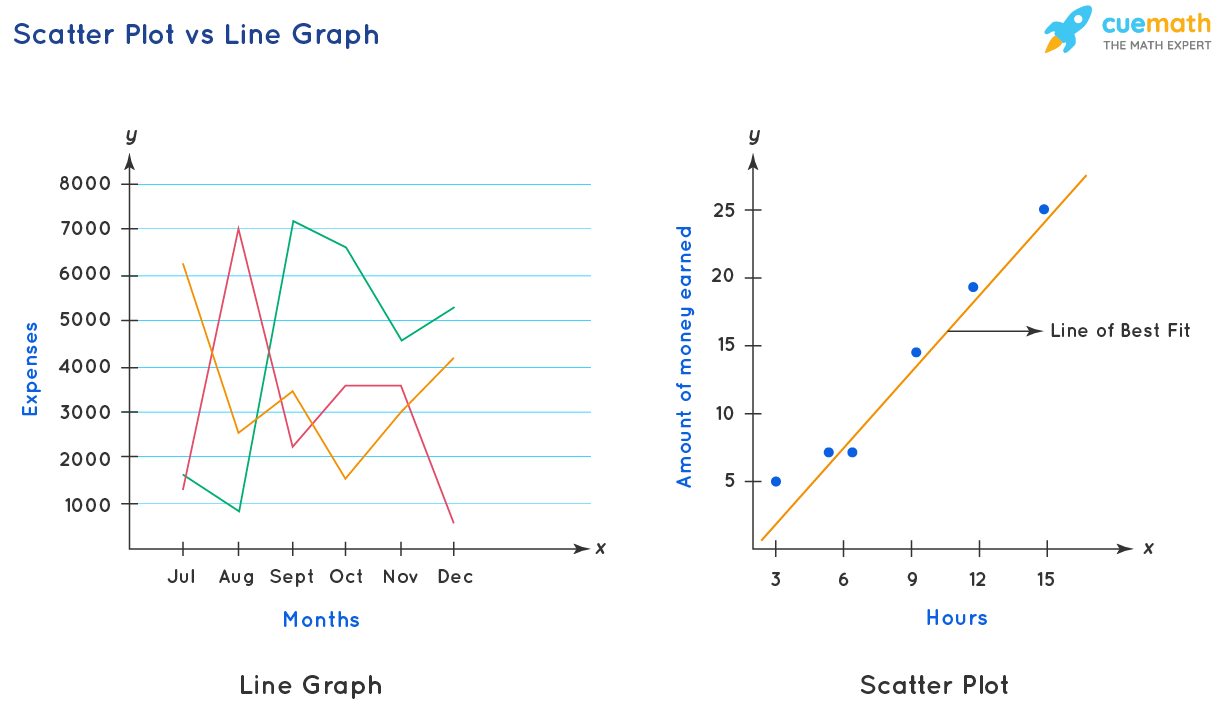
Graph theory is the mathematical study of networks made up of points and connecting lines. It gives you a rigorous way to model pairwise relationships between objects, whether you're mapping airline routes, analyzing neural pathways in the brain, or routing data packets across the global internet.
The field began in 1736 when Swiss mathematician Leonhard Euler solved the Königsberg bridge problem. Citizens wanted to walk through the Prussian city, crossing each of its seven bridges over the Pregel River exactly once. Euler abstracted the landmasses as vertices and the bridges as edges, proving mathematically that the walk was impossible. That simple abstraction founded network science. Today, it underpins modern computing, logistics, and social network analysis.
Core Anatomy of a Graph
Every graph consists of two fundamental components: vertices (nodes) and edges (lines connecting them). Depending on what you're modeling, these components take on specific properties.
- Vertices ($V$): Represent entities such as cities, computers, people, or molecules.
- Edges ($E$): Represent relationships, roads, communication links, or bonds between vertices.
Graphs fall into several primary structural categories:
- Directed vs. Undirected: In an undirected graph, edges have no direction, like a two-way street or a handshake. In a directed graph (or digraph), edges have a specific direction, like a one-way street or a Twitter follow.
- Weighted vs. Unweighted: Weighted graphs assign numerical values to edges—such as distance, traffic delay, or financial cost. Unweighted graphs treat all connections equally.
- Cyclic vs. Acyclic: A cyclic graph contains at least one closed loop, where you can start at a vertex and follow edges back to it. Acyclic graphs have no loops; a connected acyclic graph is known as a tree.
How Graph Algorithms Power Modern Systems
Abstracting real-world systems into nodes and edges lets computers solve complex routing and optimization problems in milliseconds.
Shortest Path Routing
When you open a GPS app to find the fastest drive home, your phone isn't scanning a picture of a map. It's running graph algorithms like Dijkstra's algorithm or A* search over a massive road network. Intersections act as vertices, and road segments act as weighted edges where weights represent travel time. The algorithm calculates the minimum cost path from your current node to your destination node.
Network Flow and Bottleneck Analysis
Logistics companies like UPS and Amazon model their delivery networks as flow networks. Edges have maximum capacities (maximum parcel volume per hour), and vertices act as distribution hubs. Ford-Fulkerson and related algorithms calculate the maximum rate at which goods can flow from source hubs to destination addresses, helping engineers spot structural bottlenecks before traffic jams happen.
Advanced Graph Structures and Theorems
As mathematics advanced past basic topology, researchers proved foundational theorems that define the limits of network connectivity.
The Four Color Theorem
First posed in 1852, the Four Color Theorem states that any planar map—a map drawn on a flat surface where edges don't cross—can be colored using at most four colors so that no two adjacent regions share the same color. Unlike simpler mathematical proofs, this theorem resisted analytical resolution for over a century until Kenneth Appel and Wolfgang Haken proved it in 1976 using a computer to check nearly 2,000 reducible configurations. It marked a turning point in computational mathematics.
Eulerian vs. Hamiltonian Paths
While Euler solved the problem of visiting every edge once (an Eulerian path), graph theory also tackles visiting every vertex once (a Hamiltonian path). Finding an optimal Hamiltonian cycle on a weighted graph is the famous Traveling Salesperson Problem. It's NP-hard, meaning that as cities scale into the thousands, checking every permutation takes longer than the age of the universe, requiring heuristic approximations instead of exact brute-force solutions.
Real-World Impact Across Industries
Graph theory extends far beyond pure math and software engineering. It shapes modern science in unexpected ways.
- Epidemiology: Public health officials model disease outbreaks using contact tracing graphs. Nodes represent individuals, and edges represent close physical proximity. By identifying highly connected hub nodes (super-spreaders), agencies target interventions effectively.
- Chemistry and Drug Discovery: Molecules are natural graphs where atoms are vertices and chemical bonds are edges. Graph neural networks (GNNs) analyze molecular structures to predict toxicity, solubility, and binding affinity for new pharmaceutical drugs.
- Search Engines: Early web search relied heavily on link analysis. Google's PageRank algorithm treats the entire web as a directed graph where hyperlinks are votes of confidence, ranking pages based on incoming edge density and authority.
You can explore more about how network structures shape digital infrastructure through the Internet Engineering Task Force guidelines or read about foundational topology research at The Royal Society.
Common Misconceptions
People often confuse graph theory with data visualization charts like bar graphs or scatter plots. While charts display statistical data visually, graph theory is a branch of discrete mathematics focused entirely on relational structures and network topologies. Another common error is assuming graphs require visual rendering; computers process massive graphs as adjacency matrices and edge lists entirely in memory without drawing a single line.
Frequently Asked Questions
What is the difference between a tree and a general graph?
A tree is a specific type of graph that is connected and contains no cycles. Every pair of vertices in a tree is connected by exactly one path, preventing any loops or redundant pathways.
Why are graph problems so hard for computers to solve?
Many graph problems scale exponentially. While finding a shortest path is efficient, finding the absolute longest path or visiting every node with minimum cost falls into NP-hard complexity classes, forcing computers to rely on approximations.
How do social media platforms use graph theory?
Platforms like LinkedIn and Facebook represent users as vertices and friendships or professional connections as edges. Recommendation engines traverse these graphs to suggest connections you might know within two or three degrees of separation.
Can graphs have edges that connect a node to itself?
Yes. These are called self-loops. While simple graphs forbid them, multigraphs and general graphs permit self-loops and multiple edges between the exact same pair of vertices.


