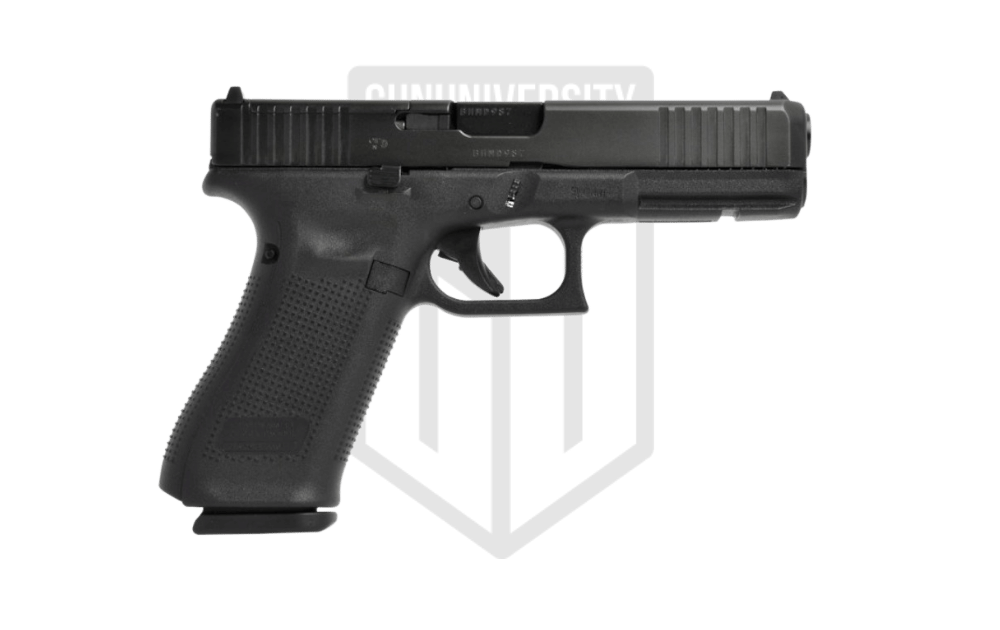
When law enforcement agencies upgrade their sidearms, tens of thousands of service pistols flood the secondary market. Among these surplus offerings, Glock models consistently dominate volume. Labeling this multi-million dollar commercial pipeline as a "black market" is fundamentally inaccurate. In reality, police trade-ins flow through strictly regulated, lawful channels governed by federal, state, and local statutes. Licensed distributors buy these handguns in bulk, process them through formal inventory controls, and resell them to everyday buyers via licensed gun dealers.
Understanding how this industry operates clears up common misconceptions about legality, pricing, and weapon condition. If you're looking to purchase a reliable duty pistol without paying retail prices, police surplus markets offer a practical path, provided you know what to look for and how the laws apply.
How the Police Trade-In Pipeline Actually Works
The lifecycle of a police service pistol follows a predictable path. Law enforcement agencies typically operate on scheduled replacement cycles ranging from five to ten years. When a department decides to transition to a new generation—such as upgrading from Gen 3 or Gen 4 pistols to the latest optics-ready Gen 5 variants—they don't simply throw away their old hardware.
Instead, departments contract with specialized law enforcement distributors. These licensed entities handle the trade-in valuation, credit the department toward their new gear purchase, and take possession of the retired inventory. Every single transaction requires formal federal paperwork, bound-book logging by Federal Firearms License (FFL) holders, and strict adherence to agency disposition policies.
[Police Agency Upgrade] ➔ [LEO Distributor Buyback] ➔ [FFL Wholesale / Retail] ➔ [Background Check / Buyer]
Far from an underground operation, this process is transparent, audited, and strictly legal. Distributors inspect the incoming inventory, grade the pistols based on cosmetic wear, and make them available to commercial dealers or directly to the public through compliant web platforms.
Sorting Fact from Fiction: Is There a Black Market Risk?
Sensationalist headlines sometimes conflate secondary surplus sales with illicit firearms trafficking. That fear is misplaced. A true black market involves straw purchases, stolen goods, or serial numbers being filed off.
Police trade-ins are the exact opposite:
- Immaculate Paper Trails: Every frame bears a factory serial number that links directly to the department's asset management history and the acquiring distributor's acquisition log.
- FFL Mandates: You cannot buy a trade-in pistol online and have it shipped to your front door. It must go to a local FFL holder who executes a federal background check using ATF Form 4473.
- Department Accountability: Law enforcement agencies maintain rigorous armorer logs detailing which officer was assigned which specific serial number during their active tenure.
While stolen police firearms do occasionally enter illicit markets, standard commercial trade-ins sold by reputable nationwide distributors are entirely legal assets passing through legitimate commercial channels.
Decoding Condition Grades and Real Wear
When you browse surplus Glocks, you'll notice pricing structures tied to condition grades, usually ranging from Grade 1 (Excellent) to Grade 3 (Fair). Knowing what these grades mean helps you avoid paying collector prices for a heavy workhorse, or conversely, passing up a mechanical gem because of minor cosmetic scuffs.
Cosmetically "Salty," Mechanically Sound
Police officers spend significantly more time carrying a firearm in a holster than firing it on a range. Consequently, holster wear—where the black surface finish on the front edges of the slide thins out or wears down to bare metal—is common.
Glock's underlying gas-nitration treatment hardens the steel deeply beneath the surface finish. Even if the slide looks worn, the corrosion resistance remains intact.
Round Count Realities
Civilian shooters often worry that a duty pistol is "worn out." In practice, standard-issue handguns are fired relatively infrequently outside of mandatory annual or semi-annual department qualifications. A typical officer might put 200 to 500 rounds through their pistol per year. A Glock frame and barrel easily handle tens of thousands of rounds before showing internal degradation. Inspecting the barrel hood for the classic "smiley" wear ring tells you the gun is broken in, but rarely worn out.
Financial Value: Why Trade-Ins Offer High ROI
Buying a police trade-in is widely considered one of the smartest budget strategies in the firearms community. A brand-new commercial Glock often retails at a premium, whereas standard police surplus models frequently drop significantly lower depending on the generation and caliber.
You aren't just saving money on the base pistol; you often get added value. Many departments bundle night sights—even if tritium vials have dimmed over time—or include multiple factory magazines that would cost $25 to $30 apiece to buy separately. This makes surplus pistols exceptionally cost-effective for home defense, training, or competition builds.
Common Mistakes to Avoid When Buying Surplus
Buyers entering the surplus market sometimes stumble into preventable pitfalls. Keep these core principles in mind to ensure a smooth purchase:
- Ignoring Caliber Conversions: Many older police trade-ins (such as Glock 22 or Glock 23 models) are chambered in .40 S&W because many agencies favored that cartridge through the 2000s and 2010s. If you prefer cheap 9mm practice ammunition, don't accidentally buy a .40 S&W pistol expecting 9mm compatibility without an aftermarket conversion barrel.
- Neglecting Deep Cleaning: Surplus pistols arrive straight from department armories with years of accumulated carbon, lint, and dried-out factory grease. Strip the gun down, clean out the striker channel, and apply fresh lubricant before heading to the range.
- Skipping the FFL Transfer Fee Check: Always check what your local gun shop charges for transfer fees before ordering online. A cheap trade-in loses its value advantage if your local dealer charges an exorbitant transfer fee. You can review guidelines on licensed transfers via the Bureau of Alcohol, Tobacco, Firearms and Explosives.
Frequently Asked Questions
Are police trade-in Glocks safe to carry for self-defense?
Yes. They are typically maintained by certified professional armorers throughout their service life. Once you perform a standard function check, clean the internal mechanisms, and verify that safety components like the trigger safety and firing pin block operate properly, they are just as reliable as brand-new firearms.
Do police trade-in Glocks come with factory warranties?
Glock's official manufacturer warranty generally applies to the original retail purchaser. However, Glock maintains an industry-renowned customer service reputation and will often service or repair mechanical issues on older pistols for nominal fees or free of charge if shipped to their Glock Official Site service facility.
Why are so many police trade-in Glocks chambered in .40 S&W?
Law enforcement widely adopted the .40 S&W cartridge in the 1990s and 2000s for its ballistic profile. As federal and local agencies transitioned back to 9mm due to modern projectile technology improvements, massive waves of .40 S&W Glocks flooded the surplus market at steep discounts.
What should I check immediately after picking up my trade-in from the FFL?
Field-strip the pistol to inspect the recoil spring assembly, barrel rifling, breech face, and slide rails. Check that the magazine drop is clean and that the slide locks back properly on an empty magazine. If you are unfamiliar with Glock internal architecture, take it to a qualified gunsmith for a quick safety inspection.


