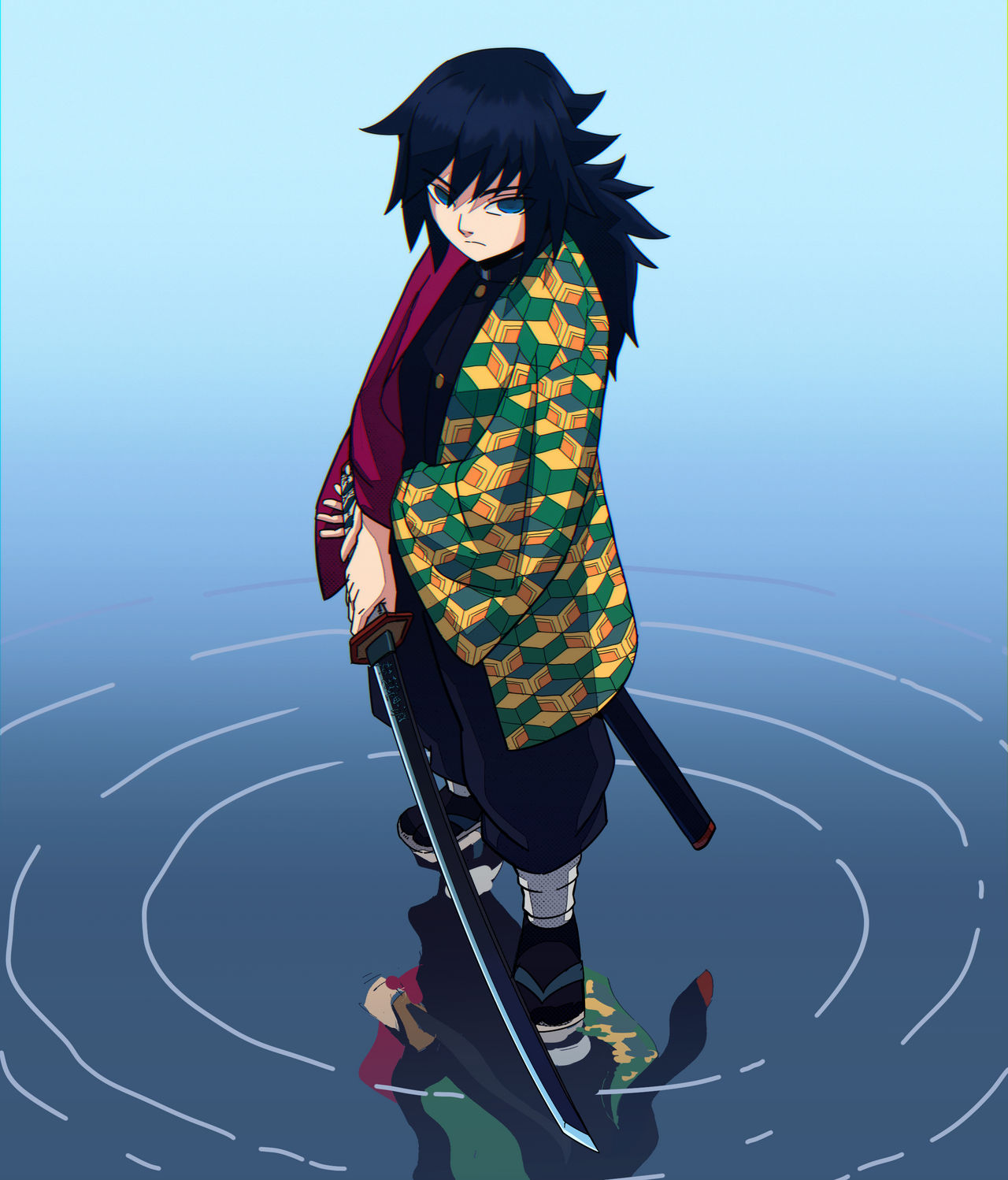
Giyu Tomioka steps out of the shadows in the opening episodes of Demon Slayer: Kimetsu no Yaiba as a distant, unyielding wall. He doesn't waste words, and he spares Nezuko not out of weakness, but because a spark of human defiance catches his eye. Beneath his quiet demeanor lies a crushing burden. The Water Hashira isn't just stoic; he's a survivor trapped in the amber of his own grief. Every breath he takes feels, to him, like an error in the cosmic arithmetic of who deserved to live.
The Anatomy of Survivor's Guilt
Giyu's heavy silence isn't a personality quirk born of arrogance; it’s a symptom of profound psychological trauma. Long before he donned the mismatched haori, his world was gutted twice. First, his older sister Tsutako sacrificed her life to hide him from a demon on the eve of her wedding. Left entirely alone, a young Giyu tried to warn others, only to be met with disbelief and institutional isolation.
Years later, during the Final Selection on Mount Fujikasane, history repeated itself in a more agonizing fashion. While Giyu was injured early in the trial, his friend Sabito single-handedly protected almost every other candidate on the mountain. Sabito paid with his life, while Giyu woke up days later having passed the exam without slaying a single demon.
- The Stigmatized Orphan: Giyu learned early that speaking the truth brought rejection, teaching him to retreat inward.
- The Unearned Victory: Surviving the Final Selection while Sabito died forged a permanent inferiority complex.
- The Isolationist Defense: By keeping everyone at arm's length, he protects himself from forming bonds that might break him again.
This background explains why Giyu tells Tanjiro later that he doesn't belong among the Hashira. He views his high rank as stolen valor. When Shinobu Kocho casually remarks that he is disliked by everyone, Giyu is genuinely stunned—not because he cares deeply about social standing, but because he genuinely believes he occupies space meant for better people.
The Mismatched Haori as a Monument to Loss
Few character designs tell a story as efficiently as Giyu's iconic garment. Split squarely down the middle, the left side features a geometric pattern of green, orange, and yellow, while the right side is a solid, deep red.
These aren't fashion choices. The solid red half belonged to Tsutako, preserving the memory of her final, protective embrace. The patterned half belonged to Sabito, matching the exact haori his late friend wore during their days under Sakonji Urokodaki's tutelage. By wearing them fused together, Giyu carries his ghosts on his back. He wraps himself in the dead because he feels naked without their sacrifices validating his survival. It’s a visual manifestation of quiet resolve—he walks forward, but only because he is anchored to those who fell behind.
Water Breathing and the Invention of Dead Calm
Water Breathing is traditionally characterized by its fluid adaptability, mirroring the continuous, flowing nature of rivers and oceans. Urokodaki trained both Giyu and Sabito in these foundational forms. Yet, Giyu's ultimate evolution of the style reflects his internal psychological state: absolute, unmoving stillness.
He develops the Eleventh Form: Dead Calm (Shi no Kokyu), a technique entirely of his own invention. When executed, Giyu ceases all motion, entering a zone of absolute tranquility where any attack entering his radius is instantly neutralized or deflected.
Traditional Water Breathing -> Continuous flow, adaptability, strike and pivot.
Giyu's Eleventh Form      -> Complete stillness, absolute defense, zero wasted energy.
This form is a brilliant metaphor for his character. On the surface, he appears cold, frozen, and unresponsive to emotional turbulence. But beneath that stagnant exterior lies a razor-sharp lethality capable of cutting down Lower Moon threats like Rui without the naked eye even tracking the draw of his blade.
How Tanjiro Kamado Unlocks Giyu's Humanity
When Giyu encounters Tanjiro protecting a newly transformed Nezuko in the snow, he initially intends to execute her according to strict Corps regulations. Yet, Tanjiro's desperate plea—combined with his willingness to prostrate himself and protect a demon—shatters Giyu's rigid worldview.
Giyu recognizes the exact despair in Tanjiro that he felt years ago in the mountains. Instead of killing them, he gambles his own life, offering to commit seppuku if Nezuko ever consumes human flesh. This act breaches protocol, proving that Giyu's sense of justice is flexible and deeply humane.
Later, during the Hashira Training arc, Giyu attempts to isolate himself again, refusing to participate because he feels unworthy of standing alongside his peers. Tanjiro punctures this isolation with persistent, uncomplicated warmth. By refusing to let Giyu wallow in self-imposed exile, Tanjiro forces the Water Hashira to confront a vital truth: honoring the dead doesn't mean punishing yourself with survival; it means living fully because they couldn't.
Frequently Asked Questions
Why does Giyu Tomioka wear a two-toned haori?
His haori is stitched together from two distinct garments. The red half belonged to his older sister Tsutako, and the patterned half belonged to his late friend Sabito. Wearing it is a constant, physical reminder of the lives lost so that he could live.
Did Giyu pass the Final Selection fairly?
Technically yes, but psychologically no. Giyu was incapacitated by a demon on the first day of the trial and was saved and carried by Sabito, who defeated almost every demon on the mountain. Because Sabito died during that week, Giyu survived the seven days without killing a single opponent, which fueled his lifelong survivor's guilt.
What is Giyu's unique breathing form?
Giyu invented the Eleventh Form: Dead Calm. Unlike other Water Breathing techniques that emphasize fluid movement, Dead Calm utilizes absolute stillness to instantly intercept and deflect incoming attacks.
Does Giyu survive the final battle against Muzan?
Yes, Giyu survives the grueling conflict against Muzan Kibutsuji, though he suffers severe injuries—including the loss of his right arm. Following the eradication of the demons, he adopts a softer, more open demeanor, visibly smiling alongside his surviving comrades.



