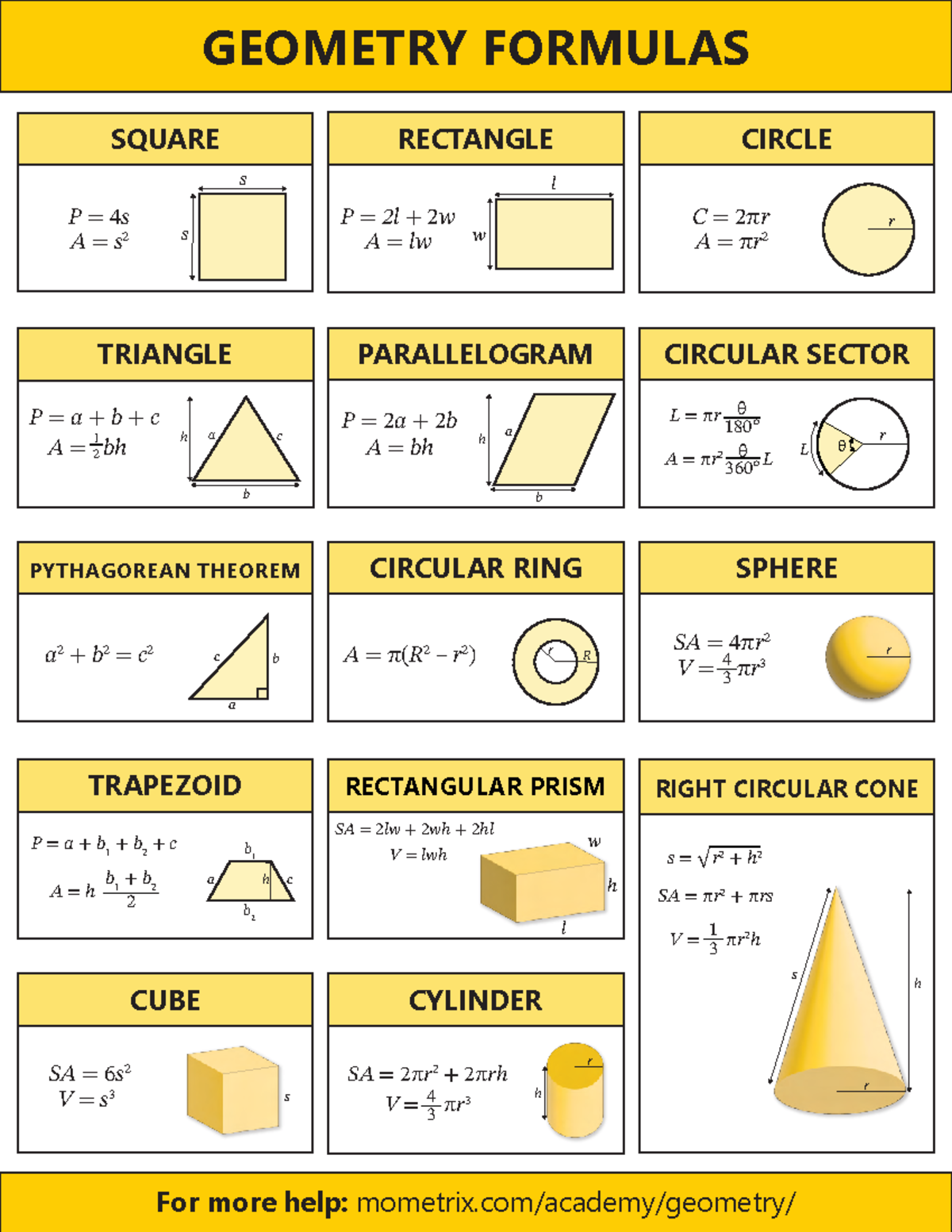
A geometry contest tests advanced spatial reasoning, structural visualization, and rigorous proof construction under strict time limits. Unlike standard school exams that reward memorization, these competitions challenge students to apply theorems creatively, spot hidden geometric symmetries, and translate complex visual puzzles into elegant mathematical arguments.
Success in these high-stakes competitions requires more than raw talent. It depends on disciplined preparation, precise diagram construction, and a systematic approach to synthetic and coordinate geometry.
What is a Geometry Contest?
A geometry contest is a specialized academic competition focused entirely on geometric problem-solving. Competitors face challenging multi-step problems that evaluate their mastery of shapes, angles, points, lines, and spatial relationships.
These events typically fall into a few distinct formats:
- Individual problem-solving exams featuring short-answer or proof-based questions.
- Team-based competitions like the American Regions Mathematics League (ARML), where collaborative problem-solving is critical.
- Olympiad-style tournaments, such as national math olympiads, where participants have hours to solve a handful of deeply complex proofs.
Participants must navigate these problems without calculus or heavy algebraic brute force whenever possible. Instead, successful contestants rely on synthetic geometry—using classical tools like compasses, straightedges, and fundamental theorems—to uncover concise, logical solutions.
Core Pillars of Competitive Geometry
Top-tier competitors don't rely on luck. They build their success on three foundational pillars that streamline problem-solving during high-pressure events.
Diagram Mastery
A precise, well-drawn diagram acts as your most reliable advisor. Many students make the mistake of sketching rough, misleading figures that obscure the relationships between shapes.
When tackling a contest problem, draw large, accurate diagrams using a straightedge and protractor during practice. Label every given length, angle, and midpoint immediately. Look for hidden traits like collinear points, cyclic quadrilaterals, or unexpected tangencies that emerge once the sketch is accurate.
Synthetic vs. Coordinate Approaches
Deciding whether to use synthetic geometry or coordinate geometry early saves crucial minutes.
- Synthetic Geometry: Best for angle chasing, similarity, congruence, and cyclic properties. It often leads to the most elegant and shortest proofs.
- Coordinate Geometry: Ideal when synthetic properties remain elusive. Assigning coordinates or using vectors transforms stubborn geometric puzzles into manageable algebra, though it increases computational risk.
Theorem Repertoire
Elite contestants maintain a mental catalog of advanced theorems beyond the standard high school curriculum. Essential tools include:
- Power of a Point theorem
- Ceva's and Menelaus's theorems for concurrency and collinearity
- Ptolemy's theorem for cyclic quadrilaterals
- Properties of the nine-point circle and triangle centers (orthocenter, circumcenter, centroid, incenter)
Step-by-Step Contest Strategy
When the clock starts, your strategy dictates your score just as much as your mathematical ability. Managing time and mental energy separates finalists from participants who burn out on a single difficult problem.
- Scan the entire paper first: Spend the first five minutes reading every problem. Categorize them into quick wins, moderate challenges, and heavy proof problems.
- Tackle low-hanging fruit: Solve the problems you immediately recognize to build momentum and secure baseline points.
- Allocate strict time budgets: If a problem yields no progress after fifteen minutes, leave it and move on. Returning with a fresh mind later often reveals the missing insight.
- Work backwards from the goal: If a proof feels stuck, assume the conclusion is true and ask yourself, "What condition must be true immediately before this step?" Bridge the gap from both ends.
- Verify through alternative methods: If time permits, check coordinate results with synthetic reasoning, or test numeric answers with extreme cases (such as setting an angle to 90 degrees).
Common Mistakes to Avoid
Even brilliant mathematicians lose points in contests due to avoidable procedural errors. Watch out for these common pitfalls:
- Ignoring boundary cases: Failing to consider obtuse triangles when your diagram only depicted an acute triangle can invalidate a proof or lead to missing solutions.
- Overcomplicating the setup: Resorting to heavy trigonometry or complex numbers before checking for simple cyclic quadrilaterals or similar triangles wastes valuable time.
- Sloppy notation: In proof-based contests, ambiguous naming of angles or poorly referenced theorems frustrates judges and costs partial credit. Always state which triangles are similar and by what criterion (e.g., AA, SAS).
- Poor time management: Spending forty minutes on a single problem while leaving three easier problems blank destroys your overall score.
Frequently Asked Questions
How do I start preparing for a geometry contest?
Begin by mastering standard Euclidean geometry axioms, triangle properties, and circle theorems. Platforms like the Art of Problem Solving offer specialized contest math textbooks and practice problems designed for middle and high school students.
Are calculators allowed in geometry competitions?
Most elite geometry contests, including national olympiads and regional proof-based events, prohibit calculators entirely. Competitors must rely on exact values, fractions, radicals, and mental arithmetic.
What is the best way to improve proof-writing skills?
Read official solutions from past contests to study how experts structure their arguments. Practice writing out proofs completely on paper rather than just solving them in your head, ensuring every logical leap is explicitly justified.
How important is spatial visualization in 3D geometry problems?
Crucial. While 2D problems dominate most contests, 3D geometry occasionally appears, requiring strong mental rotation skills and the ability to project three-dimensional relationships onto two-dimensional cross-sections.



