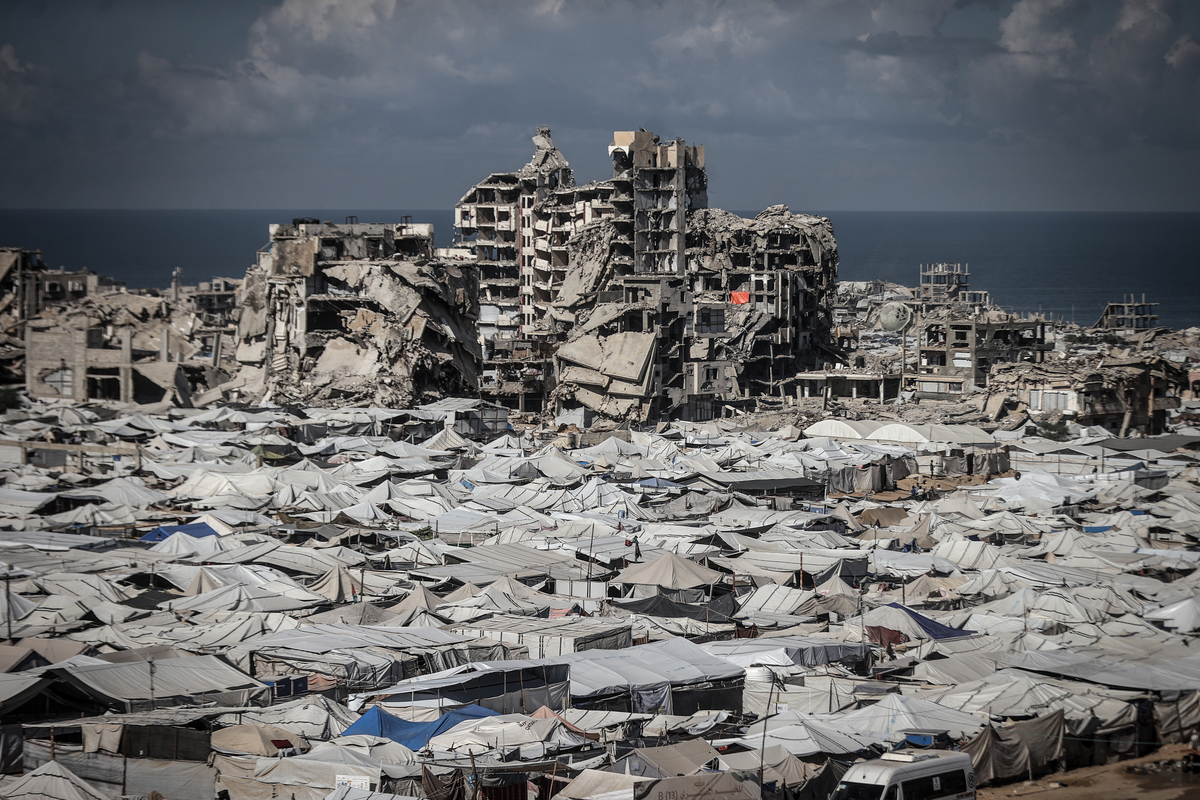
Confusing Gaza with Palestine is a common mistake, but they represent two entirely different layers of geography and politics. Gaza is a specific territory, while Palestine is a broader national and regional entity that encompasses both Gaza and the West Bank. Think of it as the difference between a single state and a city within it, or a specific region versus an entire national identity.
To clear up the confusion immediately: Gaza is a small, densely populated enclave located along the Mediterranean coast. Palestine, on the other hand, refers both to the broader geographic region and to the aspirations for an independent Palestinian state recognized by a majority of United Nations member states. Understanding how these terms overlap requires looking closely at borders, governance, and history.
The Geographical Reality: Part Versus Whole
To understand how these entities relate on a map, you have to look at the fragmented nature of modern Palestinian territories.
- The Gaza Strip: This is a narrow 25-mile stretch of land bordered by Israel to the east and north, Egypt to the southwest, and the Mediterranean Sea to the west. It is home to roughly 2.3 million people, making it one of the most crowded places on earth.
- The West Bank: Located miles away on the other side of Israel, the West Bank is a much larger territory bordered by Jordan. It features major urban centers like Ramallah, Bethlehem, and Nablus, and houses over 3 million residents.
- Palestine: In modern political terms, the "State of Palestine" is defined by international bodies as comprising both of these separated territories—Gaza and the West Bank—with East Jerusalem designated as its capital.
Because Gaza and the West Bank are geographically disconnected by Israeli territory, travel or communication between the two requires crossing international checkpoints or borders.
Governance and Political Leadership
Another major source of confusion stems from who is actually in charge of these areas. Palestine does not have a single unified government running every piece of its claimed territory.
Gaza has been governed independently from the West Bank since a major political split in 2007. Following internal Palestinian political conflict, Hamas assumed administrative and security control of the Gaza Strip.
Meanwhile, the West Bank is administered primarily by the Palestinian Authority (PA), a governing body dominated by the Fatah political faction. While the Palestinian Authority is recognized internationally as the official representative body for the Palestinian people at the United Nations, its actual administrative control in the West Bank is heavily restricted by ongoing Israeli military occupation and settlements.
Consequently, when people talk about political actions or conflicts involving Gaza, they are often referring specifically to Hamas-administered policies or military engagements, which do not automatically reflect the entire West Bank or the broader Palestinian diaspora.
Historical Context and Evolution of the Terms
The name Palestine has deep historical roots that stretch back millennia, long predating modern state boundaries. Historically, "Palestine" referred to the entire geographic region between the Jordan River and the Mediterranean Sea, encompassing land that is now Israel, the West Bank, and Gaza.
Following the 1948 Arab-Israeli war and the creation of Israel, the Gaza Strip came under Egyptian administration, while the West Bank was annexed by Jordan. During the 1967 Six-Day War, Israel captured both territories.
Decades of peace initiatives, most notably the 1993 Oslo Accords, attempted to carve out a pathway for Palestinian self-governance in Gaza and the West Bank. However, final statehood was never fully realized, leaving these regions in a prolonged state of legal and political limbo. In 2012, the United Nations General Assembly upgraded Palestine’s status to a "non-member observer state," giving it formal recognition on the global stage even without complete territorial sovereignty.
Common Misconceptions to Avoid
- Assuming all Palestinians live in Gaza: In reality, millions of Palestinians live in the West Bank, inside Israel as citizens, or across global refugee communities and diaspora populations.
- Treating Hamas as synonymous with all Palestinians: Hamas is a specific militant and political organization governing Gaza, whereas Palestinians are an ethnically and culturally diverse national group with varied political views.
- Believing Gaza and the West Bank share a border: They are entirely separate enclaves divided geographically by sovereign Israeli land.
For official updates and international legal frameworks regarding these territories, you can review documentation provided by the United Nations. For deep historical overviews of the region's shifting boundaries, consult resources from the Library of Congress.
Frequently Asked Questions
Is Gaza a country?
No, Gaza is not an independent country. It is a densely populated coastal territory that forms a geographical part of the wider Palestinian territories, but it lacks full international sovereignty.
Do people in Gaza and the West Bank share the same government?
No. Gaza is governed separately by Hamas, while parts of the West Bank are administered by the Palestinian Authority under the Fatah leadership.
Can Palestinians travel freely between Gaza and the West Bank?
No. Traveling between Gaza and the West Bank is extremely difficult, requiring hard-to-get permits and passing through strict Israeli security checkpoints and borders.
Why is Palestine not recognized universally as a country?
While over 140 UN member states recognize Palestine as a sovereign state, several Western nations—including the United States and major European countries—maintain that Palestinian statehood must be achieved through direct bilateral negotiations with Israel rather than unilateral declarations.



