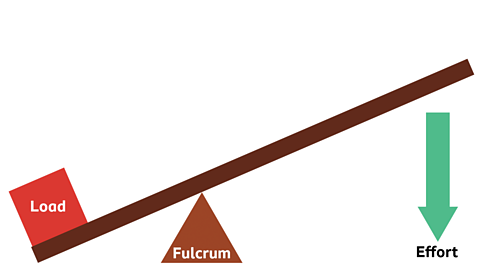
We often think progress requires brute force. Work longer hours, push more code, run more ads. But physics tells a different story. A child can lift an adult if they place a lever on the right pivot. That pivot is the fulcrum, and understanding its function changes how we approach work, business, and daily decisions.
The core fulcrum meaning goes far beyond a balance beam in a physics lab. It represents the exact point where a small, targeted shift generates disproportionately massive output. When you find your operational fulcrum, you stop trading time for linear results and start multiplying your inputs through strategic leverage.
The Mechanical Foundation of Advantage
To understand strategic leverage, you have to look at how simple machines operate. A lever is a rigid bar resting on a pivot. The efficiency of that setup depends entirely on where you place the pivot point relative to the effort and the load.
Physics measures this through torque and distance. If you move the pivot closer to the heavy load, the effort arm lengthens. You need less muscle to lift the object, though you must push the lever farther.
- Effort: The energy, time, or capital you invest.
- Load: The resistance, problem, or objective you want to move.
- Fulcrum: The fixed point that determines the mechanical advantage.
In physical systems, you cannot get something for nothing; you trade distance for force. But in modern intellectual, financial, and organizational systems, a well-placed fulcrum creates genuine multiplication. You don't just trade distance for force—you create systems where inputs compound automatically.
Translating Physics into Strategy
In business and daily life, the physical bar becomes a workflow, a codebase, or a market strategy. The fulcrum becomes the single bottleneck, asset, or decision that controls the entire system.
Consider software development. Writing every line of code by hand is linear work. Creating an internal library or an automation pipeline introduces a fulcrum. Suddenly, one engineer can deploy updates that previously required a team of ten. The code library is the pivot point.
In finance, debt can act as a fulcrum. Borrowing money at a low interest rate to acquire a cash-flowing asset multiplies equity returns, provided the asset's yield exceeds the cost of capital. Yet, just like a physical lever, improper placement or excessive load snaps the bar.
When you look at a stalled project or a stagnant career, you're usually looking at a misaligned fulcrum. You're pushing hard on the wrong side of the lever, applying effort where the resistance is highest instead of moving the pivot.
Identifying Your Personal and Systemic Fulcrum
Finding your operational pivot requires systematic auditing rather than random experimentation. Most people push harder against the load instead of adjusting their position.
Step One: Audit the Bottleneck
Look at your current workflow or business model. Where does work pile up? Where does energy drain away with minimal return? The constraint points directly to where the system is failing to leverage its inputs.
Step Two: Locate the Pivot Point
Determine what variable controls that bottleneck. In a marketing funnel, it might not be the ad spend; it might be the checkout page drop-off rate. Fixing that single conversion element is your fulcrum.
Step Three: Apply Minimal Force
Test small adjustments at the pivot point. Shift a pricing tier, automate a onboarding email sequence, or delegate a repetitive operational task. Measure whether the output shifts dramatically relative to the input energy.
For further reading on how systems theory approaches complex bottlenecks, you can explore the Systems Engineering resources at NASA.
Common Failures in Leverage
Applying leverage without understanding the mechanics creates severe risk. Many organizations collapse because they mistake high risk for high leverage.
- Ignoring Structural Integrity: Pushing maximum force onto a brittle fulcrum breaks the system. Financial institutions discovered this during liquidity crunches when debt leverage stripped away their safety margins.
- Misjudging Direction: A powerful lever moving in the wrong direction accelerates failure. Efficiency in a flawed product only helps you fail faster.
- Overcomplicating the Pivot: The best fulcrums are often simple. If your strategy requires twenty moving parts to align perfectly, your lever is too fragile.
For economic context on how systemic leverage impacts markets, review the analytical frameworks provided by the Bank of Canada.
Frequently Asked Questions
What is the simplest way to define a fulcrum outside of physics?
In strategy and daily operations, a fulcrum is the single point of leverage where a minor change in input or position creates a massive change in output. It is the pivot that makes efficiency possible.
How do I find the fulcrum in my daily work?
Look for tasks or assets that have compounding effects. If writing one documentation page saves fifty support emails per week, that document is a professional fulcrum. Focus your energy where outputs outscale inputs.
Can a fulcrum be a person?
Yes. In organizational structures, a key hire, a specialized advisor, or an executive sponsor often acts as a human fulcrum, unlocking capital, talent, or market access that was previously unreachable.
Why does leverage sometimes cause total system failure?
Leverage amplifies both positive and negative results. If your fundamental assumptions are wrong, applying leverage accelerates the negative fallout, turning minor miscalculations into catastrophic losses.



