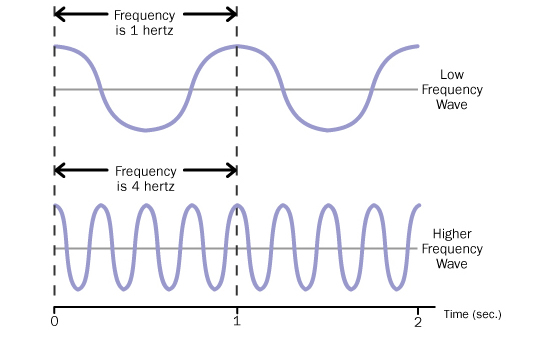
Frequency shift keying (FSK) is a digital modulation technique that encodes binary data by shifting the frequency of a carrier wave between discrete values. When you send a digital signal, a binary '1' (known as the mark) is transmitted at one specific carrier frequency, while a binary '0' (the space) is transmitted at a second frequency. Unlike amplitude modulation, which alters wave height, or phase modulation, which shifts wave timing, FSK manipulates pure frequency while maintaining a constant signal amplitude.
This modulation method remains fundamental to modern engineering because it balances reliability with implementation simplicity. While newer protocols grab headlines, FSK quietly underpins numerous legacy and active systems, from caller ID infrastructure and radio pagers to Bluetooth low-energy basic modes and emergency warning broadcasts. Understanding how this technique handles noise and manages bandwidth provides a solid foundation for network design and wireless communications.
The Core Mechanics of FSK Modulation
At its heart, FSK translates a stream of bits into continuous analog waveforms suitable for transmission across physical media like copper wires, fiber optics, or radio frequencies. A standard binary FSK system utilizes two distinct frequencies:
- The mark frequency represents a binary 1.
- The space frequency represents a binary 0.
As the data stream flows from a computer or microcontroller, an electronic modulator switches the output frequency back and forth between these two presets. For another look on this event, see the recent update from Reuters.
The receiver performs the inverse operation using a demodulator. By passing the incoming signal through bandpass filters or phase-locked loops, the receiver detects whether the energy peak sits at the mark frequency or the space frequency, reconstructing the original stream of ones and zeros. Because the amplitude remains constant throughout transmission, voltage drops or signal attenuation along the channel don't corrupt the core data as easily as they would in amplitude-based systems.
Key Variations of Frequency Shift Keying
Engineers developed several variations of basic FSK to solve specific engineering challenges, particularly regarding bandwidth consumption and signal stability.
Continuous Phase FSK (CPFSK)
In basic FSK, abrupt frequency jumps can create sharp phase discontinuities at bit boundaries. These sudden shifts generate wide sidebands that consume excess bandwidth. CPFSK solves this by ensuring the phase of the carrier wave changes smoothly and continuously from one symbol to the next, reducing unwanted frequency spread and keeping transmissions clean.
Minimum Shift Keying (MSK)
MSK is a specialized form of CPFSK where the difference between the mark and space frequencies is set to the minimum possible value that maintains orthogonality. This tight spacing maximizes spectral efficiency, allowing more data to pass through crowded radio bands without overlapping or causing interference.
Multiple Frequency Shift Keying (MFSK)
Standard FSK encodes one bit per symbol, but MFSK expands the alphabet by using more than two discrete frequencies. For instance, a 4-FSK system uses four distinct frequencies to encode two bits per symbol simultaneously. This approach increases data throughput without requiring a dramatic increase in signal power, though it demands more sophisticated receiver hardware.
Practical Applications in Modern Networks
You encounter FSK technology in more places than you might expect. Its inherent resilience to amplitude spikes and noise makes it ideal for harsh electrical environments and low-power devices.
- Caller ID Systems: Traditional landline caller identification transmits subscriber data between the first and second ring using Bell 202 tones, a standard form of audio FSK.
- Radio Control and Telemetry: Remote control systems for garage doors, industrial cranes, and weather balloons frequently rely on narrow-band FSK for robust command delivery.
- Amateur Radio and Pagers: Packet radio networks and paging systems use FSK variations to transmit text messages over VHF and UHF radio bands reliably.
- Emergency Alert Systems: Broadcasters transmit standardized header tones using audio frequency shifts to trigger automated weather radios and emergency warnings across national networks.
According to technical documentation from the Federal Communications Commission, robust analog and digital signaling standards continue to support legacy infrastructure alongside modern packet data.
Advantages and Disadvantages of FSK
Every modulation scheme involves trade-offs between hardware cost, bandwidth utilization, and error rates. FSK occupies a distinct niche based on these operational characteristics.
The primary advantages include high noise immunity and circuit simplicity. Because noise spikes typically alter signal amplitude rather than frequency, amplitude-limiting circuits can strip away interference before demodulation occurs. Furthermore, transmitters and receivers don't require linear amplifiers, which lowers manufacturing costs and reduces power consumption.
The primary disadvantages center on bandwidth inefficiency. FSK requires more frequency spectrum than advanced phase modulation techniques like PSK or quadrature amplitude modulation when transmitting high-speed data streams. As data rates scale up, simple FSK hits physical ceilings where spectrum crowding becomes unmanageable.
Common Mistakes in FSK Implementation
Engineers and students working with FSK systems often encounter predictable pitfalls during design and deployment.
- Ignoring Bandwidth Expansion: Assuming FSK requires the same channel width as amplitude modulation leads to severe adjacent-channel interference. Always calculate Carson's bandwidth rule to allocate proper spectrum spacing.
- Poor Frequency Separation: Setting the mark and space frequencies too close together makes demodulation difficult in noisy environments, while setting them too far apart wastes valuable spectrum.
- Neglecting Phase Discontinuities: Using non-coherent switching without filtering creates harsh transients that violate regulatory spectral mask requirements for radio transmitters.
Frequently Asked Questions
What is the difference between FSK and ASK?
Amplitude shift keying (ASK) alters the height or amplitude of the carrier wave to represent binary states, making it vulnerable to signal fading and noise spikes. FSK alters the frequency while keeping the amplitude constant, offering superior resistance to amplitude-based interference.
Why is FSK considered robust against noise?
Most environmental noise, static, and circuit interference manifest as amplitude variations. Because FSK receivers strip amplitude variations using limiters and focus solely on zero-crossing frequency detection, the noise is largely filtered out before data recovery.
What is the modulation index in FSK?
The modulation index measures the ratio of the frequency deviation to the maximum frequency of the modulating signal. It dictates how far apart the mark and space frequencies sit relative to the signaling rate, directly influencing the occupied bandwidth.
Can FSK be used for high-speed internet?
Basic FSK is far too inefficient in terms of bandwidth to handle modern gigabit internet traffic. However, advanced multi-carrier adaptations and related techniques like discrete multitone modulation build upon these foundational principles for complex broadband systems.



