Everything in the physical world vibrates. From subatomic particles locked within atomic nuclei to massive galactic arms spinning through space, periodic motion drives reality. When we examine frequency and wave mechanics across different scales, we see that nature repeats structural blueprints using oscillations and resonance.
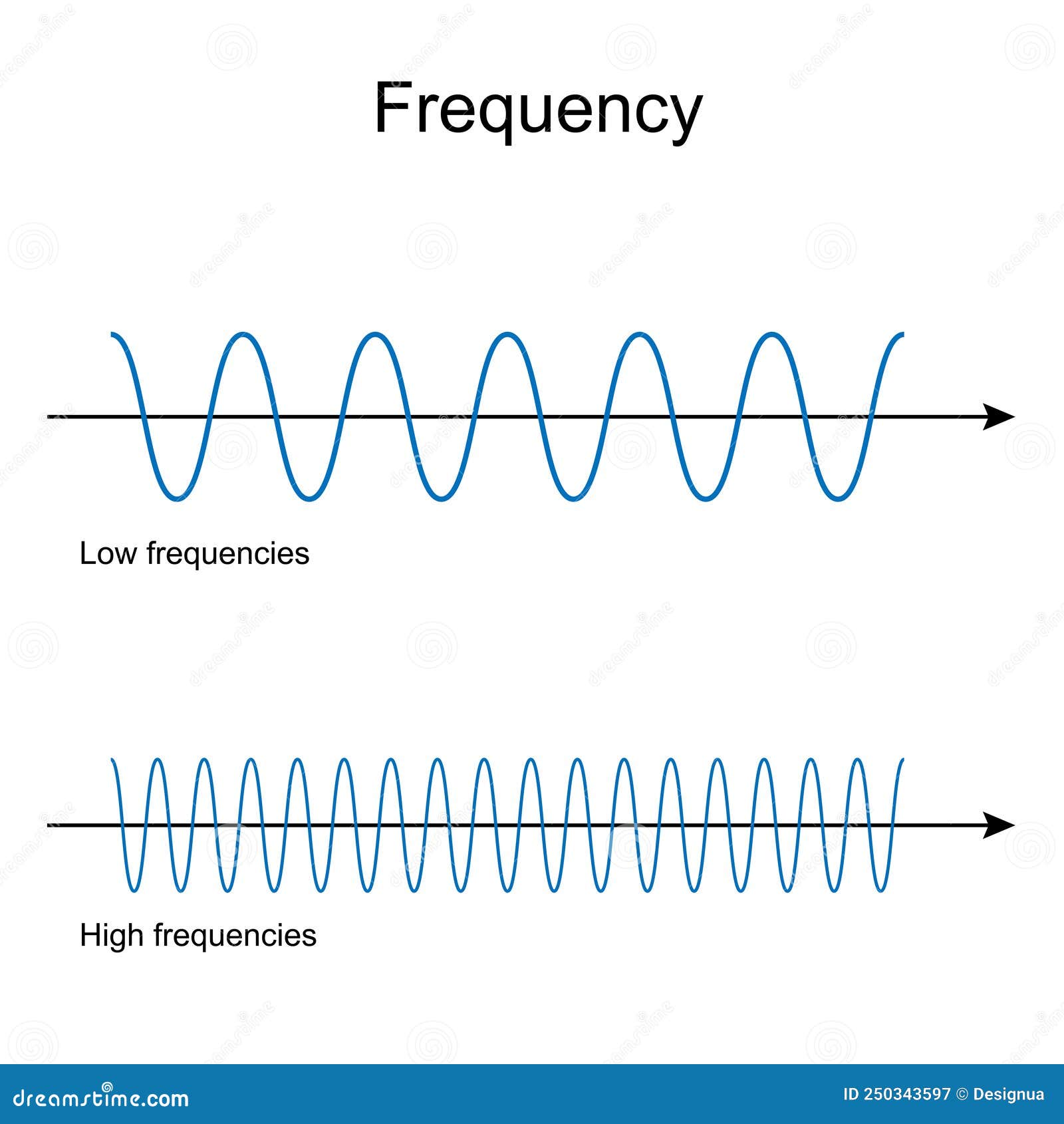
At its core, a wave is a disturbance that transfers energy through space or matter without permanently displacing the medium itself. Frequency measures how often these cycles repeat per second, expressed in hertz. When waves interact, they create interference patterns, standing waves, and resonant nodes that dictate everything from the color of light to the stability of chemical bonds. Understanding these physical rhythms lets us decode how natural systems organize themselves into stable structures.
The Mechanics of Oscillations and Simple Harmonic Motion
Simple harmonic motion serves as the fundamental building block for all wave phenomena. Any system displaced from an equilibrium point while experiencing a restoring force proportional to that displacement will oscillate. A pendulum swinging back and forth or a mass attached to a spring demonstrates this exact mathematical behavior.
- Displacement: The distance and direction of the oscillating object from its central resting position.
- Restoring Force: The physical force—such as gravity or elasticity—that pulls the system back toward equilibrium.
- Inertia: The property that carries the system past the equilibrium point, creating a continuous back-and-forth cycle.
The relationship between mass, stiffness, and frequency remains constant across physical systems. For example, tightening a guitar string increases its tension, which raises the restoring force and results in a higher frequency of vibration. You hear this as a higher pitch.
Resonance and Energy Transfer Across Scales
Resonance occurs when a periodic driving force matches the natural frequency of a system. When this happens, energy transfers efficiently, causing dramatic increases in amplitude. This principle governs physical systems from acoustic instruments to orbital mechanics in planetary systems.
Consider how acoustic instruments amplify sound. The string vibrates at a specific frequency, and that vibration transfers through the bridge into the hollow body of an instrument. The air inside resonates at matching frequencies, pushing sound waves outward with much greater volume than the string could produce alone.
Orbital resonance operates on a cosmic scale. Moons and planets exert regular gravitational pulls on one another at specific integer ratios. For instance, Neptune and Pluto maintain a 3:2 orbital resonance, meaning Pluto completes two orbits around the Sun in the exact time Neptune completes three. This gravitational synchronization prevents collisions and stabilizes orbits over billions of years. According to NASA Solar System Exploration, gravitational interactions and orbital resonances shape the architecture of planetary systems throughout our galaxy.
Electromagnetic Waves and the Spectrum of Reality
Electromagnetic radiation travels through a vacuum as self-propagating waves consisting of oscillating electric and magnetic fields. Unlike sound waves, which require a physical medium like air or water to travel, electromagnetic waves move freely through empty space.
The electromagnetic spectrum spans an enormous range of frequencies, from extremely low-frequency radio waves to high-energy gamma rays. Despite their different behaviors, all electromagnetic waves travel through a vacuum at the exact same speed, known as the speed of light.
- Radio Waves: The lowest frequency band, used for long-distance communication and broadcasting.
- Visible Light: A very narrow frequency band that human photoreceptors evolved to detect, translating wavelengths into color.
- X-Rays and Gamma Rays: High-frequency, high-energy waves capable of penetrating matter, used in medical imaging and astrophysics.
Energy is directly proportional to frequency, described by the Planck-Einstein relation where energy equals Planck's constant multiplied by frequency. High-frequency ultraviolet light carries enough energy to break chemical bonds, while low-frequency infrared light merely transfers thermal energy.
Quantum Waves and Matter
At the subatomic level, the distinction between particles and waves dissolves entirely. Quantum mechanics shows that electrons, protons, and other fundamental constituents exhibit wave-particle duality. Erwin Schrodinger developed the wave equation to describe how quantum states evolve over time, treating particles as probability waves.
An electron bound inside an atom doesn't orbit the nucleus like a tiny planet. Instead, it forms a standing wave pattern known as an atomic orbital. These standing waves have discrete energy levels and fixed nodes where the probability of finding the electron drops to zero. The periodic table of elements directly reflects these underlying quantum wave patterns. As nuclear charge increases, electrons fill available wave states in specific sequences, determining the chemical properties of every element. The National Institute of Standards and Technology provides detailed atomic spectra data that maps out these exact quantum frequency transitions.
Common Misconceptions About Natural Frequencies
Many popular discussions surrounding frequency rely on pseudoscientific claims rather than empirical physics. Separating actual wave mechanics from unverified speculation helps clarify what physics can and cannot explain.
- Misconception: Everything in the universe vibrates at a single, mystical frequency that can cure diseases if matched.
- Reality: Complex systems contain millions of different vibrational modes across various components, not a single monolithic frequency.
- Misconception: Quantum entanglement allows instantaneous communication using radio or sound frequencies.
- Reality: Entangled particles share correlations in quantum states, but they cannot transmit usable data or signals faster than the speed of light.
Frequently Asked Questions
What causes a wave to change frequency?
Frequency remains constant when a wave travels through a uniform medium. However, if the source moves relative to an observer, the perceived frequency shifts, known as the Doppler effect. Changing the physical properties of the medium—such as temperature or density—can also alter wave characteristics.
Why do standing waves form?
Standing waves form when two waves of identical frequency and amplitude travel in opposite directions through the same medium and interfere with each other. This creates stationary points of zero amplitude called nodes and points of maximum amplitude called antinodes.
How does frequency relate to wavelength?
Frequency and wavelength are inversely proportional for waves traveling at a constant speed. As frequency increases, wavelength decreases. Multiplying frequency by wavelength always equals the propagation speed of the wave.
Are gravitational waves the same as electromagnetic waves?
No. Electromagnetic waves consist of oscillating electric and magnetic fields traveling through space. Gravitational waves are ripples in the fabric of spacetime itself, caused by massive accelerating objects like colliding black holes, as detected by experiments detailed by the National Science Foundation.



