Yes, a time difference exists between most of Florida and most of Texas, though it depends entirely on where you are standing in each state. Florida sits primarily in the Eastern Time Zone, while the vast majority of Texas operates on Central Time. When you cross from Houston to Miami, you lose or gain an hour depending on your direction.
However, the question isn't as simple as a flat one-hour gap across the board. Texas spans a massive geographic expanse and actually crosses into a second time zone, while parts of Florida's panhandle share the same clock as the Lone Star State. If you're planning a cross-country call, a business meeting, or a multi-state road trip, understanding these boundaries prevents missed flights and confused schedules.
The Core Time Zone Breakdown
To understand the gap, you need to look at how federal time zones slice up the American South. The standard boundary places Florida in the Eastern Time Zone and Texas in the Central Time Zone.
When it's noon in Austin, Texas, it's 1:00 PM in Miami, Florida. Florida is one hour ahead of Texas for the vast majority of both states' populations. This means major economic hubs like Houston, Dallas, San Antonio, and Austin lag one hour behind Miami, Orlando, Tampa, and Jacksonville.
This one-hour offset applies uniformly during both standard time and Daylight Saving Time because both states observe federal clock shifts identically. Clocks spring forward and fall back on the exact same weekends, preserving that steady sixty-minute gap between their primary commercial centers.
The Texas Exception: Central Meets Mountain
While people often picture Texas as a single monolithic block of Central Time, geography tells a different story. The westernmost tip of the state operates on a completely different schedule.
El Paso and the surrounding desert region near the New Mexico border sit in the Mountain Time Zone. This creates a fascinating internal quirk:
- El Paso vs. Miami: There is a two-hour time difference, with Miami sitting two hours ahead of El Paso.
- El Paso vs. Houston: Even within Texas itself, traveling from Houston to El Paso requires moving your watch back one hour because El Paso shares time with Denver rather than Dallas.
- The Border Split: Small towns like Hudspeth County and parts of Culberson County also observe Mountain Time, keeping them aligned with Mountain Standard or Mountain Daylight Time.
If you are calling someone in El Paso from Orlando, you are dealing with a two-hour gap, whereas calling someone in Dallas from Orlando involves only a one-hour gap.
The Florida Exception: The Panhandle Split
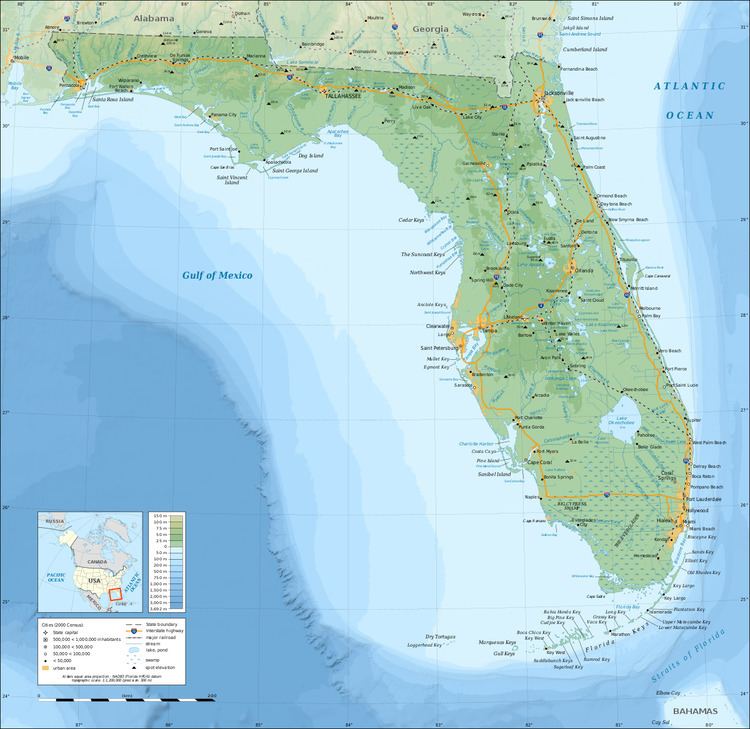
Florida also refuses to fit neatly into a single box. While the peninsula dominates the Eastern Time Zone, the western portion of the Florida Panhandle splits off.
Everything west of the Apalachicola River—including major cities like Pensacola, Panama City, and Destin—observes Central Time. This means these western Floridians share the exact same time zone as Dallas and Houston.
- Pensacola vs. Houston: There is zero time difference. Both cities run on Central Time.
- Pensacola vs. Miami: There is a one-hour time difference, even though both cities are in Florida. Miami is one hour ahead of Pensacola.
This internal state division catches many travelers off guard. Driving from Tallahassee to Pensacola on I-10 means crossing a time zone boundary, requiring you to turn your clock back one hour even though you never left Florida. You can check official federal details via the National Institute of Standards and Technology to see how official time zones are mapped across state lines.
Practical Impact on Travel and Business
Managing schedules across these regions requires a bit of local awareness. Because both states are economic powerhouses with heavy corporate and logistics traffic, coordination happens constantly between cities like Dallas and Jacksonville or Houston and Miami.
If you are scheduling a remote conference call between a team in Fort Worth and a team in St. Petersburg, remember that the Florida team is always one hour ahead. A 9:00 AM start in Fort Worth translates to 10:00 AM for your colleagues in Florida.
For commercial flights, airlines list all departure and arrival times in local time. A direct flight leaving Houston Intercontinental at 8:00 AM and landing in Miami at 11:30 AM takes roughly two and a half hours in the air, even though the clock on the wall at your destination reads much later due to the combination of flight duration and the one-hour zone shift. You can review standard aviation scheduling guidelines through the Federal Aviation Administration to understand how carriers handle multi-zone routing.
Common Mistakes to Avoid
People frequently trip up on a few common assumptions when calculating schedules between these two states:
- Assuming Texas is entirely in one time zone. Forgetting about El Paso leads to missed appointments with western Texan businesses.
- Forgetting that the Florida Panhandle uses Central Time. Travelers often assume they can drive across the entire state of Florida without touching a different time zone.
- Miscalculating seasonal changes. Because both states observe Daylight Saving Time, people sometimes worry about mismatched transition dates. Fortunately, the United States updates its clocks nationwide on the same days, meaning the one-hour difference remains stable year-round.
Frequently Asked Questions
Is all of Florida in the same time zone?
No. Most of Florida is in the Eastern Time Zone, but the western section of the Panhandle—west of the Apalachicola River—is in the Central Time Zone.
Does Texas have more than one time zone?
Yes. The vast majority of Texas uses Central Time, but the far western region, including El Paso, uses Mountain Time.
What is the exact time difference between Houston and Miami?
Miami is one hour ahead of Houston. When it's 2:00 PM in Houston, it's 3:00 PM in Miami.
Do Florida and Texas change their clocks for Daylight Saving Time?
Yes. Both states observe Daylight Saving Time, so the relative time difference between their primary cities stays identical all year.



