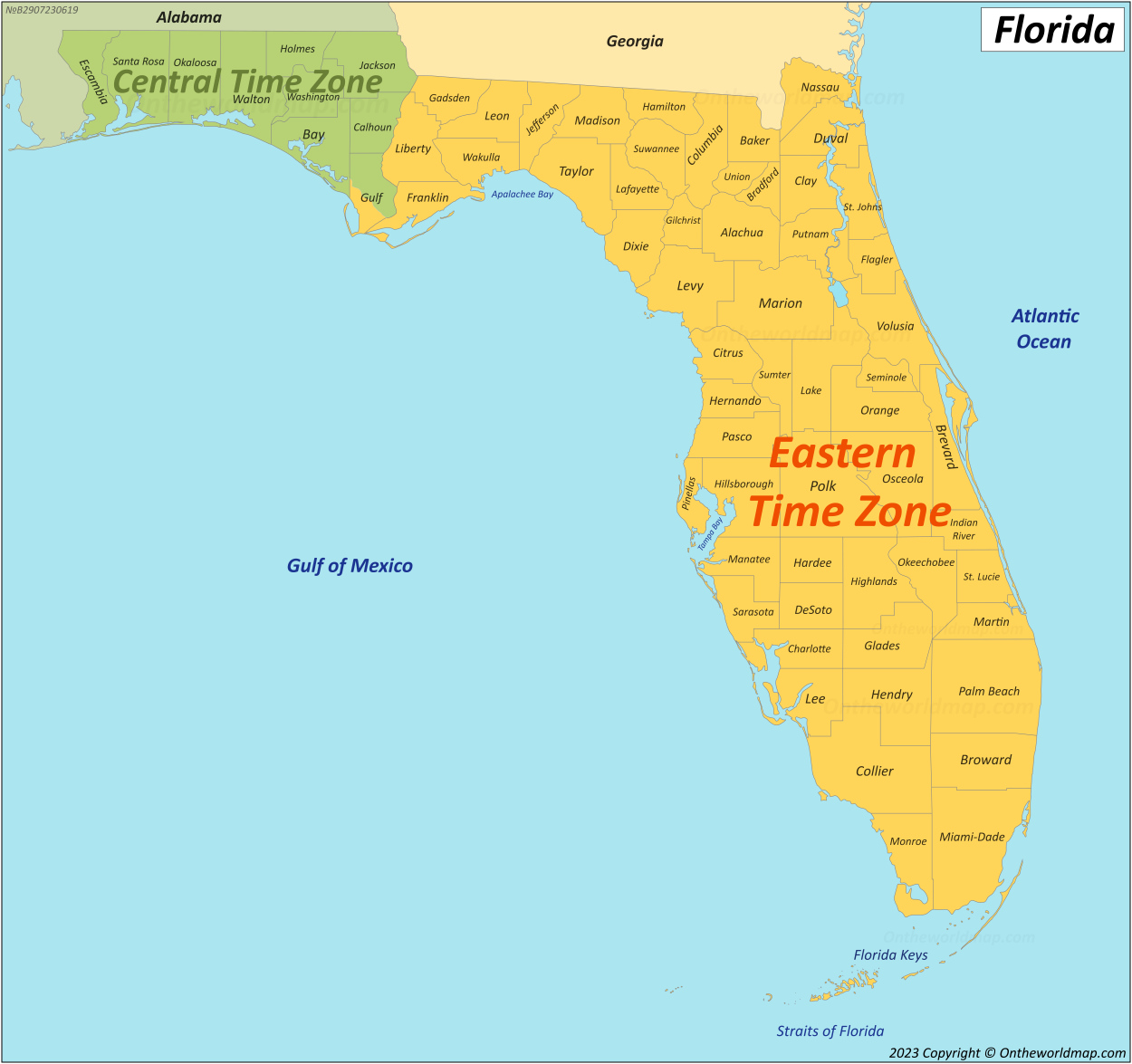
If you're planning a trip across the Sunshine State or coordinating a call with someone in Miami or Pensacola, knowing what time it is in Florida requires more than assuming a single clock setting. While most of the state operates on Eastern Time, a distinct slice of the Florida Panhandle runs on Central Time. This split catches travelers off guard every day, especially when driving west past the Apalachicola River or crossing county lines.
Florida spans two separate time zones and observes Daylight Saving Time biannually. Understanding how the state divides its hours helps you avoid missed flights, late meetings, and scheduling mix-ups.
The Two Time Zones of Florida
Florida is split between the Eastern Time Zone (ET) and the Central Time Zone (CT). The vast majority of the state—including major metropolitan areas like Miami, Orlando, Tampa, Jacksonville, and Tallahassee—operates on Eastern Time.
The Central Time Zone covers the western portion of the Florida Panhandle. If you're west of the boundary line, you're one hour behind the rest of the state. For instance, when it's 5:00 PM in Orlando, it's 4:00 PM in Pensacola.
Which Florida Counties Are in the Central Time Zone?
The boundary separating Florida's time zones runs primarily through the Panhandle, following county lines rather than major highways. Nine of Florida's 67 counties sit entirely or partially within the Central Time Zone:
- Escambia County (Pensacola)
- Santa Rosa County
- Okaloosa County
- Walton County
- Holmes County
- Washington County
- Jackson County
- Calhoun County
- Bay County (Panama City)
Gulf County has a unique distinction. It is the only county in Florida split into two time zones. The northern portion of Gulf County observes Central Time, while the southern coastal area—including Port St. Joe—observes Eastern Time.
Daylight Saving Time Rules in Florida
Like most of the United States, Florida shifts its clocks twice a year. Under federal guidelines managed by the U.S. Department of Transportation, clocks spring forward one hour on the second Sunday of March and fall back one hour on the first Sunday of November.
State lawmakers have pushed heavily to abandon this biannual shift. The Florida legislature passed the Sunshine Protection Act resolution to stay on year-round Daylight Saving Time. However, federal law prohibits individual states from enacting permanent Daylight Saving Time without congressional approval. Until Congress changes federal statutes, Florida must keep changing its clocks.
Common Travel Mistakes and How to Avoid Them
Crossing time zones within the same state leads to predictable errors for visitors.
- Ignoring GPS updates: When driving from Tallahassee to Destin or Pensacola, your phone or car navigation system will automatically shift back an hour. Don't panic if your dashboard clock suddenly jumps backward; you've crossed the boundary.
- Booking transport across zones: If you catch a bus, train, or flight departing from a Central Time city to an Eastern Time destination, double-check your arrival time. A one-hour flight from Pensacola to Miami arrives two hours later according to local face-clock values.
- Missing hotel check-ins: Driving west from a theme park vacation in Orlando to a beach rental in Panama City gives you an extra hour of daylight, but heading east does the opposite. Heading east steals an hour, turning a relaxed check-in window into a rush.
Check official transportation schedules through the Federal Aviation Administration when booking connecting travel that involves regional Panhandle airports.
Frequently Asked Questions
Does all of the Florida Panhandle use Central Time?
No. Only the western portion of the Panhandle uses Central Time. Counties closer to Tallahassee, such as Leon, Wakulla, and Franklin, remain strictly on Eastern Time.
What is the time difference between Miami and Pensacola?
Pensacola is one hour behind Miami. When Miami is on Eastern Time, Pensacola is on Central Time.
Does Florida observe Daylight Saving Time everywhere?
Yes. Every region in Florida shifts its clocks in March and November. No part of the state opts out of Daylight Saving Time the way Arizona or Hawaii do.
Where does the time zone line actually cross?
The boundary runs north-to-south starting near the Alabama-Georgia-Florida border, cutting down through the Panhandle just east of Walton County and splitting Gulf County near the Apalachicola River.


