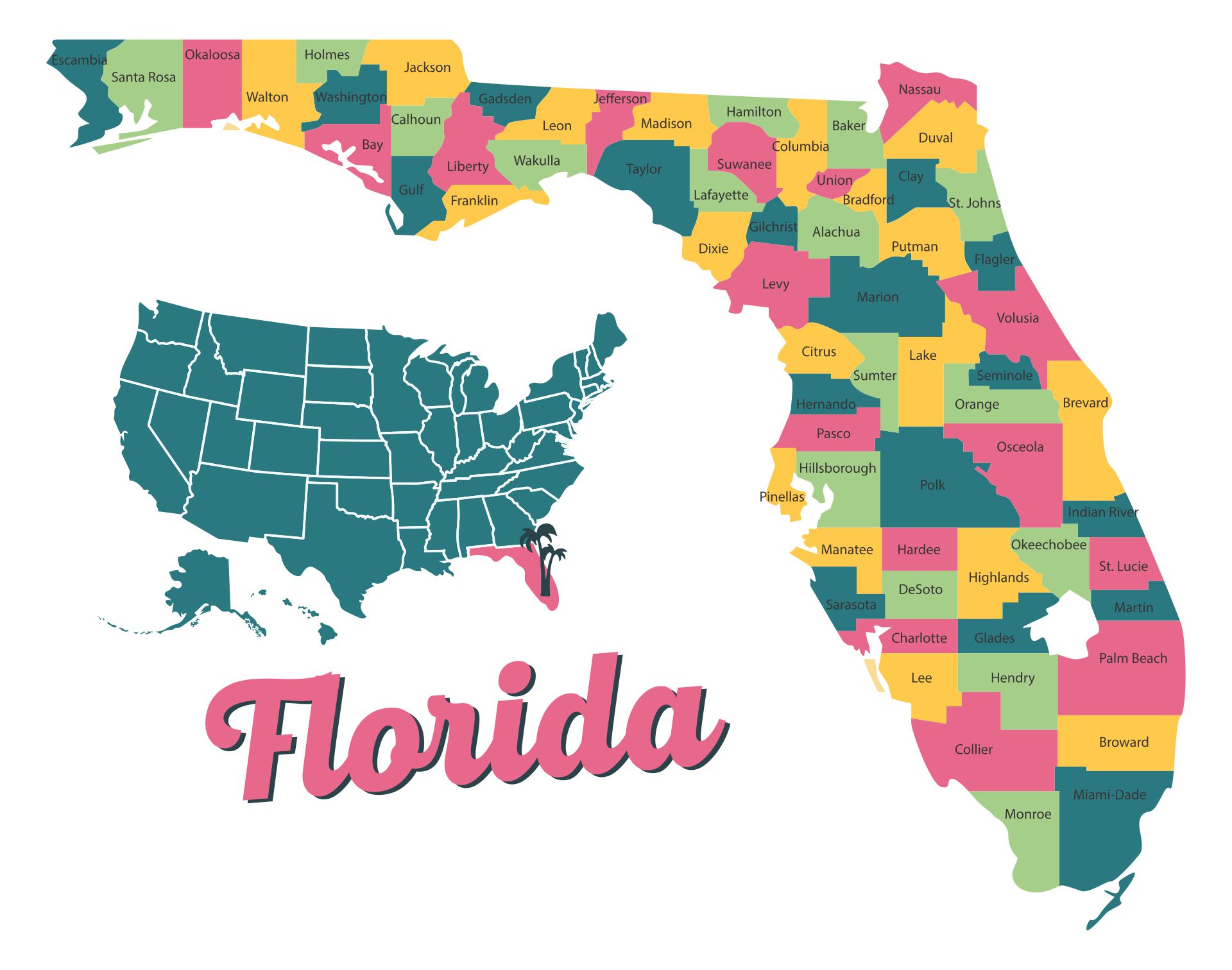
Florida splits across two different time zones, catching many travelers and remote workers off guard. While most of the state runs on Eastern Time, the western Panhandle operates on Central Time. If you drive from Miami to Pensacola or schedule a cross-state call, ignoring this shift will cause you to miss flights, meetings, and reservations.
The division splits the Sunshine State right past its northern panhandle region. Understanding where the line falls prevents confusion when crossing county borders or planning multi-city itineraries.
Florida Time Zone Breakdown
Florida uses both Eastern Time (EST/EDT) and Central Time (CST/CDT). Daylight Saving Time applies uniformly across both zones, so the one-hour gap between them stays consistent year-round.
Eastern Time Zone Regions
The vast majority of Florida operates on Eastern Time. This zone covers major population centers, tourist hubs, and financial districts, including:
- Miami, Fort Lauderdale, and the Florida Keys
- Orlando, Kissimmee, and theme park properties
- Tampa, St. Petersburg, and Sarasota
- Jacksonville, Daytona Beach, and the Space Coast
- Tallahassee, the state capital
Central Time Zone Regions
The western Panhandle transitions to Central Time, aligning logistically with neighboring Alabama. This zone includes:
- Pensacola and Pensacola Beach
- Destin and Fort Walton Beach
- Panama City and Panama City Beach
- Chipley, Marianna, and DeFuniak Springs
When it is 10:00 AM in Orlando, it is 9:00 AM in Pensacola. This internal hour difference surprises visitors who assume an entire state shares a single clock.
Where the Time Zone Boundary Actually Lies
The border between Florida's two time zones isn't a straight line drawn on a map. Instead, federal regulations define the transition using natural waterways, rivers, and specific county lines.
The Apalachicola River Marker
For the most part, the boundary follows the Apalachicola River southward from the Georgia border. Drivers heading west on Interstate 10 cross the time zone threshold right around mile marker 160, as they pass over the Apalachicola River bridge.
Split Counties
Certain counties near the border experience unique local splits. For instance, Gulf County is largely in the Central Time Zone, but its eastern portion—including the coastal city of Port St. Joe—observes Eastern Time. Similarly, parts of Franklin County near the mouth of the river adopt Central Time while other areas stay on Eastern Time. If you travel through these specific coastal pockets, check your phone settings, as cell towers occasionally bounce between towers broadcasting different regional signals.
Why Florida Has Two Time Zones
The dual-zone setup stems from historical commerce and geography. The Florida Panhandle shares deep economic, cultural, and transit ties with Alabama and the broader Gulf Coast. In the early days of railroad development and standardized timekeeping, keeping the western Panhandle on Central Time made practical sense for local business operations, trade, and train schedules connecting Pensacola to Mobile and New Orleans.
Efforts to unify the entire state under a single time zone surface in the Florida legislature from time to time, but shifting the Panhandle to Eastern Time would detach its business day from neighboring Alabama markets. As a result, the two-zone layout remains firmly in place.
Common Mistakes to Avoid
Travelers frequently run into trouble because they underestimate how long it takes to traverse the state or assume local clocks are universal.
- Assuming statewide uniformity: Don't book a flight out of Pensacola thinking you have the same buffer time as an arrival in Miami. Always verify the airport's local clock.
- Ignoring phone auto-updates near borders: Cellular towers close to the Apalachicola River can occasionally trigger manual time shifts or jump hours unexpectedly. Keep an eye on your device if you're navigating rural parts of Gulf or Franklin counties.
- Miscalculating meeting times: When coordinating remote work calls between Jacksonville and Panama City, explicitly state the time zone rather than just writing "EST" or assuming Florida time.
For official regulatory definitions and legal demarcations of the boundary coordinates, consult the Code of Federal Regulations via the Electronic Code of Federal Regulations. If you are tracking nationwide boundaries, the National Institute of Standards and Technology provides comprehensive technical breakdowns of official U.S. time zones.
Frequently Asked Questions
Does all of Florida observe Daylight Saving Time?
Yes. Both the Eastern Time and Central Time portions of Florida switch to Daylight Saving Time simultaneously. Clocks spring forward and fall back together, preserving the exact one-hour gap between Pensacola and Miami year-round.
What major Florida cities are in the Central Time Zone?
Pensacola, Panama City, Destin, Fort Walton Beach, and Tallahassee's western neighbors like Marianna sit in the Central Time Zone. Tallahassee itself is securely in the Eastern Time Zone.
How do I avoid missing appointments near the time zone border?
Always confirm the specific city or county time zone when scheduling events near the Apalachicola River. If you stay in a split county like Gulf County, check whether your hotel or venue operates on Eastern or Central Time.
Why doesn't Florida unify into one time zone?
Panhandle communities maintain stronger economic and transportation links with Alabama and the Central time corridor than with South Florida. Moving the Panhandle to Eastern Time would create a mismatched business day for local commerce near the state border.


