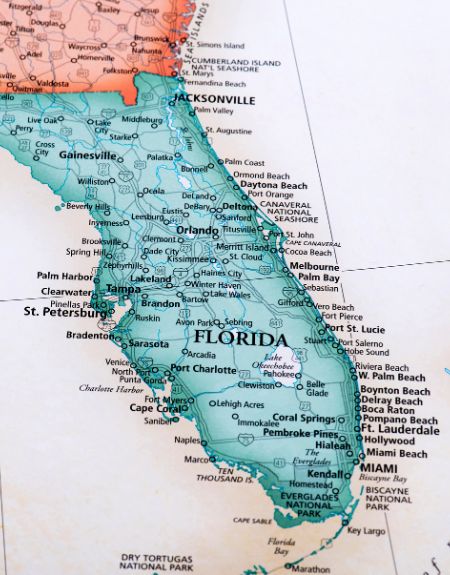
Florida is widely imagined as a single-clock vacation state, but reality runs on a split schedule. While Miami, Orlando, and Jacksonville tick away in the Eastern Time Zone, a distinct slice of the Sunshine State operates an hour behind. Understanding the Florida time zone layout is essential for anyone traveling across the Panhandle, managing cross-state business operations, or coordinating logistics between Pensacola and Tallahassee.
The Western Panhandle follows the Central Time Zone, creating a unique geographic and cultural boundary right inside state lines. This split affects everything from local commerce and commuter habits to television broadcasts and tourist itineraries. Knowing where the line falls keeps you from missing flights, meetings, or dinner reservations.
The Geography of Florida Time Zones
The state is split between two distinct zones. The vast majority of the peninsula and northern territory uses Eastern Standard Time (EST), aligning with major East Coast financial hubs. However, the western portion of the Florida Panhandle is anchored to Central Standard Time (CST).
The official boundary cuts primarily along the Apalachicola River and stretches through specific county lines. In total, parts or all of nine counties out of Florida's sixty-seven operate on Central Time.
- Counties on Central Time: Escambia, Santa Rosa, Okaloosa, Walton, Holmes, Washington, Bay, Jackson, and portions of Gulf County.
- Major Cities in Central Time: Pensacola, Panama City, Destin, Fort Walton Beach, and Tallahassee's neighboring western communities.
Gulf County features a split personality. The northern section observes Central Time, while the southern coastal strip, including Port St. Joe, runs on Eastern Time. Crossing this invisible internal border requires a constant awareness of your exact GPS coordinates.
Impact on Local Business and Commerce
Operating across two time zones within a single state introduces daily friction for businesses. Companies headquartered in Jacksonville or Orlando dealing with vendors in Pensacola must account for the one-hour lag.
Banks, state government offices, and local shipping hubs adjust their internal schedules to bridge the gap. For instance, a state agency in Tallahassee closing its doors at 5:00 PM Eastern Standard Time is locking up while its regional office in Pensacola still has a full hour left in the workday.
- Scheduling Logistics: Corporate meetings require explicit notation of time zones rather than just stating "3:00 PM Florida time."
- Supply Chain and Freight: Delivery trucks crossing from the eastern peninsula into the western panhandle gain an hour on westbound trips, altering arrival window calculations.
- Tourism Coordination: Resorts, hotels, and charter boat captains near the border must clearly display schedules for guests who cross back and forth from beach towns like Panama City Beach to eastern attractions.
Culture, Media, and Daily Life
Culturally, the Western Panhandle shares more with neighboring Alabama and the broader Gulf Coast than it does with South Florida. The rhythm of life in Pensacola mirrors Mobile rather than Miami.
Media consumption also reflects this divide. Television affiliates based in Mobile, Alabama, broadcast into the western panhandle, delivering Central Time programming schedules. Residents watch national news and sports broadcasts an hour earlier than their fellow citizens in Tampa or Gainesville. High school football games kick off under local lights that match the Central clock, creating unique regional traditions distinct from the rest of the state.
High-speed rail proposals and state-level legislative debates often touch on these regional nuances. According to updates from the Florida Department of Transportation, infrastructure projects continually adapt to the heavy flow of interstate travelers moving between Alabama and the Panhandle beaches.
Common Traveler Mistakes to Avoid
Visitors driving west along Interstate 10 often fall victim to the time change without realizing it. Because cell phones automatically update based on cell tower pings, digital clocks handle the shift seamlessly. However, analog clocks in rental cars, older dashboard displays, and wristwatches do not update on their own.
- Missing Flight Departures: Travelers flying out of Pensacola International Airport must remember that boarding passes list local time, which can confuse tourists driving in from Eastern Time destinations.
- Restaurant and Reservation Errors: Driving just thirty miles east for dinner can cause you to arrive an hour early or late if you forget to reset your watch.
- App-Based Scheduling: Ride-share drivers and food delivery apps automatically convert times, but manual calendar entries for excursion bookings require double-checking.
Frequently Asked Questions
Does all of Florida observe Daylight Saving Time?
Yes. The entire state observes Daylight Saving Time, moving clocks forward in March and back in November. The one-hour gap between the Eastern and Central zones remains constant year-round.
Where exactly does the time zone change on Interstate 10?
The official time zone boundary on I-10 sits near the Choctawhatchee River, shifting drivers between Walton County (Central) and Holmes or Washington counties depending on the exact stretch. Signage along the highway alerts drivers to the transition.
Why doesn't Florida unify under a single time zone?
Federal law places time zone boundaries under the jurisdiction of the Department of Transportation. Because the western panhandle is economically and geographically integrated with Alabama and the central time zone corridor, petitions to unify the state have never gained federal traction.
How does the time zone split affect public schools and government?
Local school districts and county governments set their operating hours independently based on local community needs, keeping school buses and municipal services aligned with the correct local sun position rather than state capital schedules.



