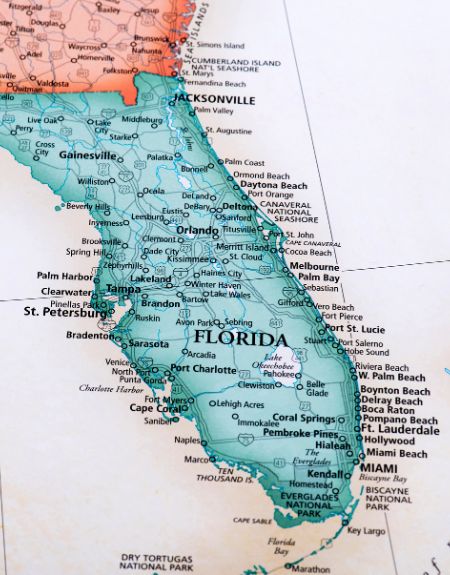
The internet treats the "Florida Man" archetype as a permanent fixture of daily comedy. When calendar pages flip to specific dates like October 3, social media feeds experience predictable surges of bizarre arrest logs, wild mugshots, and absurd local news clippings. But this viral phenomenon isn't born from an unusual concentration of eccentric human behavior in the Sunshine State. Instead, it is the direct byproduct of unique open-government legislation, rapid-fire news aggregation algorithms, and the architecture of modern social media.
Understanding why these specific calendar milestones catch fire requires looking past the punchline. Behind every viral post lies a complex interaction between public record laws, modern journalism economics, and how platforms like X, TikTok, and Reddit curate collective amusement.
The Legal Engine Behind the Meme
The primary reason bizarre arrest stories emerge from Florida more often than from other states has little to do with the water or the weather. It comes down to the state's Government in the Sunshine Law, originally enacted in 1909 and heavily expanded over the decades.
Under Florida public records statutes, nearly all documents maintained by state and local government agencies—including police arrest affidavits, jail booking logs, and incident reports—are immediately open for public inspection. Journalists, bloggers, and automated scrapers have unmatched, frictionless access to raw police blotters in real time.
If a similar bizarre incident occurs in other states, restrictive privacy rules, delayed report processing, or exemptions often keep the details buried. In Florida, an eccentric encounter with law enforcement goes from an officer's notepad to a public database within hours. This radical transparency created a steady data stream that early content aggregators learned to exploit.
Anatomy of a Viral Spike
Milestones like October 3 don't happen in a vacuum. Social media algorithms thrive on recurring temporal hooks, turning calendar dates into decentralized content creation events. Users don't just wait for news to break; they actively trawl digital archives for throwback mugshots that match the day, creating cyclical waves of engagement.
Raw Police Blotter -> Public Sunshine Laws -> Content Aggregator -> Algorithmic Amplification -> Viral Punchline
When a particular date approaches, meme pages and content creators deploy predictable templates. They pair a real, albeit deeply strange, news headline with a reaction GIF or an exaggerated caption. This feedback loop rewards extremity. The stranger the crime—such as trading household items for illegal substances or attempting to evade capture via improbable aquatic escapes—the higher the shareability.
According to analyses by media watchdogs like the Columbia Journalism Review, this cycle forms a lucrative cottage industry. Local reporting of vulnerable individuals experiencing mental health crises or substance abuse struggles gets stripped of its context and repackaged as national entertainment.
Why Other States Don't Produce the Same Lore
People often ask why equivalent memes haven't emerged for states with comparable or even larger populations, such as California or Texas. The answer reveals how media branding works.
California spent decades associated with late-night television jokes about counterculture, tech wealth, and Hollywood excess, but it lacked a catch-all criminal archetype. Texas generates plenty of eccentric news, but its sprawling geographic jurisdictions and varied county reporting systems never coalesced into a single, punchy two-word moniker.
"Florida Man" won the SEO and cultural naming lottery in the early 2010s. Once Twitter accounts like @_FloridaMan automated the pairing of news feeds with the phrase, the moniker became a self-fulfilling prophecy. Journalists began writing headlines with the specific intent of securing the phrase placement, knowing it guaranteed higher click-through rates.
Real-World Consequences of Digital Satire
While internet users treat these headlines as harmless fiction, the phenomenon carries real-world friction for residents and officials in the state.
- Tourism and Economic Image: State marketing agencies frequently combat the persistent cultural trope that visiting the region means encountering wildlife conflicts or bizarre public disturbances on every corner.
- Stigmatization of Vulnerable Populations: Mental health advocates point out that viral mugshots frequently mock individuals dealing with severe psychiatric episodes or addiction rather than addressing systemic community issues.
- Law Enforcement Adaptation: Local sheriff's offices have adapted their communication strategies, occasionally leaning into the humor or directly addressing public misconceptions to humanize their daily operations.
For more context on how state legislation shapes media reporting, you can review the guidelines provided by the Florida Attorney General regarding public records compliance.
Common Misconceptions About the Trend
As the meme matures, several myths continue to circulate across digital platforms. Clearing these up helps separate internet lore from reality.
- Myth: There is a single person named Florida Man. Many casual internet users joked in the early days that one prolific individual was committing thousands of distinct crimes across multiple counties. In reality, the phrase describes thousands of completely unrelated individuals.
- Myth: Florida has higher crime rates than other major states. Statistical tracking from agencies like the Florida Department of Law Enforcement shows that crime rates fluctuate similarly to other populous states, proving that the meme reflects reporting visibility rather than a unique crime wave.
- Myth: All headlines used in the meme are fabricated satire. While satirical sites occasionally trick social media users, the vast majority of viral posts originate from verified, legally documented police blotters.
Frequently Asked Questions
When did the Florida Man meme start?
The viral phenomenon gained massive traction around 2013, largely driven by dedicated social media aggregator accounts that scoured RSS feeds for matching headline formats.
Are the viral headlines real news stories?
Yes. Almost all viral posts trace back to verified local journalism reporting on actual police arrests, court filings, and municipal incident logs.
Why doesn't privacy law protect these individuals?
Florida's constitutional amendment regarding public records explicitly mandates that government and law enforcement documents remain open to the public, preventing the sealing of routine arrest affidavits.
How do local officials view the internet culture?
Reactions vary widely. Some law enforcement departments use self-deprecating humor on social media to build engagement, while community leaders often express concern over the public humiliation of people undergoing personal crises.



