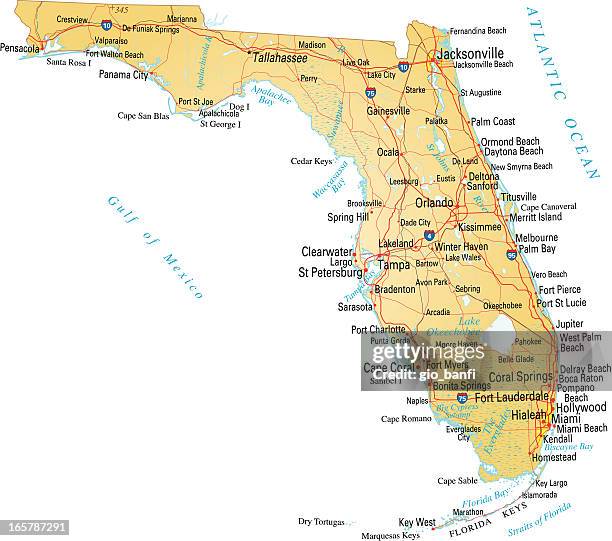
Florida's legal foundation rests on a deliberate combination of Spanish colonial legacy, territorial administration, and a state constitution forged in 1845. Far from being a mere administrative afterthought, the state's institutional framework emerged from intense negotiations between regional demands and federal oversight, shaping how courts, property rights, and legislative bodies operate today.
Understanding this system requires looking past the sunny tourism marketing and examining the actual statutes, treaties, and constitutional documents that bind the jurisdiction together. Let's break down how Florida transformed from an isolated Spanish outpost into a codified American state with a distinct legal identity.
The Colonial Roots and Territorial Transition
Long before statehood, the Florida peninsula operated under varied legal codes. Spain claimed the region in the sixteenth century, establishing a militarized outpost in St. Augustine governed by Spanish colonial law and the Leyes de Indias. This period introduced Spanish land grants, civil law traditions, and ecclesiastical oversight that later complicated American land claims.
Following years of border disputes and military incursions by Andrew Jackson's forces, Spain ceded the territory to the United States via the Adams-Onís Treaty of 1819, which took formal effect in 1821. Under U.S. territorial governance overseen by federal appointees, the region transitioned away from Spanish civil law toward Anglo-American common law traditions.
Key milestones of this territorial phase include:
- The Florida Organic Act of 1822: Established a territorial government featuring a governor and a thirteen-member legislative council.
- Adoption of Common Law: The territorial legislature officially adopted the common law of England in 1829, anchoring property and criminal disputes in codified precedents rather than Spanish royal decrees.
- The Second Seminole War: A protracted conflict (1835–1842) that displaced Indigenous populations and cleared the interior for plantation agriculture and white settlement, heavily influencing the demographics of the impending statehood convention.
The 1845 Constitution and Statehood
Statehood required congressional approval through the Florida Enabling Act of 1845, signed by President James K. Polk. Delegates gathered in St. Joseph in 1838 to draft the founding document long before Congress officially admitted the territory as the twenty-seventh state.
This initial constitution established a tripartite government divided into executive, legislative, and judicial branches, mirroring the federal structure. It mandated a bicameral legislature consisting of a Senate and a House of Representatives, alongside a supreme court tasked with appellate review.
Property rights formed a central pillar of the document. Framers included protections for homesteads, ensuring that families couldn't lose their primary residences to sudden unsecured debts—a provision designed to attract settlers fleeing economic panics elsewhere in the United States.
The Contradictions of Early Florida Law
History doesn't present a clean narrative. While the 1838 convention delegates debated progressive mechanics for commerce and local courts, they simultaneously embedded racial subjugation into the fabric of the state. Despite abolitionist pressures in northern territories, the foundational state laws protected and expanded chattel slavery to serve the plantation economies of Middle Florida.
It took repeated constitutional overhauls—particularly the Reconstruction-era Constitution of 1868 and the modern iteration ratified in 1968—to dismantle these systemic inequities and establish equal protection guarantees under the law.
Structure of Modern Florida Jurisprudence
Modern Florida law blends constitutional statutes, administrative regulations, and statutory codes enacted by the Florida Legislature. The state operates under the Florida Constitution of 1968, which streamlined previous amendments and added an explicit right of privacy—making Florida's state-level privacy protections stronger than those found in the federal Constitution.
The court system operates through a four-tiered hierarchy designed to manage heavy caseloads driven by population growth:
- County Courts: Handle minor civil disputes, traffic infractions, and misdemeanors.
- Circuit Courts: Exercise general jurisdiction over major felonies, family law, equity disputes, and civil claims exceeding specific financial thresholds.
- District Courts of Appeal: Review trial court rulings across six appellate districts, serving as the final arbiters for the vast majority of legal appeals.
- The Florida Supreme Court: Composed of seven justices, it holds final authority over the interpretation of the state constitution, capital punishment reviews, and statewide administrative rules.
Common Misconceptions About Florida's Legal Origins
Many observers misunderstand how Florida laws evolve, often attributing unique statutes to modern political whims rather than historical precedent.
- Misconception: Florida's open-government laws are recent innovations.
- Reality: The Sunshine Law, enacted in 1967, and the Public Records Act trace their lineage directly to a longstanding distrust of closed-door political deals dating back to territorial reconstruction and early municipal corruption.
- Misconception: Spanish land grants hold modern validity without local court confirmation.
- Reality: While historical treaties protected property rights, decades of federal and state litigation extinguished unverified Spanish grants, making modern title insurance an essential component of Florida real estate transactions.
For a deeper look into official state legal resources and historical statutes, consult the State Library and Archives of Florida or review legislative records maintained by the Florida Legislature.
Frequently Asked Questions
When did Florida officially become a U.S. state?
Congress admitted Florida to the Union on March 3, 1845, alongside Iowa, through a joint act signed by President John Tyler just before Polk took office.
Does Florida follow common law or civil law?
Florida operates primarily under English common law, mirroring the rest of the United States, though traces of Spanish civil law remain in specific property and water rights doctrines.
How often has Florida rewritten its constitution?
Florida has adopted six distinct state constitutions (1838, 1861, 1865, 1868, 1885, and 1968), with the 1968 constitution serving as the baseline for modern governance today.
What makes the Florida Constitution unique compared to others?
The document includes an explicit, standalone right to privacy in Article I, Section 23, which protects citizens from government intrusion into personal autonomy more strictly than federal equivalents.


